Showing posts with label jingoism. Show all posts

Thursday, 3 January 2013

The Refuge and its Scoundrels.


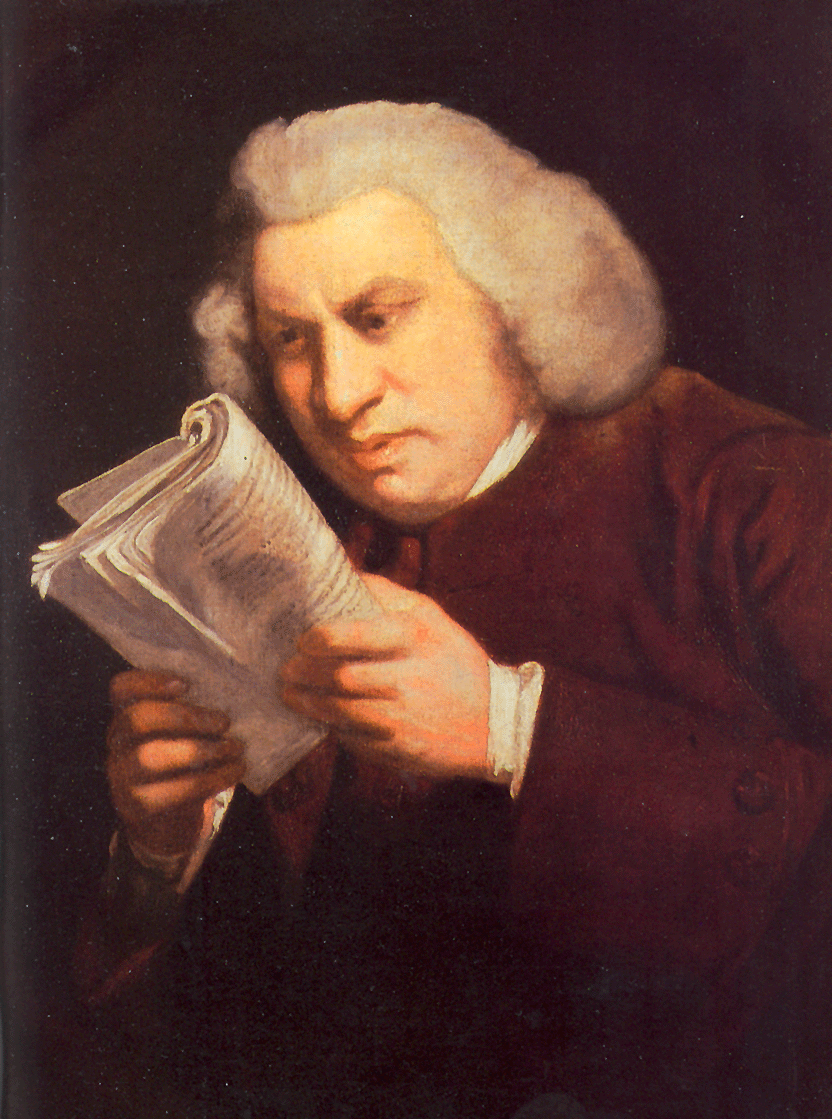
When Dr Johnson famously remarked that patriotism is the 'refuge of the scoundrel' he was actually referring to the Patriotic Party. Johnson was a Tory and wouldn't have written-off the love of one's country, and to some extent, he was right to do so. For patriotism can come in handy, in the war against Fascism it was the Churchillian vision of a determined island nation that held the people mesmerised. It's also worth noting that the great anti-colonial struggles of the last century involved revolutionary nationalism, especially in Vietnam and Cuba. The calls for Irish independence and reunification came primarily from nationalists. Of course, there is the darker side of nationalism, the jingoist harbinger of irredentism and nativism. And it's worth noting that the dark spirit of nationalism is much more common than the progressive and revolutionary possibilities of nationalism. Today we can see the reactionnaire appeals of nationalism against the European Union, while there are active pushes towards independence in Catalonia and Scotland where greater moves to regional autonomy have hardly failed.

It makes sense that the ultra-nationalist defenders of secession are crawling out of the woodwork in Europe at this time. Though this isn't simply the case where independence is concerned. If the referendum had secured Catalan independence recently it seems likely that the new nation would've been quickly subjected to a series of austerity measures. Because once a country of that size has broken-off it would need a new orbit and the European Union offers the strongest alternative. There are progressive arguments in favour of Catalan and Scottish independence. Yet it seems highly unlikely that a fledgling Celtic republic would escape the clutches of neoliberal globalisation either. There's some truth in Portillo's words that the country might easily be transformed into a land of low taxes and a shrunken state sector. In other words, Scotland could easily become a breeding ground for an even more merciless variation on the free-market ideal. At this point we need more unity, not less. This was most potently demonstrated by the demise of Yugoslavia - one of the great tragedies of the last century.

Yugoslavia was a federal socialist system of devolved republics and autonomous regions. It was free of Soviet domination and maintained a multi-ethnic society where Christianity and Islam were practiced side-by-side. All of it was held together under Marshall Tito who inculcated notions of 'brotherhood and unity' into the society as he fought to stamp out the remnants of nationalism in the masses. The state was maintained by a market socialist economy, which featured decentralised cooperatives and worker self-management as well as  a state planning apparatus. It combined the state as a primary mechanism for the organisation of the society and economy, while markets and cooperatives offered secondary mechanisms. The people enjoyed a guaranteed right to a job with a month's paid vacation, as well as free universal health-care and education as part of a comprehensive range of state services. There was never a Soviet-style collectivisation of Yugoslav society, for that may have torn apart the entire project of a country for Southern Slavs.

For a time Yugoslavia prospered with an average rate of growth at 6% and remained a leading model of independent development. The literacy rate reached 90% and life expectancy rose to 72 years. To expand the productive base and increase consumer goods the Yugoslav government borrowed from Western governments throughout the 1960s and 70s. Given that Yugoslavia had achieved development along independent lines (from Russia and not just the US) its federalism came under attack in the 1980s. The dismemberment of Yugoslavia became a concerted US policy as the National Endowment for Democracy began to focus on Yugoslavia as to hasten its breakdown and implement a series of neoliberal reforms. The IMF then began to force an austerity programme on Belgrade as a condition for payments on the country's debt. The austerity measures did not just mean a reduced public expenditure, but huge job losses and wage-cuts for the working. Eventually it would amount to the abolition of workers' self-management in the Balkans.


In spite of the decline of economic conditions inside the country Yugoslavia remained the only socialist republic after the collapse of the Eastern bloc in 1989. The people didn't rise up to overthrow the Communist government despite widespread discontent and rising nationalist sentiment. By now the dream of a Yugoslavia free of the old ethnic strife was dead in the water, with the rise of nationalist demagogue Slobodan Milošević. The Serbian nationalists wanted to hollow out Yugoslavia to establish a Greater Serbia. But the other nationalist movements wanted to break-off from Yugoslavia completely. To hasten the burst of secessionism the US began to yank the chain. In 1990 the Bush administration saw to it that Congress cut-off aid to all Yugoslav republics unless they declared independence within six months. The US demanded elections in all republics and went on to stipulate that every election must meet standards set by the US State Department. Later Italy would try to bribe Montenegro with aid to leave Yugoslavia and join them in the new Europe.

Within two years the US delivered another blow to Yugoslavia in the form of international sanctions to put a halt to all trade to and from the country. The economy quickly dived further into the abyss, unemployment spiralled to 70% while the health-care system collapsed and inflation exploded. Michael Parenti sees this as part of an agenda to turn the Balkans into a Third World developing region and to reverse the achievements of the Communist era. It would be a fractured region of republics incapable of independent development. The economy would be shattered, its natural resources stripped open to exploitation by multinational corporations. The people of Yugoslavia would provide a skilled workforce vulnerable to suppressed wages, as well as a reserve army of labour to be deployed to sink the wages of workers in Western Europe. The designs of neoliberalism to break-up Yugoslavia - only for its people to be rinsed by the forces of globalisation - converged with the aims of nationalists.

Wednesday, 28 December 2011

The Death of a Stalinist.


So Kim Jong-il has died at the age of 70, going by Russian records, and the hermit state of North Korea is in transition to another leader and this time the successor seems to be a man who has yet to enter his fourth decade on this planet. The country descended into 10 days of mourning as it had when Kim Il-sung died in 1994. It was out of respect to the wishes of the "Great Leader" that Kim Jong-il was allowed to become the Chairman of the National Defence Commission. But it was not automatic, Kim Jong-il took 3 years to consolidate his power within the bureaucracy of the Workers' Party. It was decided in 1998 that the Eternal President of the Republic would be Kim Il-sung and so Kim Jong-il is technically not the President of the Democratic People's Republic of Korea. So the notion of a President for life has been taken one step further, perhaps we should deem North Korea a "thanatocracy" as Christopher Hitchens suggested.

Now it looks as though Kim Jong-un will takeover the party-state apparatus in a similar manner, there have already been purges to undermine potential rivals for power. This was a surprise to Western commentators who predicted that the military establishment would not continue the Kim dynasty given the horrific state of affairs in the country. The importance of the Kim dynasty to the ruling ideology in North Korea cannot be understated. If the family goes then it is likely that the entire regime will have little to hold itself together. After all it was Kim Il-sung who fought the Japanese and oversaw the reconstruction of the country after the horrors of the Korean war, in which over 2 million were slaughtered. Even though the war was sparked after Kim Il-sung talked Stalin into backing an invasion of South Korea in 1950. But the Korean People's Army consisted of the same forces who had fought the Japanese and to this day the regime relies on this record of anti-colonial struggle.


As with figures such as Tito in Yugoslavia, Hoxha in Albania and Ceaușescu in Romania when Kim Il-sung died in 1994 commentators looked for signs of a coming collapse. It is likely that the military establishment tightened control of the population as Kim Jong-il consolidated his power. No doubt the privileged position of the military comes down to the interdependent relationship it enjoys with the Party. The military cannot rule nakedly and therefore requires some kind of justification and in turn the Kim clan fall back on the military for power. It is worth noting that the most recent amendments to the constitution have removed all references to communism and even Marxism-Leninism, instead old ideas of Juche (self-reliance) and Songun (military first) have become central. The old communist slogans have little appeal to the profoundly conservative establishment, no wonder then that the regime has become staunchly nationalist in character under Kim Jong-il.

As a consequence of the succession from father to son and now to grandson there has yet to be a process of de-Stalinization in North Korea. The personality cult around the family remains elaborate and in full swing as it was started by Kim Il-sung in the 1950s. But the Stalinist model became increasingly isolated as the Soviet Union underwent a brief period of liberalisation under Khrushchev. Then came the mutation of Maoism into a unique form of authoritarian capitalism and the collapse of really existing socialism in Eastern Europe. The mock Stalinism of Albania and Romania melted in the face of popular rage, as goulash communism ran dry in Hungary and the Berlin Wall came down in Germany. Tito’s death gave way to ethnic tensions which would eventually tear apart Yugoslavia in the most horrific manner. No one in the West saw it coming and the US took credit for it all, even though it came about as a result of internal tensions. The fallout left North Korea isolated and dependent on a now rationed flow of resources.

No doubt the power structure of North Korea and the scarcity of oil led to the food crisis of the 1990s. In Cuba the Soviet collapse prompted the decentralisation of agriculture, to prevent the shortage of fuel from creating a food shortage which could in turn create a famine. By contrast, North Korea opted to maintain the old structure of centralised control and even sought to intensify the Songun doctrine as the regime relied even more on the military establishment for its strength. The brutality of the regime apparently reached new heights. The intense militarism which came as Kim Jong-il took power exacerbated the famine, which came out of the centralised control of the state and the decline of ready access to oil. The military and scientific elites were given priority in the allocation of resources. In the consequent famine over 2 million people died as Kim Jong-il retained power and enjoyed a life of excessive indulgence.

The countryside became a source of great shame to the regime, which still seeks to conceal the disgraceful conditions from the outside world. The constraints on farming from a fuel shortage exacerbated by the Songun doctrine have left the countryside picked clean of vegetation as the military is given priority. The preference is to keep its tourists to the cities where the illusion of a workers’ paradise can be maintained. In the midst of the famine came rumours of cannibalism and the sight of people grazing on grass like cows. Since then there have been small openings for market forces in North Korea since the collapse of really existing socialism around the rest of the world. The relations with Russia and China descended into exploitative arrangements, with North Korean workers sold to chop wood in the Russian East as increasing numbers of Chinese entered the country to sell food and clothing. Most recently footage of women picking grass to sell has been smuggled out of the country.

The fears of a power struggle sparking violence on the Korean peninsula are not outlandish as North-South relations are at a low point. There was a power struggle in the 1990s between the old guard and the reformists who wanted to mimic the Chinese model of ‘capitalism with Asian values’. We don’t know the details of the tension, but it is clear that Kim Jong-il had taken over the Workers’ Party with his father elevated to Eternal President. It was clear that the few openings made for markets were the only concessions that would be made as the military establishment formed the base on which Kim Jong-il sat. The principle of Songun made it sure that the military was privileged over the rest of North Korean society. But it is likely that the regime has been preparing for this succession for a while. There have been purges throughout the year and it would likely be a method of securing the succession to Kim Jong-un. Any sign of an uprising against the regime remains to be seen, but when the collapse comes it won't be seen coming from afar.

Saturday, 30 July 2011

Self-Hating and Israel Threatening?

 
The anti-Semitism of Zionists.

In the disgraceful history of anti-Semitism there is an irony that the Jews have traditionally been depicted as both upper-class and lower-class, overly intellectual and too earthly, lazy and workaholic. For the Third Reich the Jew represented both the decadence of liberal capitalism and the Bolshevik spirit of socialism, the Fascists offered an alternative modernity devoid of class struggle and affirmed through a rebirth of the nation. For the Nazi conversion to Christianity is out of the question as the "guilt" of the Jews does not need to be proved, the "guilt" resides in the biological constitution of Jewishness. The source of the damnation was not theological but racial. The Jew first appeared as the enemy as the dark ages came to a close in Europe with the role of money in the rapid development of market exchange. The anti-Semitic depiction came in the form of parasites who disrupt the social fabric of society. Later, the wandering Jew came about just as capitalism began to emerge and as society was transformed it began to display the features that were attributed to Jewry.

The form of anti-Semitism prevalent today can be summarised in the words of Croat nationalist rockstar Marko Perkovic "I have nothing against [the Jews] and I did nothing to them. I know that Jesus Christ also did nothing against them, but still they hanged him on the cross."  Then there is the more recent development of Zionist anti-Semitism, which Žižek has pointed to, as the establishment of the Jewish state came so did the emergence of Jews who resist identification with the Jewish state. These are the Jews who insist on the "public use of reason" over the "private" domain offered by the nation-state being constructed in the Middle East. A standard case would be Noam Chomsky who stands against the self-designation of Israel as the state of the Jewish people on the grounds that it is based on the exclusion and oppression of the Palestinians. Chomsky was a Zionist Youth Leader and lived in a kibbutz in Israel for 5 years before leaving out of disgust with the ideological atmosphere of ultra-nationalism and even Stalinist sympathies expressed by some on the Left in those days.

A classic case of Zionist anti-Semitism can be found at www.masada2000.org where a list of over 7,000 S.H.I.T. (Self-Hating Israel-Threating) Jews can be viewed. The names listed often include detailed descriptions and unflattering photos of the person, along with an email address provided to enable hate mail. It has a lot in common with Red Watch and looks just like a Nazi list of decadent Jewish freaks. You will no doubt find Chomsky and Finkelstein on the list. The Jew who does not identify with the state of Israel is reconstructed along anti-Semitic lines as we can read in the manifesto of Anders Behring Breivik. The latter drew a distinction between "loyal" and "disloyal" Jews which is presupposed by a fundamental rejection of the Jewish contribution to European identity, which is a radical universalism. In Breivik's terms the "disloyal" Jew is a liberal opposed to nationalism and Zionist, for him these Jews are complicit in the multicultural experiment and the rise of cultural Marxism.

The Vilification Industry.

It is this reconstruction of the Jewish critics of Israel along anti-Semitic lines is how the anti-Semites of the Christian Right can support Israel. There's a great deal of projection involved clearly, notice that the Christianists will attack the media and the elites as left-wing whenever criticism of Israel is given public space. The conspiracy theory of Jews ruling the world is ripped from it's context to explain away negative reports of Israel as the plot of a ultra-leftist cabal in media. At the same time, the Christian Right support Israeli expansion out of a perverse attempt to bring about the Rapture which will herald the end for the Jews and the Muslims. Generally, the logic of anti-Semitism remains prevalent in Western civilisation as particular characteristics are still considered "Jewish". We find these features are sometimes morphed to the point that the greedy Shylock becomes the entrepreneurial spirit of Alan Sugar. Apparently, this is a compliment and not a racist insinuation!

Then there is the special case of the vilification of Norman Finkelstein orchestrated by Alan Dershowitz. Finkelstein had slammed the work of Alan Dershowitz on Israel and so Dershowitz went after him. The aim was not to refute Finkelstein's argument, it was to blast him out of the water, ruin his career and muddy the discourse to the extent that there can be no step forward. Dershowitz opted to go after Finkelstein's mother, who is a survivor of Auschwitz and he actually had the nerve to claim that she survived because she was a collaborator with the Nazi regime. It has been described by Chomsky as a "jihad" to try and prevent Norman Finkelstein from being appointed to tenure at DePaul University, a Catholic university, which is vulnerable to accusations of anti-Semitism that Dershowitz certainly has no qualms about making. The use of anti-Semitism as a label to vilify critics is cynically used to shoot out the opposition to the moral degeneracy of the Israeli government.


The consistent line of Alan Dershowitz is that all of the criticism of Israel comes from anti-Semites and self-hating Jews. This is nothing unique on his part, these same claims are often made to undermine the critics of Israel. The double-think here is that if you're opposed to mass-murder then you're a Nazi of course. It is clear that the facts of Palestinian suffering evoke outrage from normal human beings and not from people with a warped view of the world. The fact that (as of June 4th 2011) 124 Israeli children killed by Palestinians and 1,463 Palestinian children killed by Israelis since September 29, 2000 should move a normal human being. The same goes for the Israeli reaction to the deaths of three Israeli citizens as a result of around 2,000 rockets being fired into Israel, the reaction being that which had left over 1,400 Palestinians dead and thousands more injured. Of course, 10 more Israeli soldiers were killed in the mean time and the slaughter was called to a stop just before Barack Obama was inaugurated as President to avoid any embarrassment for the US.


Immodest Proposals?

At the time of the establishment of the Jewish state Hannah Arendt was one of the vocal critics of the particular statist formula that the leadership of the Zionist movement embarked upon. For Arendt the worst model for the Jews to emulate is the racial nation-state because that model had produced the horrors of Nazi Germany. To secure a future free of conflict it seemed imperative to Arendt that the Palestinians and Jews had to have equal rights and recognition as citizens based on justice. Instead of an Israel based on race carved out of the Arab world by force, Arendt proposed an independent state for Jews and Palestinians as part of the British Commonwealth of Nations that would ensure both ethnic groups got a fair deal. A Jewish homeland was a solution to the perpetual "rootless" status of the Jews and a federation amongst the Arabs and Jews in Palestine would be vital for the survival of a Jewish homeland. This was the alternative to the violence that has been used to carve a Jewish state out of a predominantly Arab region.


The concerns Hannah Arendt had about the future character of a Jewish state that had to live in agitation with its Arab neighbours were somewhat prescient. She foresaw that the Jews would have to live surrounded entirely by a hostile Arab population and secluded inside ever-threatened borders. The state would become inward looking to the extent that all other interests are marginalised by "self-defence". We have seen that the social programmes and welfare measures taken in other states have been reduced in Israel in order to raise military spending. The external threats would overwhelm social experiments, which we have seen as the most radical Kibbutzim were suppressed, whilst the military would take the centreplace of political theory and economic development. Israel was once an almost socialistic society for many years, but it is now in a state of immense inequality in which 18 families control 60% of corporate equity. Israel is second only to the US in terms of inequality.


Noam Chomsky has commented that the ideas which were considered Zionist before the establishment of the state of Israel would be considered anti-Zionist today for it is anti-statist. When Noam Chomsky was a Zionist Youth Leader he was for Arab and Jewish working-class cooperation to construct a bi-national socialist Palestine. The establishment of the state of Israel was a day of mourning for Chomsky and his pals. We can see the break between the kind of Zionism that Chomsky was involved in and the trajectory of Israel. In the country inequality has exploded as the military-industrial complex and high-tech industry (which are interconnected) have taken precedent over the welfare state. The wealth generated through financial services, chemical fertiliser and diamonds is concentrated in very few hands. Arendt went as far as to claim that the Jews of Palestine would change character to such a degree that they would no longer represent world Jewry as a whole. We find this is the case as the Israeli government differs greatly in policy to the liberal values of American Jews.

Saturday, 14 May 2011

WAD.

 
Western affluence disease, also known by the acronym WAD, is contagious and has not been contained to the West where it originates in the 18th Century. The symptoms are as follows:

1. Politicised cynicism - an inclination to believe that all governments are corrupt because the party-system is motivated by self-interest, no politician can ever solve our problems and we need to resolve our problems outside of the state. We might as well not vote, nothing will ever change and we should just accept that.
2. Obligatory jouissance - the injunction to enjoy, you can therefore you must, to indulge. This is not the realisation of freedom as it lacks the freedom from enjoyment. Instead it leaves you trapped on a hedonic "hamster wheel" constantly chasing gratification.
3. Commodity fetishism - to derive meaning, value, status or identity from possessions and money. Products seem to take on a life of their own, there value determined by "mysterious forces" and not by the market, leaving people working to attain them.
4. Permitted rebellion - hedonistic escapism, e.g. raving, which does not defy the confines of our so-called "permissive society" but remains embedded firmly in the dominant ideology. A rebellion which is permitted, controlled and provided at a price.
5. Sport-enhanced jingoism - aggressive nationalist tendencies evoked by sport events, which act as a substitute for warfare, in a controlled area and is usually characterised by an overtly homoerotic drinking session in which there is a distinct absences of gays.
6. Liberal communism - the tendency to seek a progressive outcome from a system which undermines such an outcome, in accordance with a logic of private vices reap public rewards. For instance, you cannot end world poverty within capitalism as the economic system is partly driven by poverty.

If you suffer from any of the symptoms above notify a dialectician (preferably one with a beard) as soon as possible.

Tuesday, 10 May 2011

The Narrative of Terror.

Life After History.

After the collapse of the Soviet Union, which began with the Berlin Wall in 1989, the grand narrative that the US was engaged in a war against Communism came to an end. Out of the Second World War, the US came out the most powerful country in the world and it had a powerful military to justify. The threat of Communism was enough to play on to increase the defence budget. It began with the anti-Communist witch-hunts of the 1950s were actually started by the Democrats under Truman. It provided a pretext for the Korean war, as it would later provide for Vietnam and then lose in the mid 1960s. A performative contradiction emerged between the grand narrative professed by the US and the actual situation in the world. After all the US was bombing Vietnam to contain the spread of Communism, why was the US bombing South Vietnam then? A similar contradiction has arisen in Iraq and now in Afghanistan, why are we still in Afghanistan if Osama bin Laden was in Pakistan?

The collapse of the grand narrative of the Cold War came around 1990 and gave way for a new narrative. Though for a while things flat-lined as Fukuyama had declared the End of History. The events of 9/11 would open up such a narrative, though there are signs to be detected earlier than September 11th 2001. As there was a global economic crisis in 1998, as well as the hysteria around Monica Lewinsky, US embassies in Tanzania and Kenya were bombed. Osama bin Laden was the mastermind and Bill Clinton immediately seized on it. Cruise missiles were fired and nothing was hit (except for a pharmaceutical plant in Sudan) so the media charged Clinton with trying to take the heat off himself. If a Middle East connection had been found behind the 1995 Oklahoma City Bombing the US would have bombed just about anything in sight, with the press cheering it on all the way. It wasn’t until the atrocities struck on American soil in 2001 that the grand narrative was opened up as the “War on Terrorism” was declared.

The grand narrative of the “War on Terror” has been a self-serving narrative for the Bush administration, the commentariat and not to mention al-Qaeda. It gave the government and the media a meaningful way to simplify global events for public consumption. It also sells papers, boosts approval ratings for politicians and provides a way for Islamists to recruit young angry men in the Middle East. The US could have split the Jihadist movement in 2001, as there was a division between the Islamists who supported the action and those who opposed it. Instead the US invaded Afghanistan and in doing so united the Jihadist movement behind the new strategy to attack the “far enemy” and not just the “near enemy” of corrupt Arab leaders. In other words, the moves to "contain, minimise and marginalise" the threat referred to by Alex Massie couldn't include the invasions of Afghanistan and Iraq. The same can be said of state-sanctioned kidnapping and torture.

As Patrick Cockburn has claimed, al-Qaeda might just be the most successful terrorist organisation in history. After all the attacks on 9/11 were committed in order to lure the US into an over-reaction in which it would wage a war against Islam. Ayman al-Zawahiri expressed hopes of this, these was the reason for the attacks on 9/11. The logic being to unite the Muslim masses against the West, the attacks succeeded in uniting the Jihadist movement as the US invaded Afghanistan and later Iraq. With the US and Britain committed to a ground war in Iraq, the threat of terrorism in the West increased significantly. George Bush and Tony Blair had done a good job of acting how al-Qaeda wanted them to. Despite warnings that the invasions would increase the threat of terror Bush led the way. We can all look and see the link between the invasions and the terrorist attacks which have struck in Western countries since then.

History Jump-Started.

The trial of Osama bin Laden would have surely demystified al-Qaeda, it seems as though the assassination has the potential to bring the grand narrative to a close. It could make way for a new narrative. With the snake decapitated there are few ways for the Republicans to criticise the administration and a second term may be secure. There are also few ways to justify the current occupation of Afghanistan, a contradiction could easily rise from the depths of American ideology to the surface and manifest itself in political crisis. Whether or not it can be managed by simply claiming that the US has to fight the Taliban in Afghanistan is another matter. If the man is dead what is the point of occupying Afghanistan? The hopes look slim for the “War on Terror” to be bolstered in any significant way. Yes, there are terrorists still out there. There are also Communist regimes in Cuba, North Korea and China among a few other places and yet there is no hope of kick-starting the Cold War.

The only conceivable way the grand narrative could be maintained is if there is another invasion. The most valuable, in strategic and economic terms, are Pakistan and Iran. But to even justify a war another baddie has to emerge from the shadows. There is no one in sight who can fill the shoes of Osama bin Laden. Not even Ayman al-Zawahiri, the de facto leader of al-Qaeda. It should be noted that there is word of new names being added to the terrorist watch-list, as a consequence of the raid and the information found at the compound in Abbottabad. There is a great deal of speculation over how the Pakistani government managed to ‘miss’ that bin Laden was living in Abbottabad. The Americans felt no obligation to inform Pakistani intelligence of the raid because they were "untrustworthy", as the CIA have pointed out. Even though Pakistan agreed to this kind of raid 10 years ago.

Barack Obama has faced a great deal of criticism from across the political spectrum. There has been legitimate criticism for his position on Israel-Palestine and then there are the allegations that he is an illegal alien, a Muslim and the bastard son of Malcolm X. It seems that there is little room for words which regard what change he has accomplished. Understandably so, there is a great deal of disappointment with him and general disillusionment with politics in the US. But Obama never pretended to be anything more than a centrist liberal. We forget that the presence of a black family in the White House has moved the perimeters of what is possible in the US. The statements he has made on torture and Guantanamo Bay have the same impact. Though the gulag is still open, we should not forget that it was totally impossible to even imagine the American President admitting torture and calling for Gitmo to be closed down. The assassination of Osama bin Laden may be the greatest contribution to ideological change Obama has made thus far.

American intelligence officials are expecting to add new names to the terrorist watch-list as a consequence of the raid on the compound. The information is from 10 phones, 10 computers and 100 memory sticks found at the compound in Abbottabad. So there are hopes for the “crazies” who will want to see the narrative survive. Nevertheless, there is a chance that this narrative might have to close and with that a new narrative will open up. The conditions for this new narrative are not unique. It would have to make room austerity at home and repression abroad. It would need to rationalise the lunge for resources in Central Asia and the Middle East. As the US loses its power it is possible that the grand narrative will be shaped even more by China. It is even possible that the decline of American hegemony could itself be the next narrative. We live in interesting times, as well as dangerous times.

Thursday, 5 May 2011

Brand Obama - the Warrior President.


Obama has fulfilled a campaign promise in killing Osama bin Laden. Brand Obama can go 'Warrior President' now, with his citizenship finally confirmed, it seems he shouldn’t have much trouble in fending off a Republican candidacy or even an entry by Donald Trump into next year’s electoral bout. At the same time the Middle East is being swept up in revolutionary fervour, with the US supporting the Gulf Cooperation Council in it’s repression of the uprising in Bahrain. American gulags like Guantanamo Bay are still open for business and there is little possibility of closing down the kidnapping-and-torture ring in the near future. It might have been better to have held the man for trial, alongside Khalid Sheikh Mohammed, for 9/11 and other atrocities. But that would have led to a protracted battle in court, with the potential for serious questions of American conduct in recent years and this would have reopened the rift in American politics. Unity and national pride might be useful in subduing the American people before a harsh austerity can be imposed.

Noam Chomsky predicted that the Obama administration would recycle the policies of the last half of the Bush years, which were considerably moderate when compared with the first term. The bailouts and bombing of Pakistan were the early signs of this, in spite of this conservatives resorted to labelling Brand Obama "socialist". The important changes came in form, the rhetoric changed along with the way policy was delivered and the limits of what can be done in the US has been challenged significantly in this way. The most important change being that there is now a black family in the White House, a house built by slaves, which really does widen the perimeters of what is possible in the US. Though under Obama there has still been US support for the blockade on Gaza, the bombing of Pakistan, the coup in Honduras and the assault on Haiti by the IMF. There has only been a lukewarm return for liberal interventionism. Along with a no-fly zone over Libya also came a subtle pass for Gaddafi on human rights and the Libyan bankers have been made exempt from the sanctions.

We have seen the return of the old "crazies" in the media since Osama bin Laden was wasted. Most notably of all is Dick Cheney, an ultra-nationalist if there ever was one, has come out in support of the President's decision. It was under Cheney that policies of war and torture were furthered to an appalling extent. Andy Card reappeared on Newsnight to inform us that the raid went well as a result of planning. He also emphasised that it was "tough, courageous decisions" that Presidents have to make, which Mr Card would no doubt extend to the kidnapping and torture of "enemy combatants". The uniform praise for Obama reaches as far as George W Bush. The basic message of the Bushites has been defensive of past actions, criminals like John Yoo have claimed the death of Osama bin Laden justifies torture in all circumstances. Now the extremist wing of the GOP no longer have to fall back on the feeble line that torture is justifiable because there has yet to be another terror attack on US soil.

This is reason for the whitewash for Bush, who effectively allowed Osama bin Laden to escape from Afghanistan in 2001. The administration also failed to leap on the opportunity to divide the Jihadist movement by extraditing Osama bin Laden rather than executing the invasions of Afghanistan and Iraq – which have increased the threat of terrorism significantly. Instead there is talk of "courage" and "justice", as if these values are best expressed in war and assassination. Revenge would be the best word for it! If Obama had bombed the compound, the lives of Pakistani intelligence forces and soldiers could have been jeopardised. Not that the US has ever shown any concern for killing Pakistanis in bombing raids. Under Obama there have been six times as many drone strikes as there were under Bush, in fact Barack Obama picked up where Bush left off on his third day in office and the victims of these attacks are mostly civilian. The continued bombing of Pakistan was not enough for conservatives, he was still too soft for them. 

Assassination is no more an aberration in American history than the use of violence to achieve political goals in general. As Benjamin reminds us, every advance of civilisation is an advance in barbarism as well as emancipation. The recent action undertaken in Abbottabad by Obama is standard practice for the US government. Not always carried out by Americans personally. There is Ngo Dinh Diem, who ran South Vietnam, in a typically oppressive manner, and then in 1963 he was assassinated on orders from Washington. The attempt to kill Gaddafi in Libya, which has been overshadowed, is a similar demonstration of a willingness to kill in the American establishment. Assassination is not a method reserved to dispatch the monsters from this world. At the peak of COINTELPRO Fred Hampton was murdered, the same apparatus has tried to assassinate Fidel Castro 638 times and succeeded in killing Che Guevara in 1967. The willingness to kill is an important qualification for all American Presidential hopefuls, whether it is in war or in America's prisons.

The ultra-Rightist campaign of vilification, fear-mongering and baiting of all kinds, has been successful in fuelling the rise of the Tea Party and forcing compromise in the White House. The aim was to stamp out any currents in Obama policy which might have progressive outcomes – from health-care to the stimulus. The death of Osama bin Laden might signal the end of easy targets for the RightGlenn Beck, which might contribute to the inability of the Republican machine to attack Obama in damaging ways every week and put forward a more capable figure. It would seem that the Obama administration may have a lot more in common with Bill Clinton than Jimmy Carter.

It has been said that a second term might not be secure for Obama, after all George Bush won the Persian Gulf War and then was humiliated because of a U-turn on taxes. There are important differences between the election in 1992 and the one coming up in 2012. Though there is just as much, if not more, disinformation and fear-mongering going on today as there was in 1992. George HW Bush represented a third-term for Ronald Reagan, which is what John McCain would represent for George W Bush, whereas Barack Obama was elected as he represented a clean break with the Bush era. The Persian Gulf War may have been a victory for the US, Bush was criticised by neoconservatives for not taking out Saddam. The neocons have no grounds to attack Obama as Guantanamo Bay is still open, the war in Afghanistan is ongoing; there have been air-strikes against Gaddafi and Osama bin laden is dead. Obama is about to initiate a series of harsh spending cuts and the Bush tax-cuts have been renewed, it would seem there is little the Republicans have to offer for Corporate America.

Saturday, 18 December 2010

Angry White Men of the World, Unite!


The English Defence League has taken a time out from the campaign of race-baiting against less than 2 million Muslims in Britain, but particularly targeting Asian Muslims, to react to the student demonstrations in their own special way. The leader of the movement is Stephen Yaxley Lennon, who goes by the name of "Tommy Robinson", who attacked the students in a speech this week. The former BNP member and football hooligan accused the students of "living off their dad's fucking bank cards" and not knowing what it means to be working-class. During the speech Mr Yaxley-Lennon issued a threat "The next time the students want to protest in our capital, the English Defence League will be there." This is a part of the EDL new approach of ruining left-wing meetings and denouncing trade unions as "communist", the movement is now engaged in the kind of red-baiting that still goes on across the pond.

The EDL seems to adhere to a vicious brand of evolutionary economics, whereby the strong rise and the weak fall, which is a departure from the traditional third-way economics of distributism. This is in line with the "permissive" aspects of post-modern nationalism, which is why they will claim to be defenders of freedom of speech against political-correctness. The kind of individualism the EDL favours is no doubt subordinate to nationhood. It may be a defence of free-speech but it's really about defending "English values", as if freedom was exclusively British. This extreme economic shift began with the BNP supporting the cuts and putting forward proposal of £200 billion in public spending cuts over a year, which would have decimated the welfare state and devastated the working-class. Though as this new strategy has accelerated the decline of the Party, the BNP have resorted to a vague list of cuts it advocates.

Not only would it appear that the EDL are now running with the stance that the BNP abandoned, but the growth of the League is now partly the cause of the decline of the BNP. The electoralist approach of Nick Griffin is perceived as a failure on the far-right and the EDL is a regression to the street level thuggery. As the EDL were originally just another force to collude with, the League have seized onto the "common cause" of stamping out the British Muslim community. From this there is a kind of unity among neo-Nazis and angry white men in general, but now the EDL is seeking to harden it's right-wing base in it's opposition to student demonstrations and trade unions. At the same time, the EDL has sought to allign itself with the Islamophobic wing of the Tea Party. The new line of the League on cuts might strengthen the link to the Tea Party and the American chickenhawks  who have been on board for taking on Islamism for a long time.

In Fascist ideology the class struggle is typically displaced, the EDL are no different in this sense. The idea of an English working-class is posited against an exploitative left-wing elite who have capitulated to radical Islamists. Notice that neo-fascists have yet to replace European Jewry as a scapegoat which appeals to the upper-classes just as much as it does to the working-classes. To the rich the Jew was a communist and to the poor the Jew was a banker, the virulent anti-Semitism of the Nazis externalised the tension between classes onto a "common enemy" and we all know what happened thereafter. Instead the EDL have to stick to the same line as the BNP have been, that "Islamization" is being imposed as part of a conspiracy between a left-wing media and a liberal elite.


The "intellectual" leadership of the EDL is most certainly National Socialist in character, just as the leadership of the BNP has been since it's emergence in 1982, complete with the same old genocidal intentions. The foot soldiers are typically the standard football thug with just enough brain cells to hate everything foreign. But the base of the BNP and the EDL are not consciously fascist, which is the reason for the carefully maintained veneer of railing against a culture and not a race. Cultural chauvinism is something picked up from the New Right, which focuses on the incompatibility of the culture of a "race" and thereby targets the minority indirectly. Just as old-fashioned racism is making a return, race-related harassment and violence has increased in recent times from 13,000 in 1997 to 53,000 in 2005. 35,000 of which consistuted assault. Now we can see Bruce Forsyth and Jimmy Hill defend the use of slurs such as "Paki" and "nigger".


The base of the EDL is no different than any other far-right group, it consists mostly of working-class men who have been dispossessed over the last 30 years and have legitimate grievances. The working-class has been neglected and it's grievances have been ignored by the establishment. Unemployment and stagnant wages being a serious concern. The line of the reactionary press is that the markets are efficient and produce enough jobs for all people. From this view the only explanation for unemployment is that the jobless are lazy scum or that their jobs have been "stolen" by foreigners. It's assumed that the system is perfect and has only been disrupted by "meddlesome entities" (e.g. foreigners and scroungers). When actually the case is that the markets are inefficient and don't provide jobs for all. Enter the EDL, who take advantage of a source of untapped rage and acknowledge the grievances by offering ways of restoring order - e.g. cutting off all benefits and putting a stop to Muslim immigration.

The malicious defence of authority and the erosion of welfare liberalism for the sake of "social order" is partly about solidifying a ultra-rightist base, it appeals to the bourgeois sectors of society. Equally it is about the long-term future of the EDL, whether or not it is intended to be. The end of the welfare state does have the potential to enlarge and intensify support for far-right groups, as would a double-dip recession. As it would ensure the kind of conditions that produce and sustain groups like the EDL, e.g. high unemployment, stagnant wages and greater inequality. Though it is possible that this manoeuvre will drive away working-class support for the League, as opposition to the cuts could increase rapidly as demonstrated by the student protests. Hopefully the EDL will find itself outnumbered by going down this route.

Friday, 27 August 2010

The American Experience.

The First Casualty of War.
 
Ricky Gervais once joked that the Second World War may have the best ending but the Vietnam war has the best sound track. He was referring to the horrendous use of the atomic bomb against the Japanese as less "entertaining" than the music of the 1960s. In doing so, whether intentionally or not, Gervais highlights the way war has been reduced to the realm of entertainment today. As we all know, since the end of the Vietnam war there have been countless efforts to immortalise the conflict on the big screen for all to see. The best of these films are often listed as Platoon, The Deer Hunter, Apocalypse Now and Full Metal Jacket. The Kubrick film being my personal favourite. But there are problems with the so-called anti-war films that have focused on the war which raged from the early 60s under JFK to the mid 1970s under the caretaker administration of Gerald Ford.


The problems of films like First Blood and Missing in Action are self-evident, as such films do not pretend to be anything more than a shallow display of steroid-fuelled jingoism and a mere excuse for a angry white man to go "wild". The problems of films that claim to show us the true horror of war are not often discussed in the same light. Even though the films, which take a less "positive" look at the Vietnam war, have made false depictions of the Vietnamese. One such instance being in The Deer Hunter where American POWs are forced to play Russian roulette for the pleasure of sadistic Vietcong. Thus, justifying the ruthlessness which Robert De Niro and Christopher Walken demonstrated in gunning them down to escape. It is the scars, both physical and psychological, of war that are depicted in the film. But only the scars inflicted on the minds and bodies of American soldiers.

Let's look at Apocalypse Now, Francis Ford Coppola's take on the Vietnam war, which was an adaptation of Joseph Conrad's Heart of Darkness. Conrad's novella takes place in the Congo Free State, a private-colony of the Belgian King Leopold II, and the characters are working for a trading company which brutally exploits African workers. Apocalypse Now takes place in war-ravaged Vietnam and Cambodia, the main characters are soldiers. It is Cambodians who replace the Africans as the brutalised people, but also as "primitive savages" who worship Kurtz as a God. In Apocalypse Now Kurtz recalls a humanitarian trip to inoculate children for polio in a Vietnamese village, the Vietcong went into the village and then hacked off the arms of the inoculated children. Kurtz wept at the sight of the pile of little arms, before learning to admire the will of the Vietcong to commit such atrocities. Kurtz says "If I had 10 divisions of those men, then our troubles would be over very quickly."

The emphasis on the American experience of the war is a characteristic that practically all films on the Vietnam war share. The Vietnamese experience is severely neglected, even though it was 6 million Indochinese who died during the war. Not only is the war depicted from the side of the aggressor, it is the subjective experience of the war by soldiers carrying out the invasion which is the focus of such films. The objective violence of war, which is inherent to war regardless of the existence of any particular person, which becomes subjective violence in war films. Subjective violence in the sense of violence as impacting directly on individuals, violence which is partly dependent on the existence of an individual. Take Platoon the mass-killings and fraggings that take place is all part of Charlie Sheen losing his innocence, which is the "first casualty of war" according to the film's tag line.

Far from actually taking a moral position on the war these films actually obfuscate the important issues of the war. Instead opting to focus in on the perpetrator's traumatic experience, which enables the ethical and political background of the conflict to be suppressed. Why was the US in Vietnam? This question goes unanswered in most, if not all, American war movies. The fact that it was the events at Pearl Harbour that drove the Europeans out of South-East Asia and by the early 1950s colonial powers were struggling to maintain power.  Around this time the US government supported the French in their bid to regain dominance over Indochina. This attempt failed and the US ended up backing a nationalist regime in the South of Vietnam as the North was taken over by communists. In the 60s, the US moved to destroy all currents of independence in Vietnam - whether communist or nationalist - to prevent a "domino effect" across South-East Asia. 

In We Were Soldiers, which was dedicated not just to the Americans who fought at Ia Drang but also the Vietnamese who died there, the fall of French colonialism in the region is depicted in the opening scene. The problem in the ambush of French soldiers by Vietnamese rebels is that it is the Vietnamese who remain faceless aggressors and the French who are the victims of the assault. This goes as far as portraying a Vietnamese man literally stabbing a French officer in the back with a bayonet. It is the French who are overwhelmed, disarmed and executed mercilessly. This scene is supposed to explain how the Vietnam war "began", but it takes one battle out of context. The battle of Ia Drang was one of the last in the First Indochina war, which spanned 8 years and ultimately brought an end to over 60 years of French colonialism in the region.

It is as if the American film industry is obsessed with Vietnam in particular because it is commonly perceived as such a loss for the US and a pointless waste of American life. Not because it was fundamentally wrong and immoral, but because almost 60,000 Americans died in a senseless war. Never mind the 6 million people slaughtered all over South-East Asia, not just from Vietnam but Laos and Cambodia as well. It could also be argued that the US succeeded in its goals in Indochina, most currents of independence were eradicated and these countries were reduced to satellites of China. In that sense, the Vietnam war was no loss for the US and the thousands of Americans who died in the war did die for a cause - an immoral cause. The Americans were not the victims of this war, the people of Indochina were. Thus, a film about the Vietnamese experience of war is well over due.

Tuesday, 22 June 2010

Malice in Wonderland.

Down the Rabbit Hole.

The Democratic People's Republic of Korea, known to all outside of Pyongyang as North Korea, is often described as a communist state and a relic of the Cold War. The state was founded following WW2 as a satellite of Stalinist Russia. What should be remembered about all supposedly communist states is that they were founded on Marxist-Leninist ideas. The state of affairs in countries like China and Russia, was that they were undeveloped and arguably pre-capitalist in nature. As revolution by the working-class was supposed to occur in the most advanced capitalist society. In North Korea socialism was considered impossible to develop as capitalism had not yet reached it's peak. Thus, the DPRK is a state "holding" society in preparation for the "real revolution" which would come in an advanced capitalist state. This was the internal "justification" for the totalitarian regime in North Korea, it's dynasty, personality cult and the disparity between rich and poor being the result.

Recently North Korea, has been in the news and not for the usual reasons. The reason is the World Cup and the fight the North Korean team put up against Brazil, holding them off for the first half of the match and scoring a goal, before being humiliated by Portugal. Though the people of North Korea will not see either match as the DPR was not victorious. But there are far more serious issues at hand in regards to North Korea. The last few years have been turbulent for the hermit state, to say the least. The country has collapsed economically and the state has yet to resolve mass-starvation since the famine in the 90s. The Bush administration added North Korea to the "Axis of Evil", possibly to reassure the world that the "War on Terrorism" is not a "War on Islam". Lately, the regime has been developing nuclear weapons in defiance of the USA. The aim of which is probably to deter a "pre-emptive strike" by the US, the kind seen in Iraq, which could easily tear apart the country.

It's possible that we could see regime change in North Korea soon, as Kim Jong-il has suffered strokes and may be suffering from cancer. Though the "Dear Leader" has supposedly been grooming his son to succeed him, his brother-in-law may also be a candidate, it does seem likely that the dynasty will end with Kim Jong-il. A military junta might "fill" the power vacuum, after Kim has passed on, given the militaristic nature of the DPRK government. This seems likely as Kim Jong-il is dependent on the support of generals for power. Because Kim Jong-il is not the official ruler of the country, because his father has been made "Eternal President", he is only the leader of the Workers' Party of Korea and the Korean People's Army. The bankrupt regime sustains itself by placating a nomenklatura consisting mostly of generals and atomic scientists in Yongbyon. It is possible that Kim's death has the potential to destabilise the country, especially if the passing of the "Dear Leader" led to a turbulent power-struggle.

The declining grip of Kim Jong-il on power is not only due to ill-health, the revaluation of the won last year caused a decline in the standard of living for North Koreans including the elite. The aim of the devaluation was to divert the proceeds of black markets into the economy. Instead the devaluation of the currency was the biggest disaster since the famine for the poorest of North Koreans. There was even word of demonstrations about the devaluation, which led to the regime raising the limits on how much currency citizens could exchange. The won plummeted by over 95% to the dollar and the state soon backed away after a riot by traders led to shootings. Though the devaluation succeeded in decimating private stores of money accumulated through the black market, it damaged the living standard of the elite. The "Dear Leader" has since attempted to soothe the "bruised coffers" of his generals with luxury cars. Similarly, workers were promised their salaries would be restored - but they only received a month's pay in the end.


At the Tea-Table.


The Democratic People's Republic of Korea was actually named in reaction to the founding of the Republic of Korea, at that time a virtual satellite of the US. During the reign of Kim Jong-il all references to communism and Marxist-Leninist ideology have been removed from the constitution. Instead, Juche and Songun have been enshrined in the constitution. The former essentially being self-reliance, which was first implemented to deal with the Sino-Soviet Split. The latter emphasising military as the driving force of the revolution and socialism. Though it is more likely a way for Kim Jong-il to maintain power, as by putting the Korean People's Army first the "Dear Leader" can remain in de facto control. It was likely that the jingoistic elements of Songun were comprised to unite the masses around the identity marker of the Korean nation. At the same time, the DPRK sought this shift in ethos to keep South Korea and the US at bay after the collapse of the USSR.


Therefore, the various acts of terrorism committed by the DPRK over the years, are probably ways of "holding-off" an invasion. The latest "outburst" from Kim Jong-il came in the sinking of the Cheonan, a South Korean naval ship, by a torpedo fired by a submarine from the North, which killed around 50 people. The North Korean regime soon went into denial as the outrage rippled across the world. Some analysts have concluded that this was a desperate act, the aim of which was to get the attention of the US, but also a show of strength and fearlessness to restore confidence among the military elite. The act certainly maintains the DPR government's reputation for jingoistic behaviour. Though the logical conclusion of this kind of foreign policy would be that powerful long-range nuclear weapons are a better tool for preventing a military strike in the future. Of course, the goal is not just to maintain the regime and fend off possible invading armies. It could be a way of gaining greater aid from the West, with the threat of a nuclear strike.


It is widely regarded that China has the greatest influence in North Korea, though due to the policies centred around an ethos of Juche the Chinese influence in Pyongyang has diminished. The ways in which the Chinese government supports the DPRK, economically with fuel and food aid, do not give China a great deal of control. The regime led by Kim Jong-il is fully aware that the Chinese will support them regardless of the development of nuclear weapons. Because the collapse of North Korea would be a disaster which could spill out into China, while at the same time making the US-backed South Korea a neighbour. The recent revelations that Dick Cheney and Donald Rumsfeld wanted to engineer a new "Cold War" with China, turning them into another Soviet Union, and essentially take US-China relations back 40 years.  Cheney and Rumsfeld were thinking of the interests of "Big Oil" and the military industrial complex, but not of the US economy as a whole which could be destroyed by such a conflict with China.


A war on the Korean peninsula would be a disaster, from which very few if anyone would benefit, as it has been estimated 100,000 people could be slaughtered in the first week. Seoul could easily be decimated by North Korean artillery. As the so-called "de-militarised zone" between North and South is the only place in the world where there are nuclear mines sewn into the soil and two armed forces are placed to watch each other 24/7. Though South Korea would likely be victorious in such a conflict the cost of seizing the Northern half of the peninsula could outweigh the rewards. After the collapse, Chinese and South Korean cities could be subject to a massive influx of desperate North Koreans. This is not needed nor desired by either Chinese or South Korean officials. So it would seem that conflict would be an unlikely reaction to North Korea's latest stunt. Diplomacy is probably the only way forward, to defuse the situation and move towards reunification in the long-run.

Related Links:
Behind North Korea's Closed Doors Part 1
Cheney wanted "New Cold War"

Friday, 4 June 2010

Blood and Soil in the "Free World".


"The nationalist does not only not disapprove of atrocities committed by his own side, but he has a remarkable capacity for not even hearing about them." - George Orwell

There has been a lot of "noise" recently, over the last couple of years, regarding "Britishness" and the "anti-English sentiment". Just as in the US the accusation of "anti-Americanism" is often hurled around at critics of the government. In Britain the discourse that has utilised the phrases "Britishness" and "anti-English", as well as the debate over what it means to be British, was stimulated by 'New Labour' as it became increasingly authoritarian. The debate seems to have first began when Jack Straw pushed for flag waving regardless of a regulation preventing the government from doing so, except for 18 days of the year. Not to mention the mad scramble for a national day of pride that was the British equivalent to the July 4th celebrations in the US. The question of what is "Britishness" is often asked, and when you think of "Americanism" it is equally difficult to decide what that actually means. But really this question is irrelevant, as is the concept of "Britishness".

Now the labels appear to have been hijacked by the xenophobic likes of the EDL and the BNP, who use it to vilify opposition as "anti-English". Though this is nothing unique to our concepts, the concept of "Americanism" is commonly used as a tool of vilification to stamp out dissent. This is so because the idea of "Americanism" is to conjure up a utopian image of a harmonious and unified society - devoid of domestic tensions relating to class, gender and sexuality - that is only threatened by external forces like immigrants. Concepts like "Americanism" and "Britishness" only have counterparts in totalitarian states like the USSR where "anti-Sovietism" was used for crushing dissent. The purpose of terms like "Americanism" is to justify the use of terms like "anti-American", "anti-English" and "un-Australian" against critics. It's an effective method, as the mud-slingers cannot lose as the focus turns to whether or not the accused is hateful of the country and away from the real issues that plague society.

Frankly, it is typically extreme right-wing movements and groups that latch onto these labels and use them to vilify the opposition as in some way "hateful". Terms such as "anti-English", "Anglophobia" and "anti-British" are often used interchangeably with terms like "anti-white". In doing so, the aim is usually to place criticism of England, Britain or of white people in to the realm of racial hatred. This is indicative of the warped nature of nationalism, that equates society and identity with the nation-state, turning attacks on the state into attacks against the society and the identity of the people. When the difference between "anti-white" racism and anti-Semitism is that Jews have been oppressed and persecuted for centuries, whereas it was  mostly white men who were largely responsible for the pogroms and the death camps. Similarly, labelling criticism of the British government as "anti-British" is equally inappropriate given the centuries of British hegemony that was only diminished in the 20th Century.


The aim of those applying such tools of vilification is to guide the rage of the embittered and disenfranchised against targets cherry-picked for purely political reasons. Those who equate society and identity with the nation-state typically attempt to drive this rage against asylum seekers, illegal immigrants and ethnic minorities in general. As the tendency of nationalists towards racism take human beings and turn them into some variant of undesirable "foreigner", which they regard as a source of rot in our society. But this vilification is arguably indicative of authoritarian tendencies that still linger in the West. The fact that these labels are typically used to crush dissent in totalitarian states like the Soviet Union reflects this. It's deeply ironic that such methods are now common to the so-called "Free World", where criticism of US government policy can be shot down as "anti-American". Since the US government does not represent most Americans the concept of "anti-Americanism" appears incredibly absurd.


As Orwell once pointed out, nationalism is not to be confused with patriotism. The nationalist is obsessed with the superiority of the nation, along with the people, culture and traditions of that nation. Thus, nothing less than the blind support of all state policy - which they themselves approve of - is good enough for nationalists. Whereas, the patriot is devoted to their country and way of life but has no intention to impose this way of life on others. Patriotism is defensive while nationalism is aggressive. Patriotism is devoid of tendencies towards self-deception in the face of their country's flaws and the crimes of the state, as it is the country which is the subject of devotion. Nationalists are blind to the flaws of the state, they have to believe in it's superiority and perfection, this is why critics have to be vilified as "liars" and "racists" as they are the greatest threat to the delusions of a jingoist. As military might and racial purity are fallacious theories which are easily proven incorrect, the nationalist needs vilification to defend views so utterly indefensible in any intellectual capacity.

Significant Links:
Notes on Nationalism - George Orwell
Americanism - Noam Chomsky 
Make Mine Freedom
BBC on Britishness