Showing posts with label independence. Show all posts

Friday, 19 September 2014

Reaction to Scotland's No vote.


So the votes are in. Scotland has voted 44.7% for independence and 55.3% to remain within the United Kingdom. Voter turnout was close to 87% in a display of participation greater than we have seen in any recent election. The EU elections in May drew 33.8% of the British electorate out of their homes to the local voting booth. It’s standard in UK general elections for turnout to be almost twice as high as in EU elections. Consequently, the protest vote looms large in one and not the other (at least usually this is the case).

It was said in the run-up to the referendum that Alex Salmond couldn’t lose either way: if it’s a ‘yes’ then Scotland becomes an independent state, if it’s a ‘no’ then Scotland will win more powers. Originally the proposed referendum was to include three options, not just yes or no, but the option of maximal devolution would have been on the table too. This led many to suggest Salmond was really pushing for greater powers. If Salmond was aiming for independence then this might not be the end of the story, as we have seen in Quebec where there have been two referendums on independence. The major issue for Whitehall is how they can prevent such an occurrence in the British Isles.

No wonder then David Cameron has raised the West Lothian question. He speaks of a ‘devolution revolution’ for the English and not just Scotland, Wales, and Northern Ireland. Endless bifurcation has its appeal to international capitalism as each entity can be picked off, its economy chiselled and its workforce disciplined. The appeal is to English parochialism, the same mobilising force behind UKIP, Powellism, and the EDL, can be seen as a move to strengthen the rightward trend of British politics through coalescence and triangulation. Boundary changes would have to be made in any large-scale constitutional shake-up in a country where such questions have been held-off for far too long. So devolution may not necessarily result in an automatic Conservative stranglehold in Westminster.

Decentralisation in a neoliberal world would suit Cameron and his party just right. The Conservatives are facing inexorable decline, having only increased their share of the vote by 3% in 5 years against the Brown government. It’s highly unlikely for any governing party to increase its share of the vote, even if you have the Liberal Democrats as human shields. Meanwhile, the Labour Party lacks any vision or impetus to stand up for its traditional social base. The bet may not be for a rejuvenated Tory Party, that fight may have already been lost. It’s not just that the social democratic model is rotting before our eyes; the old Toryism is going the way of the dodo too. In that regard, what is left but to fall back on the trilateral consensus and devolve the Union into a morass entrenching austerity.

As for the Scottish National Party, it was once the case that the left-right coalition (which composes the SNP) was set to break apart once they had achieved independence. It looks unlikely that will be the case as long as Scotland remains within the UK. Salmond will try to maintain the public services and welfare provisions in Scotland for as long as he can. Additional powers may help this, or hinder this, it’s difficult to foresee. It still is the case that the SNP is not a socialist party, it isn’t even a republican party, and it was willing to accept NATO, as well as international free-trade agreements, and the vanity projects of Donald Trump. I can see the ultra-left in Scotland pinning the blame on the SNP for not being pure enough and Salmond will rebuke this with the language of pragmatism.

This post was written as an immediate reaction to the outcome of the referendum on Scottish independence. It will be reproduced at Souciant later.

Saturday, 23 August 2014

Scotland's Future.


In a matter of a few weeks Scotland will decide on its future. The Left seems to have lined up behind the Yes-side of the referendum on Scottish independence. We should be asking ourselves, what is the case for unionism here? Surely, there has to be a progressive case here. After all, the Union stood firm against the rising tide of Fascism in the early decades of the twentieth century.

First of all, it has to be affirmed that there is a fundamental principle – the right to self-determination – which is without question. If the Scottish people demand an independent sovereign Scotland then they are entitled to it. The English don’t have a right to impose a form of government not accepted by Scots over Scotland. This goes to the heart of democratic concerns.

What we might call ‘red patriotism’, or traditional revolutionary patriotism, as Hobsbawm called it, has its time and place. English nationalism was tapped into by both Winston Churchill and JB Priestley. The war against fascism coincided with forces vying for the future of the social order. The people who had seen the worst of the 1930s did not want to return to those days and wanted a better life. This is why in 1945 the national government under Churchill’s leadership helped to win the war, but the Labour Party won the election. It marked the beginning of three decades of social democracy.

It was in the Union that the Welsh and Scottish people found a voice in British political life, not through nationalist organisation, but through the opposition – the Liberals and Labour. It was only with the decline of the post-war establishment and rise of Thatcherism, coupled with the death of Empire, that the Labour Party pursued devolution. Then Scottish nationalism became a contender. This should not surprise us. So a vital part of the picture is the rise of neoliberalism.

The neoliberal context

The question of Scotland’s viability is not so uncertain. The country has a GDP per capita of over £24,000. No doubt Scotland would undergo economic reform in order to reorder the institutions which underlie its standing. The real issue is what exactly an independent Scotland will look like.

It seems plausible that an independent Scotland would be opened up to international forces and exposed to the full brunt of neoliberal reforms. This might even be the case if Scotland heads for greater integration into the European system. The power of monetary policy may still be held by Whitehall and this could constrain any government in its policies. Likewise it would be possible for corporations, and even small-scale businesses, to hold the state to ransom – threatening to disinvest the fledgling economy – to shift policy in their own favour. The English government could easily initiate a race to the bottom on fiscal policy with Scotland forcing down its rate of tax and expenditure.

The possibility of a flat-tax haven north of England shouldn’t be dismissed as we have seen the same thing happen in Ireland (where there always was a much stronger nationalist/republican case). Michael Portillo has described this as the Tory case for Scottish independence. He argues it would thrust Scotland into the cold winds of global competition and, by the looks of Brussels these days, we can see how independence may lead to greater neoliberal reform and not less.

This is a point that can’t be dismissed easily as the national takes shape within the international. Contrary to the claims of nationalists globalisation does not oppose nation-states, or even nationalism. Sovereignty of national bodies has long been embedded in a global economic context. Just as the freedom and sovereignty of the individual is not absolute, neither is that of the body national. Capital can easily exploit the proliferation of borders in a world already too bifurcated. This is the reason Scotland will remain within the EU and its currency will remain sterling after independence.

The prospects for distribution

We shouldn’t kid ourselves about the Barnett formula. It’s not the case that there is a ‘trickle-down’ of wealth from the financial colossus in the City of London; but there is a case for widespread redistribution within the Union. It may be said that the United Kingdom has a greater pool of tax revenues together and from the 1940s to the 70s there was a modicum of distributional change. This led to the workers’ share of GDP rising to a peak in the late 60s and early 70s. The battle to restore profitability to the system, firstly, by the Labour government of the late 70s and then by the Thatcher administration ultimately succeeded. Since then the workers’ share of GDP has stagnated while the bosses’ share has skyrocketed.

However, once independent, Scotland would not necessarily have access to capital if a programme of redistribution were secured. The Glasgow Media Group calculated that the top layer of income-earners in the UK – around 10% of the population – were sitting on around £4 trillion in wealth in 2010. The vast amounts of capital amassed over the generations and concentrated in southern English hands would largely remain in London. The potential for redistribution would be left stunted and Scotland would be on the receiving end of a self-imposed scarcity. Under such conditions it seems likely that the Scottish government would take the side of one class over another.

It can certainly be argued that the Union has done much to preserve inequality in Scotland, where the richest 10% now have 273 times as much wealth than the poorest 10%. The richest 100 men and women increased their wealth from £18 billion to £21 billion in 2012. Just in terms of land ownership there is immense inequality in Scotland. Out of the rural landscape, which makes up 94% of Scottish land, a little over 83% of it is privately owned. Out of a population of over 5.2 million people less than a 1,000 people control 60% of the country. It seems plausible that the social inequalities preserved in Scotland by the Union would remain and could potentially be deepened by independence. So the strongest case for Scottish independence has to be a socialist case and not a nationalist one.

Except the world situation seems to make a socialist Scotland unlikely. In the distributional struggle inside the EU the biggest sparks of resistance have been in Spain and Greece. The disenchantment elsewhere in Europe, including in the UK, has not translated into electoral change. This matters because Scottish independence could well open up a new distributional struggle in the country. In the absence of a mass movement capable of waging a fight for workers’ rights the conservative tendencies of the SNP may win in the end.

This article was originally written for The Third Estate on August 23 2014.

Saturday, 29 March 2014

Where was the outrage over Chechnya?


There's plenty of outrage in the West over Russian actions in Ukraine. Where was all this bluster in the 1990s when Russia waged war on Chechnya? Tariq Ali wrote a great article for The Guardian today raising this very question. He concluded:

The Crimean affair led to barely any loss of life, and the population clearly wanted to be part of Russia. The White House's reaction has been the opposite of its reaction to Chechnya. Why? Because Putin, unlike Yeltsin, is refusing to play ball any more on the things that matter such as Nato expansion, sanctions on Iran, Syria etc. As a result, he has become evil incarnate. And all this because he has decided to contest US hegemony by using the methods often deployed by the west. (France's repeated incursions in Africa are but one example.) 
If the US insists on using the Nato magnet to attract the Ukraine, it is likely that Moscow will detach the eastern part of the country. Those who really value Ukrainian sovereignty should opt for real independence and a positive neutrality: neither a plaything of the west nor Moscow.

Putin inherited the legacy of Russian policy in Chechnya. He has capitalised on this enormously over the years in different ways and it's a record worth exploring. In his bid for power Boris Yeltsin had conspired with the leaders of Soviet republics to dissolve the Soviet Union. In the aftermath secessionists in less convenient parts of the former Soviet Union, including Chechnya, which would make a bid for independence from Russia as soon as the old Communist leaders were overthrown. Yeltsin had gotten more than the powers he had sought at home. The Chechen nationalist Dzhokhar Dudayev was elected President of Ichkeria - effectively the independent Chechen state - in the midst of increasing instability and tension in the region. With the eruption of armed conflict in neighbouring North Ossetia the Chechens feared the presence of Russian troops and the prospects of escalation.

Dudayev initiated a state of emergency after Russian troops moved to the Chechen border. He had already faced a coup attempt from his opponents. The opposition would turn to armed means of deposing Dudayev in 1994. By this point Yeltsin was keen to bolster his popularity at home after his economic policies had led to disaster. The instability in Chechnya offered an opportunity for Yeltsin. The Russians lent support to the armed opposition in order to overthrow Dudayev and crush his example of independence. Dudayev held his own from October to November against the forces Yeltsin had mobilised. Eventuating in the Battle of Grozny the Russian government was humiliated after the Chechens captured a large number of military vehicles and personnel. It was meant to be a swift clandestine operation to topple the government.


Still looking for a boost in ratings Yeltsin issued an ultimatum to all factions in Chechnya (though not his own forces) demanding that they disarm and surrender. Knowing that this wouldn’t happen, Yeltsin ordered the Russian army to invade and restore order and defend Russia’s territorial integrity. The Russian Security Council had already set its plans to intervene before Yeltsin even made the ultimatum. The Russian army began bombing the Chechen air capabilities and within ten days the invasion was underway. Just as Brezhnev had mistakenly thought the Soviet invasion of Afghanistan would be successful within weeks the Russians now thought the Grozny government could be toppled. The war would rage for two years before a ceasefire was signed on Russian terms. Dudayev was assassinated. Yeltsin would survive the Presidential elections of 1996. Estimates of the killed range to 100,000 along with 500,000 people displaced.

Thursday, 3 January 2013

The Refuge and its Scoundrels.


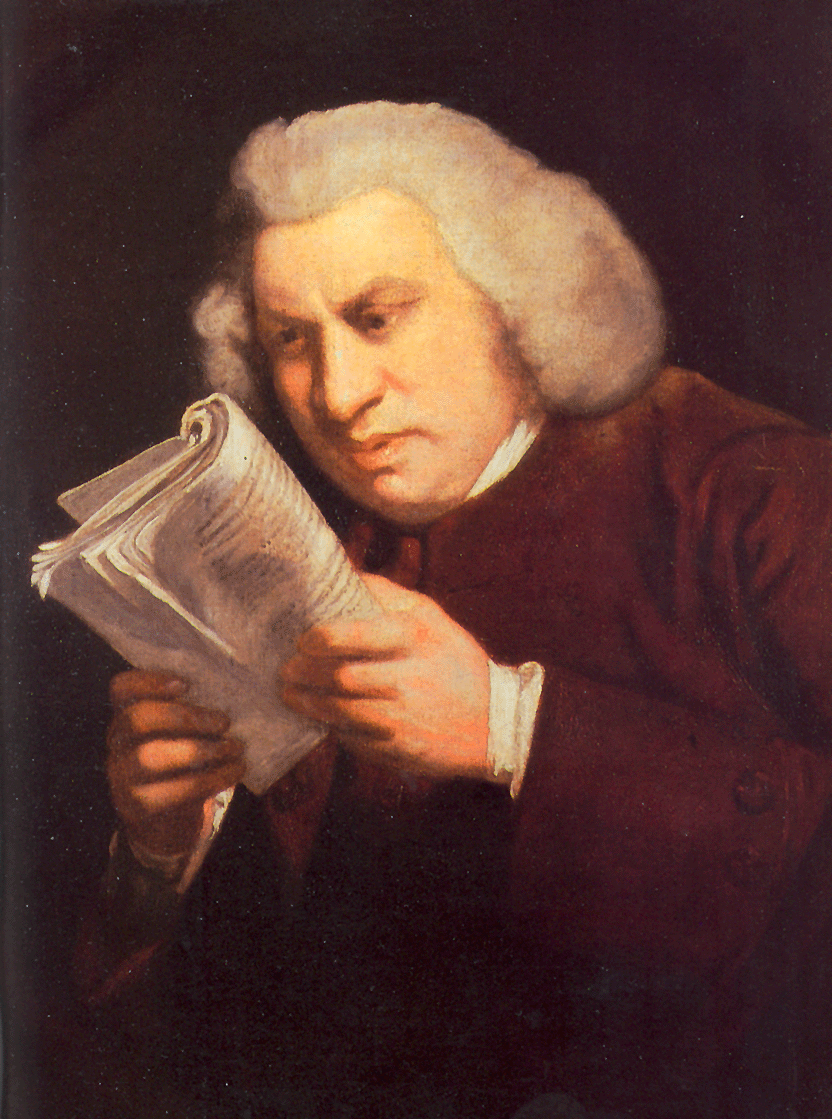
When Dr Johnson famously remarked that patriotism is the 'refuge of the scoundrel' he was actually referring to the Patriotic Party. Johnson was a Tory and wouldn't have written-off the love of one's country, and to some extent, he was right to do so. For patriotism can come in handy, in the war against Fascism it was the Churchillian vision of a determined island nation that held the people mesmerised. It's also worth noting that the great anti-colonial struggles of the last century involved revolutionary nationalism, especially in Vietnam and Cuba. The calls for Irish independence and reunification came primarily from nationalists. Of course, there is the darker side of nationalism, the jingoist harbinger of irredentism and nativism. And it's worth noting that the dark spirit of nationalism is much more common than the progressive and revolutionary possibilities of nationalism. Today we can see the reactionnaire appeals of nationalism against the European Union, while there are active pushes towards independence in Catalonia and Scotland where greater moves to regional autonomy have hardly failed.

It makes sense that the ultra-nationalist defenders of secession are crawling out of the woodwork in Europe at this time. Though this isn't simply the case where independence is concerned. If the referendum had secured Catalan independence recently it seems likely that the new nation would've been quickly subjected to a series of austerity measures. Because once a country of that size has broken-off it would need a new orbit and the European Union offers the strongest alternative. There are progressive arguments in favour of Catalan and Scottish independence. Yet it seems highly unlikely that a fledgling Celtic republic would escape the clutches of neoliberal globalisation either. There's some truth in Portillo's words that the country might easily be transformed into a land of low taxes and a shrunken state sector. In other words, Scotland could easily become a breeding ground for an even more merciless variation on the free-market ideal. At this point we need more unity, not less. This was most potently demonstrated by the demise of Yugoslavia - one of the great tragedies of the last century.

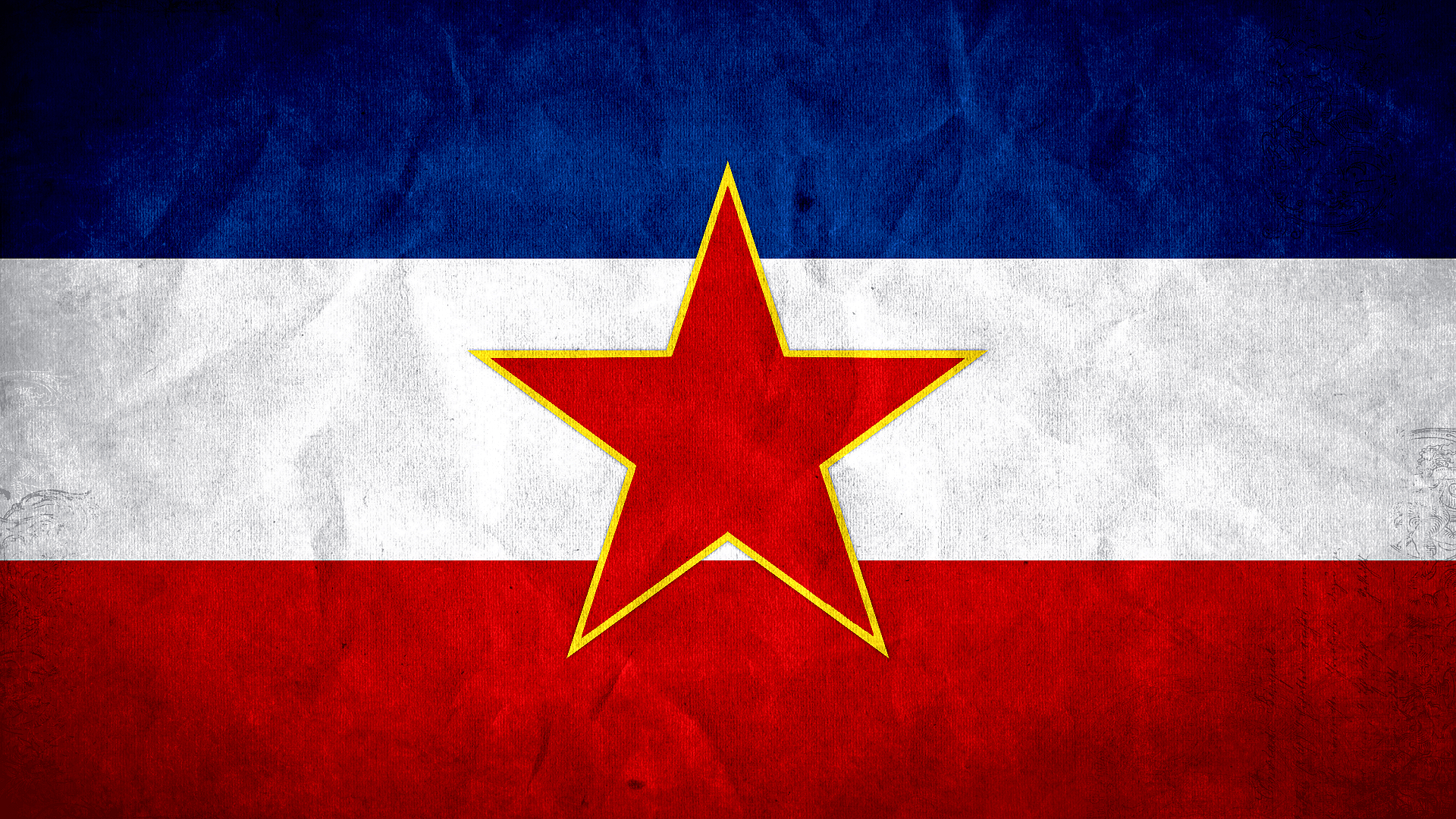
Yugoslavia was a federal socialist system of devolved republics and autonomous regions. It was free of Soviet domination and maintained a multi-ethnic society where Christianity and Islam were practiced side-by-side. All of it was held together under Marshall Tito who inculcated notions of 'brotherhood and unity' into the society as he fought to stamp out the remnants of nationalism in the masses. The state was maintained by a market socialist economy, which featured decentralised cooperatives and worker self-management as well as  a state planning apparatus. It combined the state as a primary mechanism for the organisation of the society and economy, while markets and cooperatives offered secondary mechanisms. The people enjoyed a guaranteed right to a job with a month's paid vacation, as well as free universal health-care and education as part of a comprehensive range of state services. There was never a Soviet-style collectivisation of Yugoslav society, for that may have torn apart the entire project of a country for Southern Slavs.

For a time Yugoslavia prospered with an average rate of growth at 6% and remained a leading model of independent development. The literacy rate reached 90% and life expectancy rose to 72 years. To expand the productive base and increase consumer goods the Yugoslav government borrowed from Western governments throughout the 1960s and 70s. Given that Yugoslavia had achieved development along independent lines (from Russia and not just the US) its federalism came under attack in the 1980s. The dismemberment of Yugoslavia became a concerted US policy as the National Endowment for Democracy began to focus on Yugoslavia as to hasten its breakdown and implement a series of neoliberal reforms. The IMF then began to force an austerity programme on Belgrade as a condition for payments on the country's debt. The austerity measures did not just mean a reduced public expenditure, but huge job losses and wage-cuts for the working. Eventually it would amount to the abolition of workers' self-management in the Balkans.


In spite of the decline of economic conditions inside the country Yugoslavia remained the only socialist republic after the collapse of the Eastern bloc in 1989. The people didn't rise up to overthrow the Communist government despite widespread discontent and rising nationalist sentiment. By now the dream of a Yugoslavia free of the old ethnic strife was dead in the water, with the rise of nationalist demagogue Slobodan Milošević. The Serbian nationalists wanted to hollow out Yugoslavia to establish a Greater Serbia. But the other nationalist movements wanted to break-off from Yugoslavia completely. To hasten the burst of secessionism the US began to yank the chain. In 1990 the Bush administration saw to it that Congress cut-off aid to all Yugoslav republics unless they declared independence within six months. The US demanded elections in all republics and went on to stipulate that every election must meet standards set by the US State Department. Later Italy would try to bribe Montenegro with aid to leave Yugoslavia and join them in the new Europe.

Within two years the US delivered another blow to Yugoslavia in the form of international sanctions to put a halt to all trade to and from the country. The economy quickly dived further into the abyss, unemployment spiralled to 70% while the health-care system collapsed and inflation exploded. Michael Parenti sees this as part of an agenda to turn the Balkans into a Third World developing region and to reverse the achievements of the Communist era. It would be a fractured region of republics incapable of independent development. The economy would be shattered, its natural resources stripped open to exploitation by multinational corporations. The people of Yugoslavia would provide a skilled workforce vulnerable to suppressed wages, as well as a reserve army of labour to be deployed to sink the wages of workers in Western Europe. The designs of neoliberalism to break-up Yugoslavia - only for its people to be rinsed by the forces of globalisation - converged with the aims of nationalists.