Showing posts with label secessionism. Show all posts

Saturday, 29 March 2014

Where was the outrage over Chechnya?


There's plenty of outrage in the West over Russian actions in Ukraine. Where was all this bluster in the 1990s when Russia waged war on Chechnya? Tariq Ali wrote a great article for The Guardian today raising this very question. He concluded:

The Crimean affair led to barely any loss of life, and the population clearly wanted to be part of Russia. The White House's reaction has been the opposite of its reaction to Chechnya. Why? Because Putin, unlike Yeltsin, is refusing to play ball any more on the things that matter such as Nato expansion, sanctions on Iran, Syria etc. As a result, he has become evil incarnate. And all this because he has decided to contest US hegemony by using the methods often deployed by the west. (France's repeated incursions in Africa are but one example.) 
If the US insists on using the Nato magnet to attract the Ukraine, it is likely that Moscow will detach the eastern part of the country. Those who really value Ukrainian sovereignty should opt for real independence and a positive neutrality: neither a plaything of the west nor Moscow.

Putin inherited the legacy of Russian policy in Chechnya. He has capitalised on this enormously over the years in different ways and it's a record worth exploring. In his bid for power Boris Yeltsin had conspired with the leaders of Soviet republics to dissolve the Soviet Union. In the aftermath secessionists in less convenient parts of the former Soviet Union, including Chechnya, which would make a bid for independence from Russia as soon as the old Communist leaders were overthrown. Yeltsin had gotten more than the powers he had sought at home. The Chechen nationalist Dzhokhar Dudayev was elected President of Ichkeria - effectively the independent Chechen state - in the midst of increasing instability and tension in the region. With the eruption of armed conflict in neighbouring North Ossetia the Chechens feared the presence of Russian troops and the prospects of escalation.

Dudayev initiated a state of emergency after Russian troops moved to the Chechen border. He had already faced a coup attempt from his opponents. The opposition would turn to armed means of deposing Dudayev in 1994. By this point Yeltsin was keen to bolster his popularity at home after his economic policies had led to disaster. The instability in Chechnya offered an opportunity for Yeltsin. The Russians lent support to the armed opposition in order to overthrow Dudayev and crush his example of independence. Dudayev held his own from October to November against the forces Yeltsin had mobilised. Eventuating in the Battle of Grozny the Russian government was humiliated after the Chechens captured a large number of military vehicles and personnel. It was meant to be a swift clandestine operation to topple the government.


Still looking for a boost in ratings Yeltsin issued an ultimatum to all factions in Chechnya (though not his own forces) demanding that they disarm and surrender. Knowing that this wouldn’t happen, Yeltsin ordered the Russian army to invade and restore order and defend Russia’s territorial integrity. The Russian Security Council had already set its plans to intervene before Yeltsin even made the ultimatum. The Russian army began bombing the Chechen air capabilities and within ten days the invasion was underway. Just as Brezhnev had mistakenly thought the Soviet invasion of Afghanistan would be successful within weeks the Russians now thought the Grozny government could be toppled. The war would rage for two years before a ceasefire was signed on Russian terms. Dudayev was assassinated. Yeltsin would survive the Presidential elections of 1996. Estimates of the killed range to 100,000 along with 500,000 people displaced.

Thursday, 23 May 2013

The Identity Politics of Reaction.

 
Upon observation the forces of Reaction seem much more adept at identitarian politics, as we have seen consistently for a very long time. It was in the 1970s that the forerunners of the New Right sought to co-op evangelical Christianity as a basis to resuscitate social conservatism and usher in the ensuing culture wars of the 1990s. Around the same time in Iran the collapse of the Shah’s rule created a vacuum into which the radical Islamists moved and crushed the competing tendencies of nationalism and socialism. In the late 1980s and early 90s Europe saw the recrudescence of irredentist ethno-nationalism in Serbia and Croatia to the detriment of Yugoslavia as a socialist federalism. The thoroughly counter-revolutionary and reactionary character of these developments can hardly be ignored with ease. The degree to which we may understand this form of identity politics as a co-optation by right-wing demagogues is a matter worth exploring.
 
One cannot help notice that the language and sometimes the practices of these movements were pilfered from radical traditions. The Catholic rightist Paul Weyrich infiltrated left-wing groups and sought to utilise the similar organising methods to politicise and mobilise Christians into a reactionary electoral base for the Republican Party. Likewise, it was Ayatollah Khomeini who emptied out the Islamic socialism of Ali Shariati only to substitute it for a conservative order within a radical framework. In dying days of Yugoslavia it was Slobodan Milošević and his supporters who appropriated the language of radicalism in condemning their enemies as ‘counter-revolutionaries’. It may be down to the compatibility of particular identity-markers (whether religious or ethnic) with a populist form of politics. In each of these instances we find that the collective identity serves as a means for demagogic leaders to attain power. The key difference is that the Serbs and American Christians can hardly be said to have been repressed in the same way as Shi’a Muslims.
 
Fundamentalism soon became the lynchpin of GOP campaigners and remains so to this day. The politicisation of Christianity came in conjunction with the right-wing reaction to the counter-cultural movements at the level of economics. The basic rights of American workers were soon under an unprecedented assault of Reaganism, while moral issues of abortion, gay rights, drugs and pornography became a means to mobilise millions behind an otherwise bankrupt party-state. It is worth acknowledging that the Islamist forces of reaction were originally mobilised in Iran to help overthrow the Mossadegh government in 1953. Instead of an Islamic regime it was a secular dictatorship which followed as the riots instigated by the CIA and MI6 were used in turn to orchestrate a coup. Khomeini was among the ‘Warriors of Islam’ protesting at the time, he would re-emerge as the Supreme Leader over 25 years later. It was an active policy of American and European governments to support the disintegration of Yugoslavia into splintered sectarian states. This went as far as offering aid to ultra-nationalists looking to secede and refusing aid to the Yugoslav edifice. It was a way to drive a nail into what was left of really existing socialism.
 
We have only to look at post-colonial Africa to find yet more instances of a convergence between identitarian forms of reaction. In the Congo we find the rise of Joseph-Désiré Mobutu brought with it a cultural nationalism opposing all forms of European culture still lingering in the country. As part of the authenticité campaign the suit and tie were banned and the name of the country was changed to Zaire. Mobutu came to power amidst the instability of the 1960s just as socialist democrat Patrice Lumumba was murdered in a coup no doubt supported by the Belgians, Americans and British secret intelligence services. In fact Mobutu was instrumental to the coup and would later to come to dominate the country as a kleptocrat until the 1990s. The soi disant African nationalism of Mobutu’s dictatorship may have functioned as a means of channelling the legitimate grievances of the people ruled by the Belgians through Mobutu. The same process may be found in Zimbabwe where Robert Mugabe maintains a party-state through the appeal to anti-colonial and nationalist sentiment. Stripping away the property of white land-owners has tremendous symbolic value to Mugabe’s regime, only for the property is then handed to the henchmen around the despot backed and funded by the capitalist roaders in Beijing.


Thursday, 3 January 2013

The Refuge and its Scoundrels.


When Dr Johnson famously remarked that patriotism is the 'refuge of the scoundrel' he was actually referring to the Patriotic Party. Johnson was a Tory and wouldn't have written-off the love of one's country, and to some extent, he was right to do so. For patriotism can come in handy, in the war against Fascism it was the Churchillian vision of a determined island nation that held the people mesmerised. It's also worth noting that the great anti-colonial struggles of the last century involved revolutionary nationalism, especially in Vietnam and Cuba. The calls for Irish independence and reunification came primarily from nationalists. Of course, there is the darker side of nationalism, the jingoist harbinger of irredentism and nativism. And it's worth noting that the dark spirit of nationalism is much more common than the progressive and revolutionary possibilities of nationalism. Today we can see the reactionnaire appeals of nationalism against the European Union, while there are active pushes towards independence in Catalonia and Scotland where greater moves to regional autonomy have hardly failed.

It makes sense that the ultra-nationalist defenders of secession are crawling out of the woodwork in Europe at this time. Though this isn't simply the case where independence is concerned. If the referendum had secured Catalan independence recently it seems likely that the new nation would've been quickly subjected to a series of austerity measures. Because once a country of that size has broken-off it would need a new orbit and the European Union offers the strongest alternative. There are progressive arguments in favour of Catalan and Scottish independence. Yet it seems highly unlikely that a fledgling Celtic republic would escape the clutches of neoliberal globalisation either. There's some truth in Portillo's words that the country might easily be transformed into a land of low taxes and a shrunken state sector. In other words, Scotland could easily become a breeding ground for an even more merciless variation on the free-market ideal. At this point we need more unity, not less. This was most potently demonstrated by the demise of Yugoslavia - one of the great tragedies of the last century.

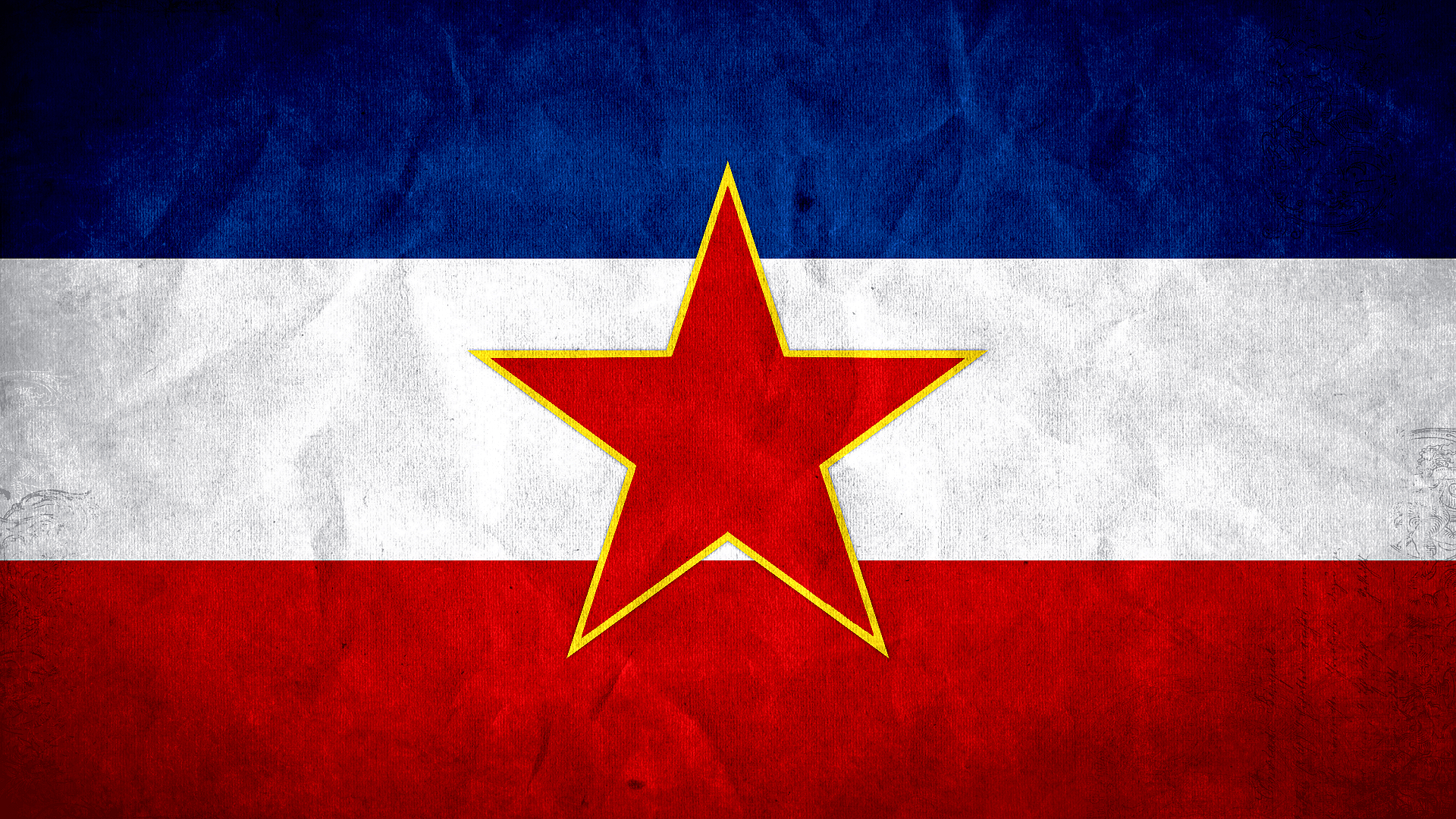
Yugoslavia was a federal socialist system of devolved republics and autonomous regions. It was free of Soviet domination and maintained a multi-ethnic society where Christianity and Islam were practiced side-by-side. All of it was held together under Marshall Tito who inculcated notions of 'brotherhood and unity' into the society as he fought to stamp out the remnants of nationalism in the masses. The state was maintained by a market socialist economy, which featured decentralised cooperatives and worker self-management as well as  a state planning apparatus. It combined the state as a primary mechanism for the organisation of the society and economy, while markets and cooperatives offered secondary mechanisms. The people enjoyed a guaranteed right to a job with a month's paid vacation, as well as free universal health-care and education as part of a comprehensive range of state services. There was never a Soviet-style collectivisation of Yugoslav society, for that may have torn apart the entire project of a country for Southern Slavs.

For a time Yugoslavia prospered with an average rate of growth at 6% and remained a leading model of independent development. The literacy rate reached 90% and life expectancy rose to 72 years. To expand the productive base and increase consumer goods the Yugoslav government borrowed from Western governments throughout the 1960s and 70s. Given that Yugoslavia had achieved development along independent lines (from Russia and not just the US) its federalism came under attack in the 1980s. The dismemberment of Yugoslavia became a concerted US policy as the National Endowment for Democracy began to focus on Yugoslavia as to hasten its breakdown and implement a series of neoliberal reforms. The IMF then began to force an austerity programme on Belgrade as a condition for payments on the country's debt. The austerity measures did not just mean a reduced public expenditure, but huge job losses and wage-cuts for the working. Eventually it would amount to the abolition of workers' self-management in the Balkans.


In spite of the decline of economic conditions inside the country Yugoslavia remained the only socialist republic after the collapse of the Eastern bloc in 1989. The people didn't rise up to overthrow the Communist government despite widespread discontent and rising nationalist sentiment. By now the dream of a Yugoslavia free of the old ethnic strife was dead in the water, with the rise of nationalist demagogue Slobodan Milošević. The Serbian nationalists wanted to hollow out Yugoslavia to establish a Greater Serbia. But the other nationalist movements wanted to break-off from Yugoslavia completely. To hasten the burst of secessionism the US began to yank the chain. In 1990 the Bush administration saw to it that Congress cut-off aid to all Yugoslav republics unless they declared independence within six months. The US demanded elections in all republics and went on to stipulate that every election must meet standards set by the US State Department. Later Italy would try to bribe Montenegro with aid to leave Yugoslavia and join them in the new Europe.

Within two years the US delivered another blow to Yugoslavia in the form of international sanctions to put a halt to all trade to and from the country. The economy quickly dived further into the abyss, unemployment spiralled to 70% while the health-care system collapsed and inflation exploded. Michael Parenti sees this as part of an agenda to turn the Balkans into a Third World developing region and to reverse the achievements of the Communist era. It would be a fractured region of republics incapable of independent development. The economy would be shattered, its natural resources stripped open to exploitation by multinational corporations. The people of Yugoslavia would provide a skilled workforce vulnerable to suppressed wages, as well as a reserve army of labour to be deployed to sink the wages of workers in Western Europe. The designs of neoliberalism to break-up Yugoslavia - only for its people to be rinsed by the forces of globalisation - converged with the aims of nationalists.

Friday, 14 September 2012

What ever happened to Brotherhood and Unity?


Quite some time ago in the middle of a talk about a political union in Europe there was a debate on Newsnight. It was apt that Nigel Farage make an appearance in standard populist colours against the liberal multiculturalist elites. The hairs on the back of my neck stood up as Farage drew a comparison between the European Union and the Socialist Federal Republic of Yugoslavia. The UKIP leader suggested that the reason Yugoslavia collapsed into appalling violence in the 1990s was a result of the imposition of Yugoslavia over sovereign nations in a bid to craft a multiethnic federal system. Thankfully Farage is too thick to comprehend the implications of such an analogy. Effectively it would go as far as an endorsement of the Fascist movements - such as the Ustaša and the Chetniks - that devastated the region before the Partisans triumphed over them. This is nothing unusual, and it's not the first time that the analogy has been drawn between the EU and Tito's Yugoslavia. Farage has deployed it repeatedly.

After all it was the final victory over the Communist-led Partisans who had succeeded where the Left had been defeated in Italy and Greece where the West crushed left-wing movements soon after the War. Out of the warring chaos parts of the Yugoslav Kingdom fell into the hands of Hungarian fascists, as well as German and Italian occupying forces; the Bulgarians and Albanians. Croatia and Bosnia were unified under the clerical fascist Ustaša while the Serb Chetniks fought against the genocidal regime with the aim of building a Greater Serbia. The Croats became a client-state of Nazism where Jasenocav (the fourth largest concentration camp in Europe) was founded with the expressed intention of exterminating Jews, Roma and Serbs. There around 600,000 people were slaughtered. There was a great deal of collusion between the Ustaša and the Catholic clergy, going as far as forced conversions of Jews and Orthodox Christians. The establishment of a socialist Yugoslavia was the ultimate defeat of Slavic brands of Fascism.

The West took the side of Tito's Partisans for pragmatic reasons and the Serb Chetniks as well as the Ustaša of Croatia were defeated. The Soviet Union lent the Partisans support only to portray Tito as an agent of Western imperialism after the split between Tito and Stalin. It was clear that the new Yugoslavia was not going to bow to any foreign power. Instead Tito carved out a particular place for his country as a founder of the Non-Aligned Movement with an apposite place in Europe between the competing superpowers of West and East. The idea was that the unity of Yugoslavia would prevent it from being thrown about by international forces. This is contrary to Farage's warped wish to see a free-market world of nations, where every country is powerless to the onslaught of international finance and multinational corporations. In his invincible ignorance Farage fails to see that British withdrawal from the EU would undermine British sovereignty even more. Likewise Farage cannot understand the implications of what it means to say that the EU is just another Yugoslavia.


It should be kept in mind that there have been many right-wingers who found the sight of Yugoslavia's crumbling into barbarism absolutely beautiful. This differs strongly from the small band of leftists who supported Milosevic out of a misguarded belief that it was the last chance to hold together Yugoslavia. By the time of the explosion of violence it was already too late and Yugoslavia was dead on its feet. What did the Right see in this? Well, the multiethnic composition of the federalism and its dependence on a culture of solidarity could not have repulsed many rightists any more than it did. The Titoist campaigns against nationalist sentiment certainly worry backward types like Nigel Farage. No doubt the Eurosceptics fear a federal state where they will be stamped out. Even more freightening is the possible end of the racial tensions that the Right can exploit to its ends. A culture of solidarity doesn't stop at ensuring improved relations between countries and peoples, it could go as far as to build a strong working-class movement.

After all the primary reason for the policy of brotherhood and unity was to hold together Yugoslavia as a socialist system. Tito could not launch a Stalinesque collectivisation, as it would've torn the country apart. Instead Tito decided to give away power to the republics and build the country into a model of market socialism. It featured a limited place for private enterprise and markets combined with a decentralised state-planning apparatus and workers' self-management. It was a prosperous system of development and growth for quite some time. The average rate of GDP was 6% at one point and the standard of living increased significantly, with the establishment of universal health-care and education came a life expectancy of 72 years and a literacy rate of 91%. Every Yugoslav citizen had a right to a job, unemployment was reduced drastically until the 1980s and every worker had a free month-long holiday every year with pay. There was affordable housing and public transportation across the country, while the borders were held open.

It's this model that the Right despises. It is not coincidental that so many right-wingers wanted to leave the Slavs to slaughter one another. The more honest reactionaries have been blunt in their support for the violence. Michael Savage was an open defender of Serbian nationalists attacking Muslims. Later Savage went on to attack Bill Clinton during the intervention in Yugoslavia. He even labelled the President 'Clintler' with regard to the NATO bombing of Serbia. What else would you expect from this fascist? Then there was Nora Beloff who wrote to The Economist in condemnation of the critics of Serbian atrocities. The way she saw it the Muslims are guilty by virtue of being Muslim, she's of the Israel First brigade you see. In this view the Serbs are just exercising their right to self-defence as the Christians fending off the barbarous Muslim hordes. Hitler said about the same of the Poles. It's about the same line that Karadzic has used to defend his actions - such as sending snipers onto the roof of his hotel to shoot civilians as he made his escape.

Friday, 9 September 2011

Lincoln's Favourite Play.


MACBETH:
If it were done when 'tis done, then 'twere well
It were done quickly. If the' assassination
Could trammel up the consequence and catch
With his surcease success, that but this blow
Might be the be-all and end-all, here;
But here upon this bank and shoal of time,
We'd jump the life to come. But in these cases
We still have judgement here, that we but teach
Bloody instructions which, being taught, return
To plague th'inventor. This even-handed justice
Commends th'ingredience of our poisoned chalice
To our own lips. He's here in double trust:
First, as I am his kinsman and his subject,
Strong both against the deed; then, as his host,
Who should against his murderer shut the door,
Not bear the knife myself. Besides, this Duncan
Hath borne his faculties so meek, hath been
So clear in his great office, that his virtues
Will plead like angels, trumpet-tongued against
The deep damnation of his taking-off,
And pity, like a naked new-born babe,
Striding the blast, or heaven's cherubin, horsed
Upon the sightless couriers of the air,
Shall blow the horrid deed in every eye
That tears shall drown the wind. I have no spur
To prick the sides of my intent, but only
Vaulting ambition which o'erleaps itself
And falls on th'other. 

Thursday, 28 July 2011

Lega Nord's Super Mario.

Behold the fat bastard Mario Borghezio, who once stood in Berlusconi's cabinet as a member of Lega Nord and now has come out to defend the thoughts of Anders Behring Breivik. Borghezio claimed "Breivik's ideas are in defence of Western civilisation." No doubt he has the Islamization of Europe in mind which is leading to the inevitable formation of 'Eurabia'. Notice the focus is on Europe as a kind of organic entity which can be infected by dirty foreigner with an even dirtier culture to purvey. This is no different than the line that the German nation is under threat from a Jewish Communist plot. He also said "Christians ought not to be animals to be sacrificed. We have to defend them." This is just rams home the implications of his earlier statement, it is the standard line of the Fascist, we're under attack and must take drastic actions immediately. All methods are justified in self-defence. For Hitler it was the Holocaust and for Anders Behring Breivik it was the bombing and shooting of almost 100 Norwegians.

The remarks prompted outrage in Italy and widespread condemnation, but Francesco Speroni of Lega Nord came to the defence of Borghezio "I'm with Borghezio. I don't think he should resign. If [Breivik's] ideas are that we are going towards Eurabia and those sorts of things, that western Christian civilisation needs to be defended, yes, I'm in agreement." Keep in mind Borghezio is the same man who once burned the bedding of migrants who had been sleeping under a bridge. Mario Borghezio referred to Ratko Mladic as a "true patriot" and went onto say "The Serbs could have halted the advance of Islam into Europe, but they weren't allowed to do so. And I'm talking of all Serbs, including Mladic." You could easily replace Islam here with Judaism or Bolshevism, replace Serbs with Germans and Mladic with Hitler. This should not surprise anyone, this is a meat-headed shit sack we're talking about! The wider issue is what Borghezio and Lega Nord represent in Italian society, we can find this tendency elsewhere in Europe and it has grown since the recession.

The phenomenon of Lega Nord (which means Northern League in English) emerged in 1991 with the collapse of the Communist Party after the fall of the Berlin Wall led to the break-up of the Soviet Union. The League attracted support from disillusioned conservatives, social democrats and radical leftists let alone plenty of nationalists and the post-fascists of the Italian Social movement. In 1992 it was found that 25% of the supporters were formerly Christian Democrats and 18.5% of former Communists in working-class areas of the North. Bare in mind that the Americans had withdrawn the Cold War level of financial support to the forces of reaction against Eurocommunism. The Communist Party of Italy had tried to take an independent line from the Soviet Union and differentiate itself from Trotskyism whilst looking to base itself on the democratic norms of Western Europe. Once the Communists broke up the Christian Democrats were no longer necessary to prevent the rise of Eurocommunism, which is the reason the Americans and the Mafia had backed the party for so long.

All alternatives to capitalism could be ruled out after 1989 as 'failed experiments' from whence began a post-political order in which liberal values and the market had triumphed. But then the old Establishment was wiped from the table and a space opened up for a new kind of politics. A grand convergence of post-politics and ultra-politics has since occurred within that space, we can trace the meteoric rise of il Cavaliere to the apex of where these two forces meet. Similarly we find Lega Nord's platform is conservative on social and cultural issues, nationalist when it comes to European integration and generally liberal when it comes to the economy. So the cynical opposition to all forms of state intervention is aligned with the affirmation of Judeo-Christian culture and Padanian nationhood. The post-political meets the ultra-political where the deluded and disillusioned coalesce. It's clear that the closed spectrum that runs from technocratic liberal to reactionary populist is too narrow to even seriously address what happened in Norway. We still can't help but blame multiculturalism.

Saturday, 25 June 2011

The Politics of Berlusconismo.

La Rivoluzione Culturale 

For Italy the "End of History" did not just mean the end of the Cold War, the triumph of liberal democracy and global capitalism, it meant the end of politics as it had been experienced for decades. The fall of the Soviet Union led to a kind of domino-effect in Italy, in which the Communist Party collapsed in 1991 and then the Christian Democrats disintegrated in 1994 after the biggest corruption scandal in post-war Italian history. The Establishment was shaken to it's core. The Americans had withdrawn the Cold War level of support for the forces of reaction. The aim of which was to prevent the rise of Eurocommunism in Italy, which was a significant attempt by the Communist Party to take an independent line from the Soviet Union; to embrace the democratic norms of Western Europe and differentiate itself from Trotskyism at the same time. All alternatives to late capitalism were ruled out completely as 'failed experiments' as the mainstream politics collapsed and then came the emergence of Silvio Berlusconi.


The Italian version of Rupert Murdoch soon launched Forza Italia just as the five parties which had governed Italy since 1947 imploded. Since winning a term in 1994 Berlusconi has changed Italy in ways which were unimaginable before Tangentopoli. As social democracy began to 'disappear' the discourse narrowed to the point that the spectrum runs from technocratic liberalism to reactionary populism. The mass-media has been complicit in the imposition of a new discourse narrowed to benefit a regenerated band of old politicians in a supposedly post-ideological era. Berlusconi went even further to fuse technocratic liberalism with reactionary populism. As politics are rendered an apolitical spectacle in which the minimal dignity of state authority is obliterated and the state is left to function as cynically as possible. Ironically it was Berlusconi who was behind the "cultural revolution" in Italy. To paraphrase Erik Gandini, the TV empire Berlusconi built subjected the Italian people to a culture which is a reflection of Berlusconi himself.


The crisis of the early 90s also facilitated the rise of Lega Nord, a secessionist pack of racists, in precisely the working-class areas of Northern Italy which had supported the Communists. These are the natural allies of Berlusconi. It appears that Silvio Berlusconi has a knack for reawakening the darkest tendencies in Italian politics. It was Berlusconi who also brought self-described "post-Fascist" Gianfranco Fini in from the cold in 1994. Until last year, if Berlusconi had died of a Viagra-overdose he would have been succeeded by a man who considers himself the heir to Benito Mussolini. So beneath the buffoonery of the regime there is a sinister strand in which Silvio Berlusconi is truly at home, in the grizzly shit under the surface of the public persona which has been enhanced over the years through plastic surgery and hair-dye. Remember it was Berlusconi who first said "What is on TV exists, what is not on TV does not exist."


As Gandini goes onto explain, il Cavaliere is linked with il Duce on a physical wavelength as both of them were very physical in a way that Italian politicians are not normally. Berlusconi used his body language, his virility and even his smile to reach people in a way that the bespectacled politicians of the Establishment cannot. He resurrected the same kind of physicality as Mussolini. All the while he remains totally contemporary, Berlusconi belongs to the post-political era of savvy managerialism which can easily be imported from the TV industry. In the world of television it is all about emotive imagery and the consequent impressions. The way Berlusconi used the attack on him in Milan served him well, the scandals were 'disappeared' from the media for a while and he could play the victim even as he is the most privileged man in the country. It is about gut reactions, passions and rages. This is the way to turn TV stars into politicians as Berlusconi has done in the past.


As il Cavaliere has resurrected the "Fascism Lite" of Italy, so it could be that he embodies Italian ultra-politics. Slavoj Žižek would specifically designate forms of right-wing populism and fascism as ultra-politics. The ultra-political leader is charged as the commander-in-chief to destroy the enemy, a military task that forms the basis of his legitimacy. Rather than the regulated opposition between social antagonists, the political here requires the physical destruction of enemies. The enemy is whoever poses a threat to our way of life, which is decided by the leader. As ultra-politics is authoritarian by definition, the depoliticisation of conflict is accomplished through the militarisation of politics. This is done as the conflict is reformulated as between "us" and "them", where there is no common ground for symbolic conflict. The class struggle is reformulated in order to instigate a working-class rebellion against the corrupt elites and the corrosive effects of immigration.

Silvio Berlusconi presents himself as the stereotypical Italian male: corrupt, sexually promiscuous and bombarded by legal problems. To the average voter, this says "I am one of you." The mockery of politics along with the larger than life persona of Berlusconi functions to depoliticise the most political of events. The persona feeds into the populist paranoia of anti-communism and anti-immigrant campaigns.  Anyone who opposes him - which includes the majority of the population - is a part of the corrupt elite of communists which has imposed immigration on Italy and wants to open the floodgates of African immigrants into the country. The anti-political tendency in society can bifurcate into two seemingly separate strands, business-oriented authoritarianism in one corner and militant anti-statism in the next. The potential forms of which each take can be horrifying, just take the Oklahoma City Bombing which was a reaction of the angry white men against Big Government that was to hold responsible for all evils in society.


It is not that Berlusconismo is purely anti-political or ultra-political, but rather it is the apex at which anti-politics meet ultra-politics in a way which has changed Italy in ways that were unimaginable before Tangentopoli. The natural reaction to the unprecedented corruption scandal in a post-political age was disillusionment with the political class in general and despair at the Establishment. The anti-political Forza Italia offered a libertarian line originally, which was highly popular in the North. Typically the party consisted of the cynics who once filled the ranks of the fallen Establishmentarian parties and has picked up the vote of the disillusioned. The rise of Berlusconi as a political force has complimented the "cultural revolution" - which turned his values into national values - he had already achieved before he ever ran for office. The fallout from the Cold War necessitated a resurgence of the radical Right as the only force which could take-up the popular appeals of class against the Left.