Showing posts with label free trade. Show all posts

Tuesday, 10 February 2015

Trade versus democracy.

 
The debate on the European Union is largely framed in terms of immigration policy and outrage around vague legislation drawn up in Brussels and imposed on the rest of us. In actuality, the worst aspects of the EU project can't even be discussed - namely the free trade agreement to integrate European and American markets. It puts the welfare states of Europe directly in the firing line of corporate power. Here's an excerpt from my article at Souciant:

The most heavily-criticized part of TTIP is what is referred ISDS (Investor-State Dispute Settlement) which empowers companies to sue national governments when their profit-making is threatened by legislation. As its critics have argued, such a mechanism would specifically discourage regulatory practices, and guard against shifts towards progressive tax rates.  It would also further entrench the economic reforms of the last four decades, and raise international obstacles to any government looking to change course. The reason why it isn’t critically discussed in debates like that which took place between Clegg and Farage, is that TTIP is considered to be a fait accompli amongst Britain’s main political parties. Fiscal neoliberals, they all agree on the necessity of economic union with the United States. 
Tellingly, another side of this consensus is support for American-style health care privatization. The Health and Social Care act (2012) allows 70% of NHS contracts to be farmed out to private companies. TTIP will extend this, not just to British companies, which is bad enough, but to US companies seeking to enter the UK healthcare market. At the same time, the Cameron government has underfunded the NHS by increasing funding at 1%, while the costs of the health system rise at a much higher rate. Of course, the current coalition has spent £3 billion on a bureaucratic overhaul to ‘devolve’ power to the doctors.

Saturday, 29 March 2014

Nick Clegg has Only Himself to Blame.


Some of you may have tuned in to the LBC debate between Nick Clegg and Nigel Farage on the European union. This spectacle was hosted by reactionary lard-arse Nick Ferrari. It was everything one would expect. Nothing outside of the oscillation between mainstream liberalism and nationalism came up and this debate can largely be understood as a sign of the rightward trend of British politics over the last four decades. Liberal internationalism and conservative nationalism feed into one another, their relationship is dialectical, both oppositional and complimentary, and ultimately, they spiral into the same downward trajectory. It's no coincidence that the Liberal Democrats signed up for the Coalition with a party torn over Europe and he now finds himself poised against UKIP. For the Conservatives, Nick Clegg is the canary in the mineshaft and little more.

It must have been a disparaging experience for Liberal Nick. No longer a sponge sucking up all those disenchanted votes Nick Clegg stood as the establishment figure with his old place usurped by Nigel Farage of all people. Of course, the underdog status of UKIP is a falsehood. Nigel Farage railed against the bankrupt establishment, which Clegg now embodies so thoroughly, all the while UKIP stands in necessary relation to the status quo. He was probably expecting reason to triumph over reaction. He littered his phraseology with references to 'dogma' and appealed to common-sense. Bad moves by definition in this kind of debate. I don't know how he could have expected it to have gone his way. Without any grounding to maneouvre on economic and domestic policy (where he is wedded to Conservative policy-makers) the only issue of contention was going to immigration. That is hardly a threat to the Conservative Party. And of course UKIP has no interest in combating neoliberalism.

Outside of conventional politics the demagogue sets himself and poses as raising the real questions, the dangerous questions, to which the Establishment then reacts to preserve itself. As with Romania we find that the UKIP lot are playing this game again. The real issue that the people in countries like Romania and Bulgaria are fleeing from social conditions produced by neoliberal globalisation cannot be raised. Should we repair the damage? Now that's a dangerous question! It would only mean that the level of immigration would be based on the free movement of people, rather than on economic desperation. The Lib Dems can't make such a point because they've accepted the neoliberal model prescribed by Brussels, Whitehall, and Washington; while the only criticism UKIP may wage is that this hasn't gone far enough in tearing through all forms of state-ownership. This is why a key issue was never mentioned, namely the EU-US free trade deal currently being implemented by stealth.

The Liberal Democrats emerged from the consolidation of gains for a third party after the founding of the Social Democratic Party from the right-wing MPs who abandoned Labour. The loss of 10% of their MPs helped to secure Labour's defeat and a victory for Thatcher in 1983. So you can see how far the Party has come since helping to divide up the voters for Thatcherism thirty years ago. They have now graduated to joining those forces they helped deliver Britain to in the 1980s. This is the stinking filth of the body of liberalism: inaction, hot-air, and endless compromise. It's clear the trilateral consensus are not only complacent in the face of the nationalist reaction to the rapid internationalising trend of capitalism. We see this quite well demonstrated in Ukraine where a coalition of neoliberals, conservatives, ultra-nationalists, and oligarchs, have seized power only to wrench the country into the orbit of the European Union and open it up to the IMF prescription for an economic miracle.

Meanwhile here in Britain we find UKIP is looking to force the Conservatives further and further to the right as it condemns the EU. Clegg doesn't deserve our pity for his pathetic belief that if he just said the right words the audience would dutifully nod their heads for him. He was asking for the kicking he got.

Wednesday, 13 November 2013

The Great Rip-Off.

 
There was hardly any outrage in the air when the Health and Social Care act of 2012 was passed. The act stipulates that NHS doctors take control of their budgets as well as permit them to buy services from private companies. Another stipulation is to allow hospitals to use up to 49% of hospital beds and theatre time to generate private income. The section 75 regulations stipulate that the sectors of the NHS which can’t be ‘provably’ run exclusively by public provision will have to face competition from the private sector. Lord Phillip Hunt said that the regulations will “promote and permit privatisation and extend competition into every quarter of the NHS regardless of patients interests.”[1] He added that the reform will make privatisation the default position as the burden of proof is placed on the shoulders of any commissioner opposed to private health provision.[2]

The Chair of the Royal College of General Practitioners has stated that these reforms “remove the legal framework for a universal, publically provided, publically managed, publically planned, democratically accountable health service.”[3] Concurrent to these reforms the Coalition has been underfunding health services. In the first budget of the Coalition government, George Osborne announced a 1% increase in funding for the NHS. Yet that amount falls short of the pace at which health costs rise, which is sometimes 2% or 3% above inflation. There is a correlation to this policy. Waiting lists increased by 43% from 2010 to 2012.[4] Fortunately for David Cameron the media has yet to raise more than a whimper of questions about these reforms. It was Lansley who claimed that the NHS has to face cuts for a shortfall of £10 billion to be avoided.[5] Then this year came talk of a £30 billion shortfall at the end of the decade.[6] The government’s prescription: cuts, cuts, cuts.

This is the apogee of decades of health-care policy in this country. The Thatcherites first introduced private companies in the area of cleaning services and even went further to provide contracts to private companies willing to invest in the construction and operation of services. Public-private partnerships were established, effectively subsidising private companies with tax-payer money. The cleaning contracts commissioned from the private sector have led to rising costs for hospitals and a decline in hygiene standards. Out of this came the rise in MRSA.[7] New Labour continued and furthered these developments. The performance targets based on market standards were expanded and health-care professionals were left jumping through even more hoops. The rhetoric of New Labour was decentralisation they offered to ‘free’ hospitals from central control and allow local people to ‘own’ their own hospital.[8]

As of 2005 the UK government was looking to shift 10% of the work of existing NHS organisations to the private sector.[9] The NHS signed contracts with eight different health-care providers to set up fast-track treatments centres to treat 250,000 patients over five years. The programme forced some NHS hospitals to close down wards. In 2011 Andrew Lansley was forced to admit that 60 hospitals were on the “brink of financial collapse” as a result of public-private partnerships first started by John Major and expanded under Blair. The hospitals could not meet the high payments being demanded by private companies. The cost of these gluttonous companies feeding off of the public health service has been bared all along by the British tax-payer. Care homes for the elderly have been privatised just as prisons and now the post office have been. The pig-out goes on.

Yet these developments are not unprecedented around the world. In Canada it was the Conservative Mike Harris who introduced the public-private partnerships in Ontario to open up public assets to corporations in the financing of new facilities and the operation of support services.[10] Diagnostic clinics for MRIs and CT scans were opened up to private companies.[11] Many have introduced all kinds of hidden costs, with one place even charging $100 for an orange juice.[12] These measures were expanded and deepened by Liberal and Conservative administrations. Almost 30% of Canadian health expenditure came from private payments in 2010.[13] More and more there are user fees for those without private insurance and physicians can block treatment if you don’t pay up. Private health-care payments account for 3.1% of Canadian GDP. The spread and scope of private clinics is being expanded still.[14]

Meanwhile in Australia the government of Tony Abbott has confirmed that they will be pursuing the privatisation of Medibank and has not ruled out any further privatisation schemes.[15] Just as the British health system has been underfunded the Australian equivalent has endured cuts in the number of public hospital beds from 74,000 to 54,000 from 1983 to 2009.[16] Effectively this means a 60% cut when the growth in population is taken into account.[17] The Rudd government excluded from the commission’s review, the current 30% rebate for private insurance, which currently costs $3.7 billion annually, so as not to antagonise the insurance companies.[18] The successive Gillard government initiated an austerity programme leading to cuts being set to health budgets in New South Wales of $3 billion, $1.6 billion in Queensland and $616 million in Victoria.[19] So the incremental process of privatisation is not contained to this tired little island.

The forces behind these shifts are not just national but international. The yet to be finalised free-trade deal between the US and the EU may well have troubling implications for the future of universal health-care throughout the EU and not just in the British Isles. It looks like the agreement will open up public services – including health – to private investment and ownership.[20] It would appear as though the Bolkestein directive has only been reconstituted in its mission to see the European Union become a mere managerial edifice for a liberal market economy. At the same time we can see Obama has initiated a series of conservative health reforms in one of the few civilised countries without universal coverage. In the sectors that have profited from the chaos of the American situation there are keen eyes for the potential gains in plundering the NHS. We have been denied a debate on the privatisation of health-care, but as we aren't going to be given one. We should decide for ourselves what kind of society we want to live in and take action.

This article was originally written for the Heythrop Lion.


[2] Ibid.
[3] Ibid.
[8] Ibid.
[9] Ibid.
[11] Ibid.
[14] Ibid.
[17] Ibid.
[18] Ibid.

Thursday, 3 January 2013

The Refuge and its Scoundrels.


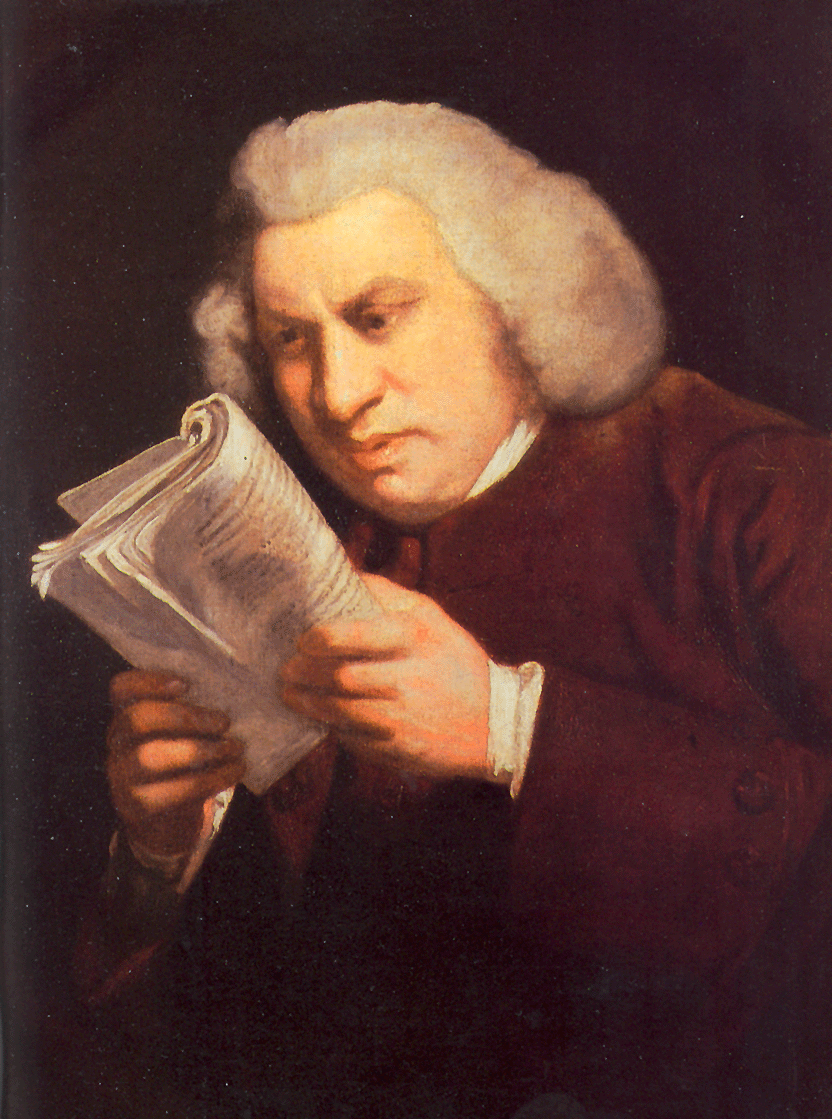
When Dr Johnson famously remarked that patriotism is the 'refuge of the scoundrel' he was actually referring to the Patriotic Party. Johnson was a Tory and wouldn't have written-off the love of one's country, and to some extent, he was right to do so. For patriotism can come in handy, in the war against Fascism it was the Churchillian vision of a determined island nation that held the people mesmerised. It's also worth noting that the great anti-colonial struggles of the last century involved revolutionary nationalism, especially in Vietnam and Cuba. The calls for Irish independence and reunification came primarily from nationalists. Of course, there is the darker side of nationalism, the jingoist harbinger of irredentism and nativism. And it's worth noting that the dark spirit of nationalism is much more common than the progressive and revolutionary possibilities of nationalism. Today we can see the reactionnaire appeals of nationalism against the European Union, while there are active pushes towards independence in Catalonia and Scotland where greater moves to regional autonomy have hardly failed.

It makes sense that the ultra-nationalist defenders of secession are crawling out of the woodwork in Europe at this time. Though this isn't simply the case where independence is concerned. If the referendum had secured Catalan independence recently it seems likely that the new nation would've been quickly subjected to a series of austerity measures. Because once a country of that size has broken-off it would need a new orbit and the European Union offers the strongest alternative. There are progressive arguments in favour of Catalan and Scottish independence. Yet it seems highly unlikely that a fledgling Celtic republic would escape the clutches of neoliberal globalisation either. There's some truth in Portillo's words that the country might easily be transformed into a land of low taxes and a shrunken state sector. In other words, Scotland could easily become a breeding ground for an even more merciless variation on the free-market ideal. At this point we need more unity, not less. This was most potently demonstrated by the demise of Yugoslavia - one of the great tragedies of the last century.

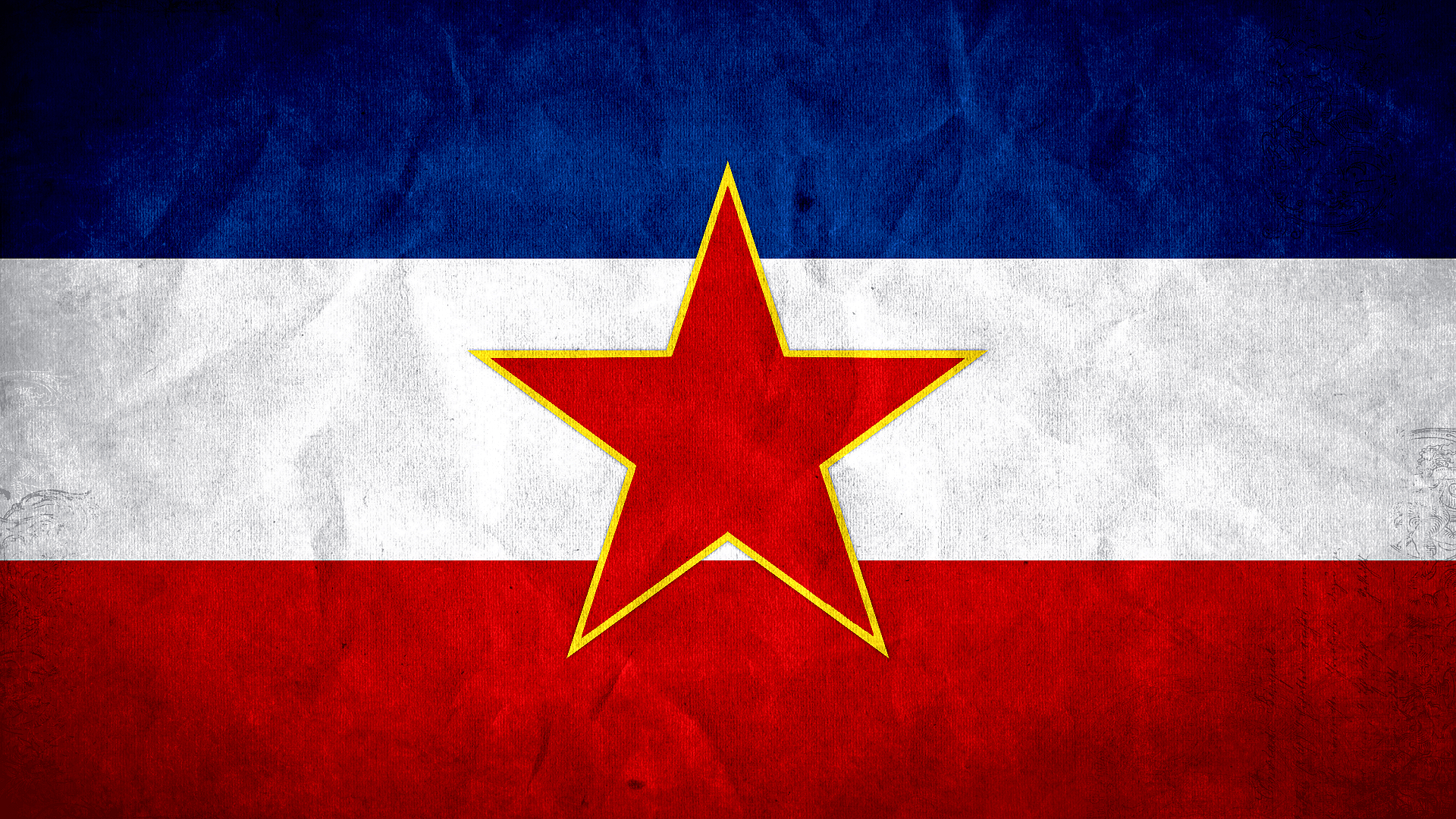
Yugoslavia was a federal socialist system of devolved republics and autonomous regions. It was free of Soviet domination and maintained a multi-ethnic society where Christianity and Islam were practiced side-by-side. All of it was held together under Marshall Tito who inculcated notions of 'brotherhood and unity' into the society as he fought to stamp out the remnants of nationalism in the masses. The state was maintained by a market socialist economy, which featured decentralised cooperatives and worker self-management as well as  a state planning apparatus. It combined the state as a primary mechanism for the organisation of the society and economy, while markets and cooperatives offered secondary mechanisms. The people enjoyed a guaranteed right to a job with a month's paid vacation, as well as free universal health-care and education as part of a comprehensive range of state services. There was never a Soviet-style collectivisation of Yugoslav society, for that may have torn apart the entire project of a country for Southern Slavs.

For a time Yugoslavia prospered with an average rate of growth at 6% and remained a leading model of independent development. The literacy rate reached 90% and life expectancy rose to 72 years. To expand the productive base and increase consumer goods the Yugoslav government borrowed from Western governments throughout the 1960s and 70s. Given that Yugoslavia had achieved development along independent lines (from Russia and not just the US) its federalism came under attack in the 1980s. The dismemberment of Yugoslavia became a concerted US policy as the National Endowment for Democracy began to focus on Yugoslavia as to hasten its breakdown and implement a series of neoliberal reforms. The IMF then began to force an austerity programme on Belgrade as a condition for payments on the country's debt. The austerity measures did not just mean a reduced public expenditure, but huge job losses and wage-cuts for the working. Eventually it would amount to the abolition of workers' self-management in the Balkans.


In spite of the decline of economic conditions inside the country Yugoslavia remained the only socialist republic after the collapse of the Eastern bloc in 1989. The people didn't rise up to overthrow the Communist government despite widespread discontent and rising nationalist sentiment. By now the dream of a Yugoslavia free of the old ethnic strife was dead in the water, with the rise of nationalist demagogue Slobodan Milošević. The Serbian nationalists wanted to hollow out Yugoslavia to establish a Greater Serbia. But the other nationalist movements wanted to break-off from Yugoslavia completely. To hasten the burst of secessionism the US began to yank the chain. In 1990 the Bush administration saw to it that Congress cut-off aid to all Yugoslav republics unless they declared independence within six months. The US demanded elections in all republics and went on to stipulate that every election must meet standards set by the US State Department. Later Italy would try to bribe Montenegro with aid to leave Yugoslavia and join them in the new Europe.

Within two years the US delivered another blow to Yugoslavia in the form of international sanctions to put a halt to all trade to and from the country. The economy quickly dived further into the abyss, unemployment spiralled to 70% while the health-care system collapsed and inflation exploded. Michael Parenti sees this as part of an agenda to turn the Balkans into a Third World developing region and to reverse the achievements of the Communist era. It would be a fractured region of republics incapable of independent development. The economy would be shattered, its natural resources stripped open to exploitation by multinational corporations. The people of Yugoslavia would provide a skilled workforce vulnerable to suppressed wages, as well as a reserve army of labour to be deployed to sink the wages of workers in Western Europe. The designs of neoliberalism to break-up Yugoslavia - only for its people to be rinsed by the forces of globalisation - converged with the aims of nationalists.

Thursday, 1 November 2012

What about Mali?

Yesterday.

In early 2012 the US was seen as turning a blind eye to the Tuareg rebellion, at least by many Malians who find it unlikely that the US would not notice the return of many of Gaddafi's fighters-for-hire to Northern Mali. The Malian military overthrew Amadou Toumani Touré because he was seen as too ineffectual in fighting the Tuaregs. A popular view in the country was that Touré had allowed soldiers to be killed defenselessly. Captain Amadou Sanogo seized the healm once Touré was expelled from the country. Sanogo was smart enough to make the usual pronouncements of working to rescusitate democracy and the state's sovereignty. Interestingly, Amadou Sanogo was trained in the US and more than likely had the approval of the US State Department to overthrow Touré. It looks as though the era of coups is not over after all. Nevertheless the military coup failed to prevent the Tuaregs from seizing the North about ten days later. It was then that the Tuaregs declared the North to be the independent state of Azawad, it would seem with Iyad Ag Ghaly at the healm.

The international community has not recognised the declaration of independence. In the new state of Azawad we know that the MNLA has not solidified its hold over the whole territory. There is Ansar Dine, a Jihadist group with alleged ties to 'al-Qaeda in the Islamic Maghreb', which has the aim of unifying Mali under Shariah. The French seem to be leaning towards a 'humanitarian intervention' to restore the South's dominion over the North. Alternatively, there has been some discussion about the prospect of an African-led intervention, probably due to the strained resources of the imperial triumvirate. The Germans have expressed a willingness to train Malian troops. Meanwhile, the Islamist leadership of the forces in Azawad have threatened to launch an assault on Mali's capital if the intervention goes ahead. The drumbeat of war was playing at The Guardian where the case for intervention was laid out on October 17th. The case against intervention was laid out as well, in standard liberal practice - the illusion of neutrality.


In case you haven't heard of Mali, it's the seventh largest country in Africa with a population of around 15 million people. Like many African countries Mali was a French colony until it became independent in 1960, incidentally the demands for Tuareg autonomy predate independence. As for the economic conditions, Mali is built on agriculture specifically cotton in the South and cattle in the North of Mali which has been damaged by American and European economic policies. Around half of the population live on less than $1.25 a day. This remains so even as prospectors are keen to find gold and oil in Mali, while narcotraffickers use the country as a midway point to Europe. The life expectancy in Mali is about 48 years for Men and 52 years for women. In cultural terms Mali is very diverse, 90% of the population are Muslim, 1% are Christian and 9% adhere to an "indigenous religion", though it's not uncommon for Muslims to blend their beliefs with traditional animism. Notably the majority of the population live in the South, while the Northern chunk of the country is actually far larger and extends into the Sahara.


Today.
 
The economic situation in Mali has long been exacerbated by Western policy. The US government subsidises American cotton farmers with more money than the Malian government spends in it's entire budget. Nor can the Malians compete with the Europeans, since the EU subsidises each farmer with 500 euros per each cow and that is even more than the per capita GDP in Mali. The Minister for the Malian economy once said: "We don't need your help or advice or lectures on the beneficial effects of abolishing excessive state regulation; please, just stick to your own rules about the free-market and our troubles will basically be over." His words fell on deaf ears in America and Europe. The politicians placing tarrifs on imported goods and restrict imports by establishing administrative barriers often claim to be "putting country first". Clearly capitalism is not synonymous with economic liberty, whether it be a free-market or free trade. All of this I noted a couple of years ago, and it should kept in mind that Islamism is typically divorced from economic doctrine.

This is where the Tuaregs reside and have long demanded autonomy from the central government in the South. And it's not an illegitimate claim as the nation-state is not an African phenomenon, rather it was an imposition of European colonialism. But that's not to say that these countries can just be torn apart. The Tuaregs could be seen as similar to the Kurds, a desert people who are on the move and reside in countries such as Algeria and Niger. It wasn't until 2012 that the Tuaregs demanded total independence. This may have been avoided had autonomy been granted to the Tuaregs sooner. Incidentally the Obama administration has reached out to the Algerians, with talk of an African-led intervention. It's important to understand this crisis with regard to the NATO intervention that helped to finish off the Gaddafi regime in Libya. Mali's most important neighbours are Algeria, Niger and Burkina Faso, though it was Libya which intervened in Malian affairs under Colonel Gaddafi. Now it looks as though Gaddafi's fall has affected Mali.

Ironic as Gaddafi was the mediator of negotiations between the Malian government and the Tuareg rebels. Near the desperate end the Colonel had even enlisted Malian mercenaries, including Tuaregs, to fight the rebellion. It seems as though the mercenaries passed into Mali with new arms and confident in their experience of a lost battle. It would seem that this is the sort of situation that has already gone too far in its very happening. The Tuaregs have a legitimate grievance, the claim to autonomy was a legitimate one. The hybridity of Malian society, including among its Muslims, shouldn't be forgotten. This is as much a threat to animist Muslims and the remnants of Sufism as it is to Malian Christians and the descendents of slaves. Of course, it follows that the Islamists tearing down Timbuktu's cultural heritage and looking to silence all music is not a legitimate expression of this grievance or any other for that matter. There's the very real possibility that this will become another front in the imaginary culture war between Islam and the West. This remains so if the conflict is left to stew as it was in Sudan.