This is one of the more maligned of Chomsky's interviews on YouTube. My own view is that we need a more sophisticated debate on pornography, as an industry, and economic model, rather than falling into the dichotomy between free-choice liberalism and moralistic calls for censorship. I don't think Chomsky's perspective falls into either of the above, but I think it falls short of acknowledging the complexity of the issue at hand. Even if we eliminated conditions of degradation and humiliation it wouldn't rule out the possibility of pornographic production beyond such conditions.
Showing posts with label positive liberty. Show all posts
Showing posts with label positive liberty. Show all posts
Thursday, 10 April 2014


Thursday, 8 December 2011
The General Will?

A
great number of liberal critics have charged Jean-Jacques Rousseau as one of the
progenitors of totalitarianism insofar as Rousseau inspired GWF Hegel and Karl
Marx thereby setting some of the wheels in motion towards really existing socialism. It is true that Rousseau was a critic of
equality before the law and the notion of private property. The interventionist
state implied in the opposition to the market society of individual
property-owners seems at odds with fundamental ideas of liberalism.[1]
The blunt advocacy of ‘force’ to compel people comes across as authoritarian.
Let alone the distinction between the general will and the will of all seems to
posit an opposition between what people might decide and what they should
decide. The insistence on the indivisibility of sovereign power seems to
eliminate any possible system of checks and balances which are given in a
liberal democracy. We are lead, by this view, to see Rousseau as at least on
the slippery slope towards authoritarianism.
If
we follow on this line of thought we might take Rousseau as a proponent of
positive liberty on the grounds that he holds happiness and freedom lies in the
individual setting aside their own particular wills and finding their true
freedom by aligning themselves with the general will of the people. It may be
necessary to ‘force’ people to be free, specifically the people who did not
realise that their best interests were in line with the Common Good.[2] It
has been said that Rousseau’s outlook is much more complicated for the reason
that the particular notions of freedom evoked in his work do not fit easily
into the distinction between positive and negative liberty.[3]
The rejection of slavery comes out of an adherence to a notion of freedom as
non-subjection to the particular will of others and this seems in line with the
liberal tradition of negative liberty. But Rousseau goes further to the claim
that the basis of legitimate authority is ‘agreed convention’ and rests on this
same basis of non-subjection.[4] The
aim of The Social Contract was to
uncover a ‘form of association’ in which each individual is as ‘free as
before’.[5]

In The Social Contract Rousseau makes a
distinction between three forms of freedom: natural, civil and moral.[6]
Natural freedom is the absence of all restraints people experienced in the
state of nature; the only possible impediments are the forces of the individual.
Only the physical power of others could impede such a freedom, the only form of
ownership was a form of physical possession but there were no obligations to
others. When we become citizens of a society we forfeit natural freedom as to
attain civil freedom. We can understand civil freedom as the freedom guaranteed
by its limits, or more specifically, the general will. The limits imposed are
the reason to associate in a civil state, the bi-product of this association
rather than the reason for it is moral freedom. This kind of freedom should be
understood as the submission to laws prescribed to oneself. It might be broken
down as a formula: each person only obeys himself and remains as naturally free
as before; each person only obeys himself and remains as civilly free as
before; by these means each person remains as morally free as before.
It
is important to note that moral freedom seems to presuppose a democratic system
whereby we can prescribe laws onto ourselves. This is a bi-product of
association in society rather than its ultimate aim, whereas civil freedom is
the freedom maintained through the limitations set by the general will. This
may seem dangerously close to the suggestion that the agreement we set into is
not in itself a guarantee of freedom, but it might lead to a greater freedom by
accident. But the general will arises out of the will of each individual, it is
where we find our true interests, so submission to the general will is not
subjection in the way Rousseau understood it. All of this seems to presuppose a
democratic system and is in accordance with Rousseau’s emphasis on autonomy
over subjection. It was the dependency of the poor on the rich, and vice versa,
which was created and sustained by inequality. It would seem the idea here is
that the citizenry should be bound by the laws forged in democratic
participation, which they have participated in making, even if a citizen does
not agree with them.
The
point being to prevent the laws from being undermined by a particular will. The
laws would apply to all and arise from all. There are no exceptions and any
opposition to the laws would be intolerable as it would undermine the whole
framework at a fundamental level. The law has to be enforced and since these
laws have been self-prescribed there is no violation of freedom, at least in
Rousseau’s terms. This seems to run against the individualism of liberal
thought, if the law is one we prescribed to ourselves through collective
decision-making then the opposition to it is not just ‘individualistic’. It is
ideological because it is more so about the egalitarian order Rousseau
advocated rather than the framework which is meant to guarantee such order.[7] Rousseau
thought individuals might have to be ‘forced to be free’ in order to guarantee
the conditions whereby individuals could coexist freely and equally. This is
down to the trajectory of history, particularly in the last century, which saw
the rise and fall of socialist states around the world. The need to refute
Marxism in the Cold War went as far as looking to uproot the ‘seeds’ of
totalitarianism to Rousseau and even as far back as Plato.[8]

As
sovereignty is based on the citizenry through which the general will is
expressed, it is directed towards the Common Good by the general will and
cannot be shaken by the particular wills of individuals – which are preoccupied
with preference rather than aimed at equality. Sovereignty is indivisible and inalienable;
it derives its being from the sanctity of the contract into which the people have
entered. The general will cannot be ‘delegated’ nor can sovereignty be
transferred as it is the only legitimate form of representation.[9]
The general will is the will of the body of the people, the will is either
general or it is not. It holds legal authority because of its vital role in the
establishment of sovereignty. This is where Rousseau states bluntly that the
division of sovereignty, of power from will, of legislature from executive. The
power to raise taxes, declare war and so on must rest within reach of the
people, this is the application of sovereignty rather than the thing itself.[10]
Sovereignty is really about the capacity of the people to deliberate and direct
the state.
The
establishment of society is only possible when the interests of individuals
converge rather than stand in opposition. The Common Good is essential to the
foundation of society and from there it is easy to see why society should be
governed in the common interest. We are subject to no one’s will but our own in
the sense that the laws enforced are those which we have willed. This is the
reason that the general will is not a violation of autonomy and a notion of freedom
as non-subjection can remain. Rousseau holds that once the citizenry become
servile to a ‘master’ then sovereign authority comes to an end and the body-politic
is destroyed. Consent remains important as the decrees handed down by a ‘master’
could pass for the general will, but only if the sovereign authority does not
oppose them even though it is free to do so. The government is not the
sovereign itself, rather it is the intermediate body between subjects and
sovereign, whereby mutual correspondence is ensured through the practice of law
and the maintenance of freedom.

Clearly
there is a tension in the work between the democratic conception of general
will as what the citizens of the state have decided together and the
transcendental conception where general will is the incarnation of the
citizens' common interest in abstraction from what any of them actually wants.[11] We might be led to interpret the argument as
specific of the right conditions and subject to the right procedures whereby
citizen legislators may converge on laws that correspond to the common
interest. The state lacks legitimacy whenever these conditions and procedures
are absent. So the theoretical state, which Rousseau stood for, may exercise
authority over its citizens even though really existing states fail to meet the
criteria for legitimacy. This is where Rousseau might be tied in with the
anarchist tradition. But it has to be noted that the transcendental conception
seems to be more in accordance with Rousseau’s view that the best kind of
government is an elective aristocracy. This has even more in common with the
liberal system of representative democracy, where elected officials hand down
decrees.[12]
It
is difficult to say definitively whether or not Rousseau stood for an
authoritarian state. It might be said that the conception is an authoritarian
one insofar as it doesn’t affirm classical liberal doctrines of individualism,
that the state may be a tool for shaping society, institutions and even people.
There are problems with the institutions that Rousseau advocates and there are
indeed illiberal aspects of his thought. But there are also similarities
between Rousseauian ideas and the liberal tradition, we also shouldn’t lose
sight of the anarchist strain running through Rousseau’s work. To some extent
whether or not the supposed authoritarianism of Rousseau is problematic comes
down to the political leanings we hold. Therefore it becomes a matter of
whether or not egalitarianism as an end is worth so-called "authoritarian" means. If we are to take ideals such as liberty, equality and fraternity seriously then it means (to the chagrin of liberals everywhere) we may have to embrace the means as justified only by the end.
[1] Bertram,
C: Rousseau and the Social Contract, Routledge Philosophy Guide to, (2004,
Routledge) pg.190-203
[2]
Thompson, Mel: Understand Political Philosophy (Hachette UK, 2010) pg.143-144
[3] The
particular understanding of liberty is important here. Isaiah Berlin drew a
highly influential distinction between negative and positive forms of freedom.
The negative conception of freedom is defined by the absence of constraint on
actions and aims which we can choose to pursue without such impediments. This
is the standard conception originally defined by Thomas Hobbes and typically
embellished in liberal thought. The positive conception is focused on the
capacity of the agent to set their own goals and pursue what they wish to do
with their lives.
Thompson, Mel: Understand Political Philosophy
(Hachette UK, 2010) pg.131-153
[4] The
possibility of an ‘agreed convention’ of slavery is dismissed by Rousseau on
the grounds that a man does not ‘give himself’ but sells himself in such a
scenario. Anyone who does so should not be considered sane, as Rousseau argues
to give up freedom is to give up our humanity in terms of morals, rights and duties.
Rousseau, Jean-Jacques: The Social Contract, A new
translation by Christopher Batts (Oxford University Press, 2008) pg.48-53
[5] In
simple terms, communism is an egalitarian order which emerges on the basis of
the material proper material preconditions generated by advanced capitalism and
after the development of socialism via the dictatorship of the proletariat.
Communism has been achieved once a common ownership of the means of production
has been established, where there is no exploitation of man by man and the
state has "withered away". It is the ideal which anarchists strive
for in the immediate breakdown of capitalism, whereas Karl Marx held that there
has to be an intermediate phase. By contrast, Rousseau is out to draw up an
alternative social contract to the ones put forth by Hobbes and Locke. This
vision of a new society is not made to include the transition from society as
it is to a new system. Instead the contract is posited in a kind of alternative
universe, where what should have been is possible. Consequently Rousseau has
had a great influence on the traditions of communism and anarchism, for the
reason that the ultimate aim is a free and egalitarian order.
[6] Bertram,
C: Rousseau and the Social Contract, Routledge Philosophy Guide to, (2004,
Routledge) pg.190-203
[7] It is
hardly allowed in a liberal democracy for people to decide not to follow the
law and to step out of the political system of rights and liberties to
establish a competing system. Theoretically, in a liberal society there is no
space an exception as every individual is equal before the law in terms of
rights and freedoms. We have to keep in mind that even at the origins of
liberal thought with John Locke such an exception in order to justify slavery,
slaves were not equal in terms of rights and freedoms because slaves were not
counted as human beings. A much more relevant and befitting analogy is in the
work of JS Mill, the ‘tyranny of the majority’ is specifically about an
exception. The idea is that the majority cannot impose discriminatory or
threatening laws on a minority, who are less powerful by the fact of being a
minority. The problem is that there are
powerful minorities in society, whether they are politicians, intellectuals or
economic elites. A Marxist would be keen to point to classical liberalism as
superstructural to the economic base, with the privileged class falling back on
the doctrines of property rights and individual freedom to insulate itself.
Stanford Encyclopaedia of Philosophy: JS Mill, Social
and Political Philosophy –
[8] Bertram,
C: Rousseau and the Social Contract, Routledge Philosophy Guide to, (2004,
Routledge) pg.82-89
[9] Rousseau,
Jean-Jacques: The Social Contract, A new translation by Christopher Batts
(Oxford University Press, 2008) pg.56-65
[10] Bertram,
C: Rousseau and the Social Contract, Routledge Philosophy Guide to, (2004, Routledge)
pg.97-127
[11] Stanford
Encyclopaedia of Philosophy: Rousseau, the Idea of the General Will – http://plato.stanford.edu/entries/rousseau/#IdeGenWil
[12] Rousseau,
Jean-Jacques: The Social Contract, A new translation by Christopher Batts
(Oxford University Press, 2008) pg.91-117
Saturday, 14 May 2011
Thoughts on Adam Smith.

Capitalism and the Illth of Nations.
You may recognise this fella from the £20 note in your pocket, that's if you're British and you often carry such notes around with you, his name was Adam Smith. I recall when his mug was first put on the £20 note in 2006 there were not that many people who knew who he was. There were even some who thought he might have had something to do with John Smith, which may say something about the drinking culture of Great Britain. Adam Smith was a figure in the Scottish Enlightenment, a philosopher and an economist. The people who know him or his work are typically in the area of economics for the reason that Adam Smith is the founding father of classical economics. For some Wealth of Nations is the Bible of economic science. But Adam Smith was not just the father of economics he was also a political and moral philosopher, he worked hard to construct the Philosophy of Society, which can be divided into politics, ethics and economics.
We have The Theory of Moral Sentiments to go along with the Bible of economics, as well as lecture notes and notebooks, though he never completed his work on politics and had the incomplete drafts of it burned before he died. When it came to morality Smith is of the Aristotelian tradition, he thought that the moral judgements we make can be at harmony with our natural inclination to self-interest and the key is sympathy for others. As he was an Aristotelian the marketplace was a means to ends, the realisation of human capacities in conditions of which perfect liberty tends towards perfect equality. The work he did in economics was only a small part of his academic life and yet it is Smith's economic theories which have had the most impact on society. Almost half of his writings, especially his lectures and notebooks, were not discovered until the 1970s in a second-hand bookshop and were edited in the 1980s. So we have only recently developed an all encompassing understanding of the thought of Adam Smith.

We have The Theory of Moral Sentiments to go along with the Bible of economics, as well as lecture notes and notebooks, though he never completed his work on politics and had the incomplete drafts of it burned before he died. When it came to morality Smith is of the Aristotelian tradition, he thought that the moral judgements we make can be at harmony with our natural inclination to self-interest and the key is sympathy for others. As he was an Aristotelian the marketplace was a means to ends, the realisation of human capacities in conditions of which perfect liberty tends towards perfect equality. The work he did in economics was only a small part of his academic life and yet it is Smith's economic theories which have had the most impact on society. Almost half of his writings, especially his lectures and notebooks, were not discovered until the 1970s in a second-hand bookshop and were edited in the 1980s. So we have only recently developed an all encompassing understanding of the thought of Adam Smith.

Adam Smith was a proponent of the free-market because he thought it would lead to conditions of perfect liberty and perfect equality. Smith was an advocate of capitalism in a humane, polite and decent conception. For him capitalism is the best system to generate growth in a country, but to accumulate wealth in general and once it has been accumulated it can spread around. Wealth is to be understood as well-being, it is not just money and this is where the Adam Smith Institute goes so wrong. Wealth is the opposite of Ruskin's idea of 'Illth' which is everything that detracts from life, it is the persecution of minorities, warfare and social stratification etc, by wealth Smith meant everything that contributes to life - equality, poetry, music and satisfaction etc. For Smith charity is an insufficient means for resolving poverty and for providing the essentials for living, here he thought self-interest was better. But he never said that the free-market should operate without state-intervention or supervision. These aspects of Smith's thought are all too often overlooked.
This might be the reason that the Founding Fathers of the US never took on board the theories of Adam Smith as compiled in Wealth of Nations even after he had written to them. The economic theories of Alexander Hamilton were a lot more popular with the Founding Fathers as embodied in his Report on Manufactures which called for: tariffs, prevention of monopolies, subsidy of important industries, among other federal regulation of commerce. In those days the aim of a prosperous and independent country like America was to maintain it's autonomy, free trade would have led to the US becoming an economic appendage of Britain. By 1791 Congress had formally endorsed Hamilton's theory, it was the basis of the economic platforms of Henry Clay, the Whig Party, and later the Republican Party under Abraham Lincoln. Incidentally, the Republicans were not only abolitionists when it came to chattel slavery but also wage slavery.
For Milton Friedman, the principles of Adam Smith of every bit as valid today as they were in 1776 and we know a lot more today than Adam Smith about economics. Interestingly, Milton Friedman once said that Adam Smith was "wrong" in many details of his vision but overall he was right. Where Adam Smith was "right", according to Friedman, was in his conception of how millions of people can coordinate their activities in a way which is mutually beneficial for all of them and without a large intrusive state. Notice how this conveniently removes all of the aspects of Adam Smith which would be problematic for a right-wing libertarian. No doubt Friedman would dismiss Smith when he says "The rich should contribute to the public expense, not only in proportion to their revenue, but something more than in that proportion." Smith supported the division of labour early in Wealth of Nations but later explained that it would lead to misery, stupidity and ignorance on a huge scale.

This might be the reason that the Founding Fathers of the US never took on board the theories of Adam Smith as compiled in Wealth of Nations even after he had written to them. The economic theories of Alexander Hamilton were a lot more popular with the Founding Fathers as embodied in his Report on Manufactures which called for: tariffs, prevention of monopolies, subsidy of important industries, among other federal regulation of commerce. In those days the aim of a prosperous and independent country like America was to maintain it's autonomy, free trade would have led to the US becoming an economic appendage of Britain. By 1791 Congress had formally endorsed Hamilton's theory, it was the basis of the economic platforms of Henry Clay, the Whig Party, and later the Republican Party under Abraham Lincoln. Incidentally, the Republicans were not only abolitionists when it came to chattel slavery but also wage slavery.
For Milton Friedman, the principles of Adam Smith of every bit as valid today as they were in 1776 and we know a lot more today than Adam Smith about economics. Interestingly, Milton Friedman once said that Adam Smith was "wrong" in many details of his vision but overall he was right. Where Adam Smith was "right", according to Friedman, was in his conception of how millions of people can coordinate their activities in a way which is mutually beneficial for all of them and without a large intrusive state. Notice how this conveniently removes all of the aspects of Adam Smith which would be problematic for a right-wing libertarian. No doubt Friedman would dismiss Smith when he says "The rich should contribute to the public expense, not only in proportion to their revenue, but something more than in that proportion." Smith supported the division of labour early in Wealth of Nations but later explained that it would lead to misery, stupidity and ignorance on a huge scale.

The Progress of History.
Adam Smith was a believer in history as progress, particularly in economic terms, that we are on the right track and human society will develop towards wealth. The trick is to be able to move all obstacles out of the way as we move forward. This is the view of history held commonly by Enlightenment thinkers. There are specific conditions that are conducive to economic progress: peace, easy taxes and tolerable administration of justice. The rest would be brought about by the natural courses of things. In other words, political stability is the key to bringing a society from the lowest barbarism to the highest opulence. Through commerce we can achieve civility and attain the bourgeois values of shopkeepers. Prosperity for Adam Smith can be measured by the standard of living enjoyed or endured by the working-class, who have a right to creative work in Smith's mind.
The Enlightenment view of history is conservative, in the same way that Richard Dawkins is conservative, as the implications are that there is no need for a radical intervention except only to secure the progress of historical change. At the same time, there is a pessimism in the work of Adam Smith as he felt the agrarian civilisation was inescapable and we would be trapped at a high-level equilibrium. In his day, China and Holland had hit it because of the fall in the rate of profit and the law of diminishing returns. Smith anticipated that every growth in prosperity and technology would feed into a growth in population. But the world could only sustain around 500 million through agriculture, which utilises a certain amount of the energy from the sun as part of production. With the development of capitalism, we have seen the population explode to 6.5 billion, we have become embedded in a system which requires 3% compound growth to perpetuate itself every year.
Wednesday, 11 May 2011
Capitalism, Regular not Diet.

There is a sense in which capitalism is a utopian ideal, particularly in it's untrammeled free-market conception, ironically this is quite like the communist ideal of a classless society and in both cases it appears that the idea itself seems to have a power of its own. Not only is the notion of the free-market essentially a tool to argue for greater deregulation, mass-privatisation and large tax-cuts, the features of the concept itself are ideals: perfect competition, no barriers to entry and the absolute transparency necessary for perfect information - which would require a world without advertising. Theoretically these features are what is needed for market efficiency and the kind of equilibrium dreamt up by free-market fundamentalists everywhere. But supply and demand are not static, market forces are in a constant state of change and as a result we are always in disequilibrium - e.g. there will always be some unemployment in a market system.
Not only is the vision utopian, the necessary conditions are impossible to construct without massive state-intervention in the economy, a "Big Government" is the nightmare of the average free-marketeer, and that still assumes the conditions can be achieved and maintained. A limited state is desirable because state-interference in the economy, whether it be in the form of regulation or subsidy, can constrain and influence market forces. This is why it has been argued that neoliberalism is most compatible with a liberal domestic programme. Although it can be argued that capitalism does not tend towards racism, misogyny and homophobia, the system requires racism to defend itself and it's flaws. Populist rebellions are led against positive discrimination, abortion, political correctness, unions, multiculturalism and welfare to push through a right-wing economic programme. The people are deprived of organisation while the business community is left intact and fully organised.
However, it is reductive to merely focus on free-market capitalism, as this ideal does not exist, especially in the developed world where a pure capitalist system has never existed. The systematic violation of free-market principles has been the key to economic growth and development for centuries. Today it is the "secret" of the economic dynamism we can all see in China, capitalism with Asian values which is essentially capitalism without any semblance of democracy. The fundamentalists typically deride any statist deviation from laissez-faire theory as "socialist" or "social democratic". But that would presuppose a level of welfarism and nationalisation as part of the deviation. In the 19th Century it was common for the state to exert power for the benefit of business, while it did not provide welfare for the poor. In the US there is plenty of tax-dollars to provide welfare for rich white men, but not for the poor and the vulnerable. It might be more accurate to label this kind of economic system as state-capitalist or even corporatist. We ought to look at liberalism more closely at this point.
In economic liberalism social constraints are predicated on economic freedom, whereas in political liberalism individual freedom is derived from economic constraints. But the basic assumption of capitalism, whether social democratic or neoliberal, is that there can be endless economic growth in a world of limited resources. This is precisely the reason that the Right have been in denial about climate change. Not only does this secure the world-view, holds that infinite growth and finite resources are compatible, it appeals to the elites who believe that there could be greater oil reserves under the polar ice-caps and to get to it we should let the ice-caps melt. A suicidal logic of socialised costs and privatised profits, let the world slide towards oblivion for the sake of short-term profits and short-term tax breaks. The environmental costs of capitalism are huge and it may take another energy crisis for the governments around the world to take these costs seriously and move away from fossil fuels altogether. But I won't be holding my breathe, change comes from the grass-roots.
Over the platform, of tax-cuts for the rich and spending cuts for the poor, the Right will often hoist up a banner of "freedom". Along with words like "justice" and "democracy", "freedom" is a hurray word which can easily be emptied of all meaning and used as a cover for policies that are practically the opposite. Freedom is a slogan that appeals to everyone, no one could oppose freedom and it appeals to the rugged individualist in all of us. In other words it's a public relations wet-dream of a slogan, the kind that can rally support for any policy no matter the content. Note the Conservative Party in the UK proposed "free schools" which would be schools set up by middle-class families and private companies at the expense of state-schools and free lunches for pupils. Free for the middle-classes and the ultra-rich. Similarly the free-market and free-enterprise are often used as banners for economic policy in the US. Newt Gingrich proudly cuts spending on welfare and public education in the name of the free-market, whilst funneling the billions saved into high-tech industry.
Capitalism is not only an economic system it is ideological and its politics are an extension of its economics. The rising standards of living and significant development of the last century are often posited as a defence of capitalism. For economists, theory is supported by the fact that it works and meets particular standards, e.g. it leads to greater economic growth, but this seems insufficient upon closer inspection. It is joined at the hip with the falsity that the system is justified by the "failure" of all other alternatives. This is the rationale behind Thatcher's famous motto "There is no alternative." This is the pragmatic tendency which runs through economics and beneath the surface lurks utilitarianism. The pursuit of the greatest aggregate happiness enters as a justification for the vast inequalities produced by the system. Along these lines the justification for capitalism is the greatest happiness overall, which will be tipped by the ecstasy of the opulent minority against the class interests of the majority. The people are best off (e.g. happy) with as much individual freedom as possible and untrammeled capitalism leads to prosperity - "private vices reap public benefits".
We could go down this road to justify Fascism, as there was a great deal of economic growth and development in Nazi Germany. Hitler was the most popular leader in German history in the 1930s because the Nazi Party carried out a social revolution, the lives of working-people improved significantly. In fact the economic miracle under Hitler was driven by state-intervention in the economy on a huge scale. The major accomplishment of the Fascists was to play to the interests of the workers and the bosses, it was effectively done by buying-off socialism and liberal capitalism. This came in the form of social services, job creation, subsidies and protection for industry. It was also done through anti-Semitism, for the rich the Jew was a communist and for the poor the Jew was a banker. The concentration camps provided a slave labour force for manufacturing companies, as well as a traffic management system which could be designed by private companies like IBM. It worked and it could have lasted if Hitler had waited until 1942 to invade Poland. Do these facts justify Fascism?
Notice the defence of capitalism on pragmatic grounds also starts to fall apart once you take into account the fact that the system requires 3% compound growth, in order to avoid collapse, every year forever. We live in a world of finite resources and the system is a infinite growth paradigm. Even without taking into account environmental degradation, which also threatens delusions of growth ad infinitum. Today the economy needs new investment opportunities for over $1.5 trillion and in 20 years it will be for over $3 trillion. Not only do the opportunities for investment need to be there, the investments need to be profitable. The lack of profitable investments in industry for the last 30 years is partly what has led to the financialisation of the economy. Money is not poured into production anymore, instead capitalists invest in assets, stock and other ways in which they can make money out of money. It is not enough to tame the system with social democratic reforms, the time has come for something a lot more radical.
Not only is the vision utopian, the necessary conditions are impossible to construct without massive state-intervention in the economy, a "Big Government" is the nightmare of the average free-marketeer, and that still assumes the conditions can be achieved and maintained. A limited state is desirable because state-interference in the economy, whether it be in the form of regulation or subsidy, can constrain and influence market forces. This is why it has been argued that neoliberalism is most compatible with a liberal domestic programme. Although it can be argued that capitalism does not tend towards racism, misogyny and homophobia, the system requires racism to defend itself and it's flaws. Populist rebellions are led against positive discrimination, abortion, political correctness, unions, multiculturalism and welfare to push through a right-wing economic programme. The people are deprived of organisation while the business community is left intact and fully organised.
However, it is reductive to merely focus on free-market capitalism, as this ideal does not exist, especially in the developed world where a pure capitalist system has never existed. The systematic violation of free-market principles has been the key to economic growth and development for centuries. Today it is the "secret" of the economic dynamism we can all see in China, capitalism with Asian values which is essentially capitalism without any semblance of democracy. The fundamentalists typically deride any statist deviation from laissez-faire theory as "socialist" or "social democratic". But that would presuppose a level of welfarism and nationalisation as part of the deviation. In the 19th Century it was common for the state to exert power for the benefit of business, while it did not provide welfare for the poor. In the US there is plenty of tax-dollars to provide welfare for rich white men, but not for the poor and the vulnerable. It might be more accurate to label this kind of economic system as state-capitalist or even corporatist. We ought to look at liberalism more closely at this point.
In economic liberalism social constraints are predicated on economic freedom, whereas in political liberalism individual freedom is derived from economic constraints. But the basic assumption of capitalism, whether social democratic or neoliberal, is that there can be endless economic growth in a world of limited resources. This is precisely the reason that the Right have been in denial about climate change. Not only does this secure the world-view, holds that infinite growth and finite resources are compatible, it appeals to the elites who believe that there could be greater oil reserves under the polar ice-caps and to get to it we should let the ice-caps melt. A suicidal logic of socialised costs and privatised profits, let the world slide towards oblivion for the sake of short-term profits and short-term tax breaks. The environmental costs of capitalism are huge and it may take another energy crisis for the governments around the world to take these costs seriously and move away from fossil fuels altogether. But I won't be holding my breathe, change comes from the grass-roots.
The same distinction between really existing capitalism and the "unknown ideal" of capitalism is often drawn by right-wing intellectuals who are on the defensive. This posits the failed system, really existing capitalism, as social democratic or even socialist in order to justify a call to return to free-market principles and ultimately the rejuvenation of the system as it is. When the Crash of 2008 came around, a result of a debt-driven boom, the recession that followed led to a shift to Keynesian economic policies, e.g. bailouts, as a way of resolving the crises. But this was just an transitional phase from the recession back to market liberalism is in the works in the form of a harsh austerity on an international scale. After landing in the safety-net, provided by the tax-payer, the banks will resume lending practices and further intensify such practices whilst delving into new areas. The opening up and exploitation of new markets also "opens up" new possibilities for future crises, that could be potentially more extensive and destructive than the last. At the same time the means by which another crisis could be averted are being undermined. Predictably the end result will be another crash.
Over the platform, of tax-cuts for the rich and spending cuts for the poor, the Right will often hoist up a banner of "freedom". Along with words like "justice" and "democracy", "freedom" is a hurray word which can easily be emptied of all meaning and used as a cover for policies that are practically the opposite. Freedom is a slogan that appeals to everyone, no one could oppose freedom and it appeals to the rugged individualist in all of us. In other words it's a public relations wet-dream of a slogan, the kind that can rally support for any policy no matter the content. Note the Conservative Party in the UK proposed "free schools" which would be schools set up by middle-class families and private companies at the expense of state-schools and free lunches for pupils. Free for the middle-classes and the ultra-rich. Similarly the free-market and free-enterprise are often used as banners for economic policy in the US. Newt Gingrich proudly cuts spending on welfare and public education in the name of the free-market, whilst funneling the billions saved into high-tech industry.
Capitalism is not only an economic system it is ideological and its politics are an extension of its economics. The rising standards of living and significant development of the last century are often posited as a defence of capitalism. For economists, theory is supported by the fact that it works and meets particular standards, e.g. it leads to greater economic growth, but this seems insufficient upon closer inspection. It is joined at the hip with the falsity that the system is justified by the "failure" of all other alternatives. This is the rationale behind Thatcher's famous motto "There is no alternative." This is the pragmatic tendency which runs through economics and beneath the surface lurks utilitarianism. The pursuit of the greatest aggregate happiness enters as a justification for the vast inequalities produced by the system. Along these lines the justification for capitalism is the greatest happiness overall, which will be tipped by the ecstasy of the opulent minority against the class interests of the majority. The people are best off (e.g. happy) with as much individual freedom as possible and untrammeled capitalism leads to prosperity - "private vices reap public benefits".
We could go down this road to justify Fascism, as there was a great deal of economic growth and development in Nazi Germany. Hitler was the most popular leader in German history in the 1930s because the Nazi Party carried out a social revolution, the lives of working-people improved significantly. In fact the economic miracle under Hitler was driven by state-intervention in the economy on a huge scale. The major accomplishment of the Fascists was to play to the interests of the workers and the bosses, it was effectively done by buying-off socialism and liberal capitalism. This came in the form of social services, job creation, subsidies and protection for industry. It was also done through anti-Semitism, for the rich the Jew was a communist and for the poor the Jew was a banker. The concentration camps provided a slave labour force for manufacturing companies, as well as a traffic management system which could be designed by private companies like IBM. It worked and it could have lasted if Hitler had waited until 1942 to invade Poland. Do these facts justify Fascism?
Notice the defence of capitalism on pragmatic grounds also starts to fall apart once you take into account the fact that the system requires 3% compound growth, in order to avoid collapse, every year forever. We live in a world of finite resources and the system is a infinite growth paradigm. Even without taking into account environmental degradation, which also threatens delusions of growth ad infinitum. Today the economy needs new investment opportunities for over $1.5 trillion and in 20 years it will be for over $3 trillion. Not only do the opportunities for investment need to be there, the investments need to be profitable. The lack of profitable investments in industry for the last 30 years is partly what has led to the financialisation of the economy. Money is not poured into production anymore, instead capitalists invest in assets, stock and other ways in which they can make money out of money. It is not enough to tame the system with social democratic reforms, the time has come for something a lot more radical.
Saturday, 2 April 2011
"Socialism is Theft!"

When will the Libertarians learn?
At the national demonstration on Saturday I encountered a man wearing a V for Vendetta Guy Fawkes mask and was on a one-man counter-march, who was carrying a sign that read "Socialism is Theft". At first we thought it was a joke, or some kind of ingenious troll, it turned out the slogan was intended in the same sense as "Tax is Theft". In reference to himself as a libertarian, though he soon informed us that all forms of government are "socialist" because a state taxes and the tax on the income earned by free individuals is theft. The definitive means of socialism are forceful. So we might describe him as a right-wing anarchist, who are opposed to the existence of the state but not capitalism and would like to see everything privatised. After we had our talk, a member of the Socialist Workers' Party confronted this proponent of the free-market. The sign and the mask soon disappeared, and the little Rothbard moved on claiming to have been spat on. I doubt he was among the "black bloc" who passed through Trafalgar and onwards to Oxford Street for a spot of anti-establishment vandalism.
The view of the world held by the little Rothbard entails a particular interpretation of history, into which a tacit consent remains and onto which all assumptions about the actions of individuals can be made. Each individual is responsible for their own lot in life and must act accordingly, by working the individual earns a living and can become prosperous. So taxation is just a form of theft, which deprives people of a chunk of what they have earned. This sees the individual as living on an island and the tax-collector as a force from another world looking to rob him. It is absurd. Not even Bill Gates is a self-made man. At the same time, the debt of liberalism is quietly kicked under the rug. I refer to the debt owed to slavery and feudalism, without which there would be no material pre-conditions on which liberalism could be built. Prosperity under capitalism would not be possible without slavery, this is the reason that reparations are overdue. Without capitalism there could not be socialism, but the historic break with exploitation is not theft and no reparation is owed to the beneficiaries of slavery.
Rothbardian anarchism could be best summed up as a radical interpretation of classical liberal ideas going back to John Locke. The origins of this form of anarchism are pre-capitalist, which might explain why it is ignorant of authoritarianism in the marketplace whilst also opposing any form of government. The anarcho-capitalists of this world want to see all forms of government and public property torn down and handed over the market. In a essence to replace all forms of state-power with private-power and unaccountable tyrannies which are not democratic in any sense. Though to the libertarians and anarchists, of the free-market persuasion, the democratic process is flawed compared to the forces of the market, according to which the strong will rise and the weak will fall. In that sense we vote whenever we buy a product and a successful business will be elevated over failing competitors. Of course it fails to provide an account of how a business leader can be held to account and forced to give up his position in the same way that an elected official can be.
For the right-wing anarchists and libertarians the state seems more tyrannical and oppressive than businesses, big or small. Not only is this overlooked, the efficiency of markets is a major assumption. Theoretically, a park would be better run if it was privatised because there would be invested interests in it remaining clean and safe. Of course in reality it might be more profitable to tear up the park and build a shopping centre over it. Not that the little Rothbard would disapprove of this, he might even cheer it on as providing opportunities for jobseekers and small-business owners. The market is not efficient, as supply and demand are in near constant change there can never be an equilibrium. This is the fallacious assumption underpinning the utopian idea of laissez-faire capitalism, which holds that there can be endless economic growth. It also adheres to a negative conception of freedom so limited that it is realised in the free choice of 285 varieties of cookies at a supermarket. As bourgeois democracy leaves the citizen with a limited range of political choices, bourgeois anarchism leaves the citizen with no political choices at all.
In selling off a state-owned industry, the inefficiencies and bureaucratic systems in place are merely dismantled to be replaced by a private-sector bureaucracy with it's own array of inefficiencies. The difference is a state-managed system can be changed via public policy, which can be influenced by the people, a private company can't be influenced as easily and can lie about it's inefficiencies. To end the state's monopoly over economic planning through such means would leave planning to the decentralised forces of the market. There is a great deal of planning that goes on internal to business. In both instances this transference of power, not the abolition of power, it can't be influenced by the population. A society without a government in which the capitalist system remains intact would quickly become an extreme tyranny. It would be a society in which corporations have the power to crush trade unions and eliminate unruly citizens with a privately owned police force. Effectively the government would still exist in the form of various private companies and the problems of government would be exacerbated in a world without any kind of democracy and accountability.
The argument that an enlightened self-interest among business leaders would prevent such a thing from happening. We should separate a person from the institutional role they role in society, which could range from a missionary to a slave-owner and is distinct from what makes them human. A business is not a moral agent, in that it has no consciousness or rationality, it has no long-term goal and in the short-term only profit matters. The energy industry has consistently supported candidates in US elections who are sceptical about climate change and suspicious of "Big Government". A perfect instance being George W Bush who opposed the Kyoto Protocol and then later came out as a "believer" in global warming. The rationale here is that once the ice-caps melt oil companies can have easy access to the enormous oil fields, which may or may not exist, beneath the seabed. The pursuit of short-term profit is actively opposed to the common good of the environment and humanity, though it's easier to swallow if you tell yourself climate change is just a liberal hoax.
Thursday, 17 February 2011
Free the Weed!
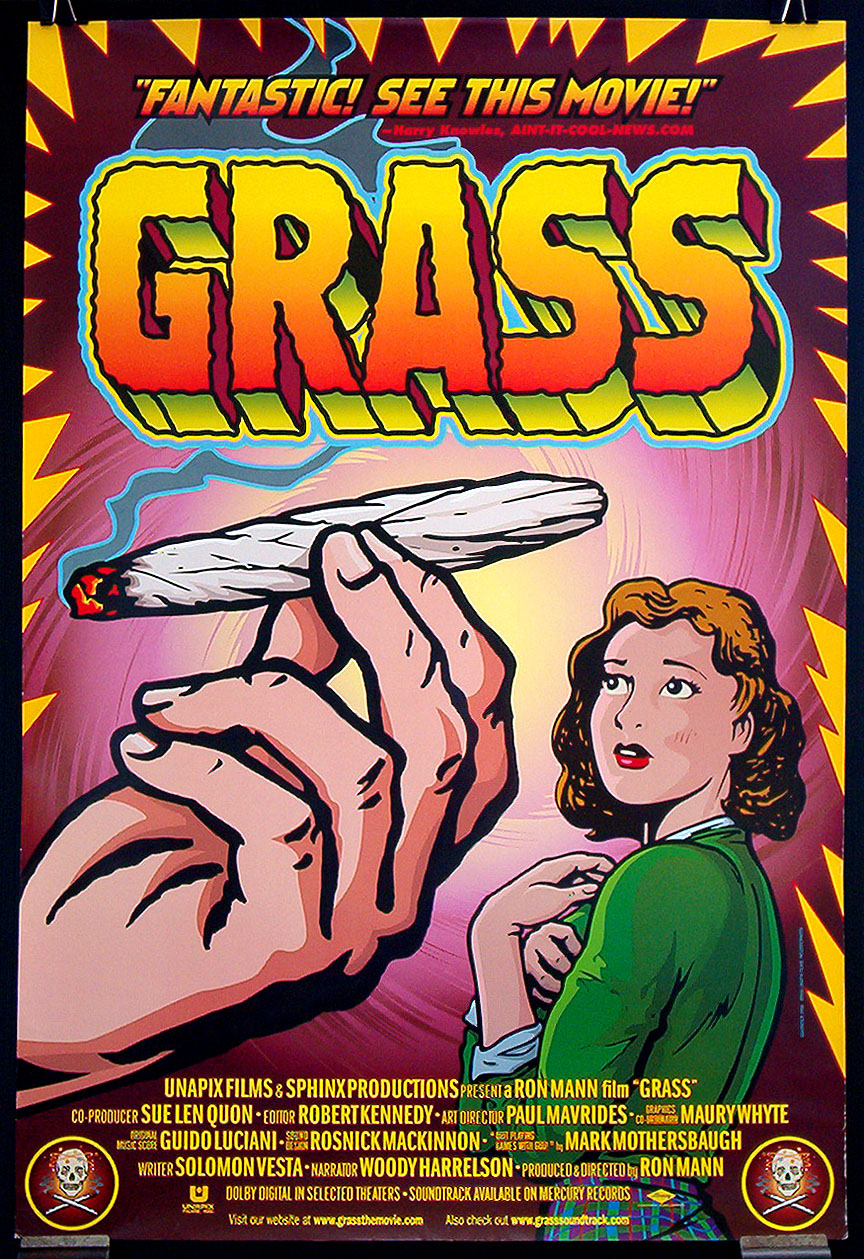
For most people maintaining a prohibition on certain undesirable substances (e.g. cocaine, ecstasy and cannabis etc) just seems common sense. Even though after 40 years of a "War on Drugs" such illegal substances are now cheaper and stronger than before this so-called "war" was declared. In the early 70s the shift from the hippie pseudo-spiritualism to a strenuous hedonism was emerging. A bi-product of the cultural revolution of the 1960s, which is often looked back on as a spontaneous explosion of civil disobedience and sexual liberation that eviscerated the rigid traditions that had lingered on from the Victorian era for too long. This aspect of the 60s counter-culture has been assimilated into the dominant ideology, which might explain why drugs are cheaper and more potent today than they were 40 years ago. But this is also why today we have access to legal highs and cyber sex, only a step away from pornography and illicit drugs, the successes of the "War on Drugs" are easy to see.
The availability of drugs has increased, along with the potency of the substances, it's commonly accepted in nightclubs and at parties. Not to mention the black market that has been built by the criminalisation of such substances, the only forms of regulation and intervention in these markets are the police and in some parts of the world the drug trade has become a substitute for a welfare state. Still we hear the drug warriors argue against decriminalisation, usually with the help of tall straw-men and very slippery slopes. Take the common defence of marijuana illegality, that it's a "gateway drug". Ironically the criminalisation of cannabis has driven people from mild drugs to hard drugs. As cannabis is bulky and smelly, it is easier for the authorities to intercept which has inflated the price of cannabis along with the "risk factor" for criminals. Drugs like cocaine is worth more per ounce than cannabis and is easier to smuggle. Raids on dealers create "marijuana droughts" which can drive people onto harder and more addictive substances. Cannabis was not a "gateway drug" originally, but has become a gateway through criminalisation.
The impact on the developing world can be seen in that the drug trade alone accounts for 25% of the Mexican economy and over 50% of the Afghan economy, a lot of the revenue made from heroin trafficking undermines and corrodes civil society and the state itself. In such narco-states, the drug trade exists as an underground capitalist economy and partly serves as a substitute for welfare measures which are often lacking in such countries. The way drugs have been criminalised in these countries contain the drug trade as a black market monopolised by cartels who compete for control of the market. This leads to violence, which in turn leads to tighter policing of the lives of the poor and in turn generates extreme violence - as seen in Mexico where the bloodshed has been reaching new heights in recent years. The criminalisation of drugs in this way provides a "justification" for an interventionist police state, rigged with pretexts to detain and imprison unruly members of the superfluous population. A situation which has given the Colombian government "justification" to send death squads into slums as part of social cleansing.
The answer to the problems of narco-states are more complex than calls to simply legalise drugs, but we in the developed world do not face the same problems. For instance, it would be preferable to use the opium crops in Afghanistan to develop the pharmaceutical industry as opposed to the doomed policy of trying to eliminate the crop. The same argument can be made in regard to Mexico, where the "War on Drugs" has done nothing but penalise farmers. In a country like Britain it would preferable to decriminalise heroin as part of a rehabilitation programme, whereby heroin is prescribed to addicts who are then weaned off the drug gradually. The result of this would be to kill off the black market for heroin, as addicts would have access to a better quality of heroin for free and a route to a better life. No doubt the reactionary press would start foaming at the mouth "Why should I pay for their addiction?!" These hypocrites would try to engineer a moral panic whilst standing by a solution to drug addiction reminiscent of the gulag, at a huge cost to society.
The class aspect of banning a substance is too often overlooked. In 18th Century England there was a ban on gin, in those times it was cheaper than water and was drunk compulsively by working-class people. Whiskey was a rich-man's vice in those days and so gin was banned while whiskey was not. In the 20th Century racism came into play in drug laws, marijuana became a target in the US as it was smoked by Mexican and African-Americans. In the US if you are convicted of possession of cocaine you will mostly spend a year in prison. But if you were convicted of possession of crack cocaine you could spend 10 years inside. There is a correlation between class and race, but the principle difference is that cocaine is snorted by rich whites and crack is smoked by poor blacks. As a result of the financialisation of the economy, not to mention lousy schools and a racist criminal justice system, African-Americans fall into the superfluous population of the US. The "rolling back" of welfare provisions has forced many impoverished black people onto crime, particularly drug crime, as a substitute for the loss in welfare as well as work.
Drug consumption does transcend class boundaries, it's usage among working-people is part of the reason for it's illegal status. Furthermore the illegal status of cannabis goes a long way to protecting the business interests of drug lords and cartels, just like the bootleggers and rum-runners of the Prohibition era, who make billions a year tax free from trafficking in cocaine and heroin. The legalisation of cannabis has progressive potential as the conditions for it's production can be created anywhere, it would be difficult to monopolise, low prices could be maintained and that would provide jobs for people. It's even possible to structure production and distribution along cooperative lines, without bosses and space for workers' democracy. It could be taxed and regulated, which could constrain the use of certain chemicals, restrict it's consumption to adults as well as to provide consumers with objective information on the effects of the drug.
The availability of drugs has increased, along with the potency of the substances, it's commonly accepted in nightclubs and at parties. Not to mention the black market that has been built by the criminalisation of such substances, the only forms of regulation and intervention in these markets are the police and in some parts of the world the drug trade has become a substitute for a welfare state. Still we hear the drug warriors argue against decriminalisation, usually with the help of tall straw-men and very slippery slopes. Take the common defence of marijuana illegality, that it's a "gateway drug". Ironically the criminalisation of cannabis has driven people from mild drugs to hard drugs. As cannabis is bulky and smelly, it is easier for the authorities to intercept which has inflated the price of cannabis along with the "risk factor" for criminals. Drugs like cocaine is worth more per ounce than cannabis and is easier to smuggle. Raids on dealers create "marijuana droughts" which can drive people onto harder and more addictive substances. Cannabis was not a "gateway drug" originally, but has become a gateway through criminalisation.
The impact on the developing world can be seen in that the drug trade alone accounts for 25% of the Mexican economy and over 50% of the Afghan economy, a lot of the revenue made from heroin trafficking undermines and corrodes civil society and the state itself. In such narco-states, the drug trade exists as an underground capitalist economy and partly serves as a substitute for welfare measures which are often lacking in such countries. The way drugs have been criminalised in these countries contain the drug trade as a black market monopolised by cartels who compete for control of the market. This leads to violence, which in turn leads to tighter policing of the lives of the poor and in turn generates extreme violence - as seen in Mexico where the bloodshed has been reaching new heights in recent years. The criminalisation of drugs in this way provides a "justification" for an interventionist police state, rigged with pretexts to detain and imprison unruly members of the superfluous population. A situation which has given the Colombian government "justification" to send death squads into slums as part of social cleansing.
The answer to the problems of narco-states are more complex than calls to simply legalise drugs, but we in the developed world do not face the same problems. For instance, it would be preferable to use the opium crops in Afghanistan to develop the pharmaceutical industry as opposed to the doomed policy of trying to eliminate the crop. The same argument can be made in regard to Mexico, where the "War on Drugs" has done nothing but penalise farmers. In a country like Britain it would preferable to decriminalise heroin as part of a rehabilitation programme, whereby heroin is prescribed to addicts who are then weaned off the drug gradually. The result of this would be to kill off the black market for heroin, as addicts would have access to a better quality of heroin for free and a route to a better life. No doubt the reactionary press would start foaming at the mouth "Why should I pay for their addiction?!" These hypocrites would try to engineer a moral panic whilst standing by a solution to drug addiction reminiscent of the gulag, at a huge cost to society.
The class aspect of banning a substance is too often overlooked. In 18th Century England there was a ban on gin, in those times it was cheaper than water and was drunk compulsively by working-class people. Whiskey was a rich-man's vice in those days and so gin was banned while whiskey was not. In the 20th Century racism came into play in drug laws, marijuana became a target in the US as it was smoked by Mexican and African-Americans. In the US if you are convicted of possession of cocaine you will mostly spend a year in prison. But if you were convicted of possession of crack cocaine you could spend 10 years inside. There is a correlation between class and race, but the principle difference is that cocaine is snorted by rich whites and crack is smoked by poor blacks. As a result of the financialisation of the economy, not to mention lousy schools and a racist criminal justice system, African-Americans fall into the superfluous population of the US. The "rolling back" of welfare provisions has forced many impoverished black people onto crime, particularly drug crime, as a substitute for the loss in welfare as well as work.
Drug consumption does transcend class boundaries, it's usage among working-people is part of the reason for it's illegal status. Furthermore the illegal status of cannabis goes a long way to protecting the business interests of drug lords and cartels, just like the bootleggers and rum-runners of the Prohibition era, who make billions a year tax free from trafficking in cocaine and heroin. The legalisation of cannabis has progressive potential as the conditions for it's production can be created anywhere, it would be difficult to monopolise, low prices could be maintained and that would provide jobs for people. It's even possible to structure production and distribution along cooperative lines, without bosses and space for workers' democracy. It could be taxed and regulated, which could constrain the use of certain chemicals, restrict it's consumption to adults as well as to provide consumers with objective information on the effects of the drug.
The US government banned marijuana in 1937, after Congress declared that there is a link between marijuana use and mental illness. The declaration was based on the testimony of Dr James Munch, a pharmacologist working at Temple University, who testified that when he gave marijuana to dogs they went "insane". This was after a representative of the American Medical Association who claimed that there is no evidence that cannabis is harmful to the health of humans. Naturally it was the testimony of Dr Munch that was taken on board by policy-makers. Today the debate on cannabis legalisation has been thoroughly obfuscated to the point where many people believe that there is a clear link between cannabis use and schizophrenia. Firstly, schizophrenia is a rare condition so it is difficult to determine its causes. What we do know is that if you smoke cannabis excessively you are 2.6 times more likely to suffer from psychotic experiences than a non-smoker. Whereas, if you smoke tobacco you are 20 times more likely to develop lung-cancer than the average Cheech and Chong.
As for the claim that cannabis use would increase if it were legalised, and the problems it "causes" now would be exacerbated, during the Prohibition era in the United States there were higher levels of alcoholism than there was prior to the Volstead act. The flirtation with prohibition was a disaster in the US. It led to an unprecedented crime wave, thousands were left dead from gangs or from rotgut alcohol and nurtured a contempt for law among the population. Back then it was the divine mission of saving the people from "Demon Rum" that the Congress was embarking upon. Now the classification of cannabis is supposed to protect us from ourselves, to stop us from descending into a load of Zombies - to paraphrase Gore Vidal - and in our endless search of Doritos whilst constantly murmuring "groovie". Decriminalisation and legalisation of drugs, even as soft as cannabis, seems to be the last taboo, as gambling, alcohol, tobacco and pornography are readily available for every citizen - all of which can be addictive and destructive. For we are still deeply puritanical in some respects, though not puritan enough to be enraged at the depiction of women found on Page 3.
Related Links:
Estimating Drug Harms: A Risky Business?Evidence Not Exaggeration
The Marijuana Tax Act of 1937
Gore Vidal - Drugs: Case for Legalizing Marijuana
Milton Friedman - Why Drugs Should be Legalised?
The Six Groups who Benefit from Drug Prohibition
Wednesday, 23 June 2010
Red Liberty - A Freedom for All.


It is commonly believed that libertarianism and socialism are totally incompatible as the former is ideologically disposition to individualism clashes with the collectivism of the latter. The philosophy of libertarians is dedicated to small government and the freedom of the individual, whereas socialism is devoted to the democratic control of the means of production and distribution. Democracy was feared by classical liberals, and many modern day libertarians, as potentially tyrannical to the freedom of the individual - the tyranny of the majority. The democratic control, or state control, of the means of production have typically troubled libertarians who take the view of taxation as theft and the state as the enemy of freedom. Many libertarians regard freedom and equality as being in opposition, it's one or the other being a pragmatic defence of the free-market. But it could be argued that equality is not opposed to freedom and a radically egalitarian approach to freedom is possible. A major issue in relation to this is distributive justice, as it is where major differences between libertarians and socialists are drawn.
Distributive justice, as a political goal, could be described as a way of resolving political and economic injustices. However, there are competing views as to how the distribution should be accomplished along the lines of desert, merit, human rights, needs and utility. For instance, the provision of health-care by the state paid for with public money could improve the standard of living for millions of people, who may not have been able to afford sufficient health treatment in the past. But this is one view of the issue of health-care, the principle being applied in relation to distributive justice is that of needs. People need health-care and therefore it should be a priority to have universal health-care funded by taxes. Another view, is that the distribution of wealth and property should be determined according to the merit of individuals. Thus, health-care should be distributed according to the merit of individuals and not on the basis of need. This is the view typically taken by free-market libertarians.
Distributive justice, as a political goal, could be described as a way of resolving political and economic injustices. However, there are competing views as to how the distribution should be accomplished along the lines of desert, merit, human rights, needs and utility. For instance, the provision of health-care by the state paid for with public money could improve the standard of living for millions of people, who may not have been able to afford sufficient health treatment in the past. But this is one view of the issue of health-care, the principle being applied in relation to distributive justice is that of needs. People need health-care and therefore it should be a priority to have universal health-care funded by taxes. Another view, is that the distribution of wealth and property should be determined according to the merit of individuals. Thus, health-care should be distributed according to the merit of individuals and not on the basis of need. This is the view typically taken by free-market libertarians.
Free-market libertarians, the ilk of Robert Nozick and Ayn Rand, might argue that taxing the income of individuals to fund such a public service diminishes the freedom of the individual. As the income and wealth of most people is derived from the individual's merit and is indicative of their character and talents. Therefore, taxing the income and wealth of individuals is in effect depriving them of their desert, which they earned through sheer hard-work. This undermines the freedom of the individual as it diminishes the ability of the individual to enjoy and to flourish to the extent that their hard-work allows them to do so. Thus, some libertarians have gone as far as to claim that taxation is a form of theft. But in regards to individual rights they might argue that the version of justice, which is preoccupied with needs, is contrary to the right to private property. Because the private ownership of property could be seen as an inalienable right, libertarians have argued that distributing land and wealth is against the rights of individuals to accumulate private property.
From this point-of-view, it could be argued that the inequality that might arise in a libertarian society would be natural as it would reflect the natural talents of individuals and the level of self-determination there is in that society. Conservatives might argue that distributive justice, of a needs-based variety, could lead to a culture of dependency amongst the lower classes which could undermine the natural hierarchy and threaten the "fabric" of communities that make up society as a whole. Whereas, socialists are focused on the idea of distributive justice as centred around needs as a way of distributing wealth and property in the long-term pursuit of an egalitarian society. It is not that libertarians and conservatives do not adhere to a kind of distributive justice, it is that their view of justice differs greatly from the needs-based formula of socialism. The idea that wealth and property should be allocated according to merit is the kind of distributive justice that libertarians and conservatives tend to believe in. In a sense, one man's justice is another woman's oppression.
The view that individual rights and a needs-based idea of distributive justice are incompatible seems to have some ground. Though it could be argued that this kind of distributive justice diminishes individual freedom is too simplistic. The view could be overly simplistic as it depends on the conception of freedom that we're talking about. In regards to the freedom of the individual from constraint, also known as negative liberty, taxation is an infringement on freedom as it functions as a constraint on the individual by decreasing their disposable income. But in relation to positive liberty, which is not just about the freedom from constraint and is more about enabling individuals with the capacity to act freely, it could be that individual freedom is enhanced by a needs-focused distributive justice. This is because the state provision of education and health-care empower individuals to flourish, as the obstacles of insurance payments and tuition fees are removed at the expense of a wealthy few.
The view that wealth and property should be distributed according to the merit of individuals assumes that the gap between rich and poor is a result of a natural difference between individuals. This fails to take into account the way wealth and property is often handed down from one generation to the next further perpetuating privilege and power. The ignorance of free-marketeers to inheritance and the ways wealth can be concentrated in a minority goes beyond innocent naivity. As Rand acknowledged by revelling in inequality, she viewed the poor as "mud to be ground underfoot, fuel to be burned." To Rand it was deeply immoral to show these "lice" compassion, who are feeding off of the success of the "Masters of the Universe", as selfishness is the only virtue. Inequality is justice. This merit-based variety of distributive justice that free-market libertarians adhere to is a narrow and simplistic kind of justice. The conception of liberty that they so adore and actively promote is equally narrow, as it abandons the individual with a set of choices to make and nothing but autonomy as a means to flourish.
It could be said that the free-market brand of libertarianism is liberalism for the ultra-rich, as in that kind of society they would have the greatest freedom and the least amount of "constraints" on that freedom. But for the rest of society, the "maximised" freedom for the individual would mean a life of total subservience to the most tyrannical. This is an absolute truism in regard to the "Greed is Good" variant that Ayn Rand espoused. Whereas, at the limitation of the disposable income and economic freedom of a small few, the rest of society could derive a far greater freedom that enables choices and not just permits them. The kind of individual freedom that right-wing libertarians are pursuing is only for the opulent few and is derived at the expense of the many. And the liberty which socialists and anarchists are pursuing is for all, not only as individuals but as communities as well.
Significant Links:
Two Biographies of Ayn Rand
Responsibility to the Poor
Ayn Rand Interview
Milton Friedman on Libertarianism
Ron Paul on the American power structure
Noam Chomsky on libertarian socialism
The view that wealth and property should be distributed according to the merit of individuals assumes that the gap between rich and poor is a result of a natural difference between individuals. This fails to take into account the way wealth and property is often handed down from one generation to the next further perpetuating privilege and power. The ignorance of free-marketeers to inheritance and the ways wealth can be concentrated in a minority goes beyond innocent naivity. As Rand acknowledged by revelling in inequality, she viewed the poor as "mud to be ground underfoot, fuel to be burned." To Rand it was deeply immoral to show these "lice" compassion, who are feeding off of the success of the "Masters of the Universe", as selfishness is the only virtue. Inequality is justice. This merit-based variety of distributive justice that free-market libertarians adhere to is a narrow and simplistic kind of justice. The conception of liberty that they so adore and actively promote is equally narrow, as it abandons the individual with a set of choices to make and nothing but autonomy as a means to flourish.
It could be said that the free-market brand of libertarianism is liberalism for the ultra-rich, as in that kind of society they would have the greatest freedom and the least amount of "constraints" on that freedom. But for the rest of society, the "maximised" freedom for the individual would mean a life of total subservience to the most tyrannical. This is an absolute truism in regard to the "Greed is Good" variant that Ayn Rand espoused. Whereas, at the limitation of the disposable income and economic freedom of a small few, the rest of society could derive a far greater freedom that enables choices and not just permits them. The kind of individual freedom that right-wing libertarians are pursuing is only for the opulent few and is derived at the expense of the many. And the liberty which socialists and anarchists are pursuing is for all, not only as individuals but as communities as well.
Significant Links:
Two Biographies of Ayn Rand
Responsibility to the Poor
Ayn Rand Interview
Milton Friedman on Libertarianism
Ron Paul on the American power structure
Noam Chomsky on libertarian socialism
Thursday, 8 April 2010
The Tyranny of the Individual.

In JS Mill's 1859 piece On Liberty, which is essential reading for any liberal today, Mill presents and explores the concept of the "tyranny of the majority". The gist of this concept is that democratic procedures can lead to tyranny over minorities, who disagree with the majority but cannot oppose them as they lack the sufficient voting power. As a concept, the "tyranny of the majority" reflects the individualistic tendency of Classical Liberalism. To liberals of Mill's ilk, it is the rights and freedoms of the individual that face potential threats from society, as a collective, in a democracy. The concept itself predates On Liberty and was probably borrowed from Alexis de Tocqueville's Democracy in America, which Mill reviewed. Though, de Tocqueville called it by another name, the despotism of the majority. Regardless, it remains a popular concept with right-wing intellectuals, the Objectivist philosophy of Ayn Rand and her followers being a typical example. Whereas, the majority of liberals today, who are social democrats or at least have social democratic leanings, are not so fond of the concept.
Mostly due to the Chicago School of Economics as well as the Austrian School, who have influenced right-wing politics in the West, there has been a resurgence of Classical Liberal ideas. Though, the return of laissez-faire politique over the last 30 years has been in relation to the global economy and has come in the form of neoliberalism. Even as Thatcher and Reagan "rolled back" the state and "liberated" the markets they still kept to "moralising" social policies that restricted gay rights. These reactionary social policies clashed with the permissive economic theories they preached. The economic theories that came out of the Chicago School and the Austrian School were laissez-faire - in the sense of libertarian and even anarcho-capitalist in some cases - in content. These theories were characterised by an overwhelming trust in private-power and distrust of state-power. But within these theories there is also a deeply cynical view of human nature, that we are fundamentally selfish and ego-driven creatures. This is why the trust of private-power only makes sense if one assumes that private vices reap public benefits. It's easy to see how such a permissive attitude to economics can clash with the repressive vision of a "good way" to live.
This assumption originates in Bernard Mandeville's The Fable of the Bees, in which he argues that private vices reap public benefits in the sense that even a libertine's indulgent behaviour has the potential to employ tailors, servants, perfumers, cooks and prostitutes. The spending of these individuals in turn employs more people like bakers and carpenters. In this sense, private vices are publicly beneficial as a whole. Though, JS Mill's writings on the economy became more left-wing, than anything Chicago School ever produced, it was On Liberty that would be his most influential work. Nevertheless, this assumption has been combined with the simple idea of individual liberty, as laid out by JS Mill, without any regard of the corrosive effects on society. The idea that we can all contribute to society by living life to the full, while at the same time assuming that the market functions best when left to it's own devices, is naive. For one thing, it fails to take into account externalities, which is when the true cost of an act is left for others to pay for. Like pollution, the true cost is being externalised for our descendents to pay for.
Thus, the ideal of individual freedom, of the untrammeled variety pursued by Friedman and Hayek, may be more suitable to an environment of isolation and desperation. A desert island, perhaps, on which one man is stranded and has to fend for himself. He must pursue his own self-interest in order to survive against all odds, the perils posed by the local wildlife and the forces of 'Mother Nature'. It is imperative that he build something that can shelter him, he must also find food and drinkable water. There is no nanny state to coddle him and no society for him to consider. His needs are the only needs that matter and his desires are the only desires that matter. Under these circumstances, greed is good and the alternative may mean death. But Western civilisation is not a network of isolated islands with desperate individuals stranded on them. We all know, our civilisation is more than that. It is an collection of complex and diverse societies, in which there is an intermingling of individual wants and desires. Worryingly, this may mean that the most primal view of humanity may rest at the centre of neoliberal ideology.

There is a tendency in liberal thought to view society as a mass of atoms, an arrangement between individuals, all of which are pursuing their own separate needs and wants. This is ignorant of the importance of society and that individuals play roles in society. Society is not subject to the whims of individuals, it is made up of individuals that interact with one another constantly. Since all actions concern oneself and others in society, it seems far too simplistic to view individual liberty as the paramount ideal of our civilisation. According to the concept the "tyranny of the majority", this ideal should even be placed above the ideal of democracy in our civilisation. Because democracy may threaten the freedom of the individual it should be restricted, so that democracy is extended to the things that don't really matter. Milton Friedman once lambasted democracy with a "straw man", in which 49% of the population are shot just because 51% of the population voted for it, to support his argument that individual freedom ought to be put above liberal democracy. Though, there appears to be something more being said here.
It could be that the concept presented in Mill's work is a "straw man" argument, used to attack what could be influenced through democratic procedures e.g. private property. We would all agree that Mill is right to argue democracy should not be extended to the personal tastes of individuals, a point he made using the example of the banning of pork in Islamic states, or the lives of individuals as Friedman argued. But these are ridiculous points, as no rational human being would extend democracy to such vital aspects of human life. Even with the example of banning pork, politicians may enact legislation to outlaw certain products and services, but they are usually not acting as representative of the majority of people in society. So it does seem logical, that the "tyranny of the majority" is really about protecting the wealthy minority from the kind of policies the poor majority would enact. Of course, this refers to the redistribution of wealth and the construction of the welfare state, which would benefit the poor majority. In this sense, the individual liberty that Mill and de Tocqueville wrote of is a bourgeois freedom - conceived of for the wealthy few.
This individual freedom, that liberals have fixated upon for centuries, could also be referred to as negative liberty. As negative liberty is the freedom of the individual from constraint, to live and act as one chooses. Though, liberals would propose the limits of negative freedom should be at the harm of others. It is this robust freedom for the individual, including a variety of rights such as the right to private property and the right to vote, which has made liberalism a prevalent political philosophy today. But it could be that this is an outdated political philosophy that panders to bourgeois needs, such as the right to private property, and is based on a atomistic and primal vision of mankind. In it's place, what may be needed is a positive liberty that encompasses the values equality and solidarity within society, as well as leaving room for the freedom of the individual on a social level. This would involve constraining the destructive capacities of individual freedom, which may lead to massive inequality and environmental disaster, while leaving room for the individual to live autonomously.
Subscribe to:
Comments (Atom)