Showing posts with label counter-terrorism. Show all posts

Thursday, 6 April 2017

Western Hypocrisy Over St. Petersburg Attacks


It was a welcome change to hear the Western media acknowledge that the St. Petersburg bombing might have something to do with Russian foreign policy: the interventions in Afghanistan, Chechnya and Syria. Yet you will never hear such an angle raised when its an atrocity carried out in an American or a Western European city. In such cases any attempt to explain terrorism would be dismissed as making excuses for violence.

This moral blackmail was not deployed over St. Petersburg. What do we know about the attack? The main suspect Akbarzhon Jalilov, a Kyrgyz national, is accused of killing 14 people and injured 50 others in detonating a bomb in the St. Petersburg underground. Six people have now been arrested. They have been accused of recruiting for ISIS. The suspects are all from Central Asian states. This would fit with the analysis that the bombing was staged in reaction to Russian aggression.

Not only was Central Asia dominated by the Soviet Union, the region was on the frontline in the war in Afghanistan. Once the USSR had invaded Afghanistan, the war aims quickly changed to building a new society and occupying the country for the time being. The United States and its regional allies - particularly Saudi Arabia and Pakistan - established a network of jihadists to fuel the Afghan resistance to the Red Army.

The Soviet occupation of Afghanistan would come to a close by 1989. Gorbachev oversaw the withdrawal and warned the West that the forces they had mobilised in Afghanistan would come back to haunt them. Of course, the network behind Osama bin Laden and the attacks on the World Trade Centre had their origins in the Afghan struggle. The war itself would create a space for Eastern European dissidents to challenge regimes backed by the USSR. This combined with economic factors would bring down the Eastern bloc.

Events in Chechnya would be even more crucial for the terror factor in Russia. As the USSR was dismantled in 1991, Chechen Ichkeria declared independence under the nationalist leadership of Dzhokhar Dudayev. Growing instability and tension in the region would lead to the eruption of armed conflict in North Ossetia, the Chechens feared the presence of the Russian armed forces would be the first stage of mission creep. Dudayev imposed a state of emergency after Russia deployed troops to the border.

At the same time, Dudayev was facing a groundswell of opposition in the fledgling state. This opposition would turn to armed force in 1994. Boris Yeltsin pledged Russian support for the attempt to overthrow the Dudayev government. Yeltsin was desperate to bolster his domestic support in the midst of his disastrous economic reforms. The instability in the Chechen region offered an opportunity. The Russians backed the opposition in order to overthrow Dudayev and crush the example of independence.

However, Dudayev held his own from October to November against the forces Yeltsin had mobilised. Russian armed forces would play a clandestine role, but the Battle of Grozny left the Russian government humiliated after the Chechen independence forces captured a large number of military vehicles and personnel. It was meant to be a swift operation to topple the government. Faced with this, Yeltsin sanctioned the invasion of Ichkeria ostensibly to restore the territorial integrity of Russia.

The Russian army began bombing the Chechen air capabilities and within ten days the invasion was underway. Just as Brezhnev had mistakenly thought the Soviet invasion of Afghanistan would be successful within weeks the Russians now thought the Grozny government could be toppled. The war would rage for two years before a ceasefire was signed on Russian terms. Dudayev was assassinated in an 1996 airstrike.

With American help, Yeltsin would survive the Presidential elections of 1996. Estimates of the people killed in the first Chechen war range up to 100,000, along with 500,000 people displaced, in just two years of fighting. A new war would start in 1999 following the apartment bombings in Moscow and the rise of Vladimir Putin. The second war was waged by Russia and its Chechen allies to kill off independent Ichkeria and snuff out the emergent Islamist movement in the Northern Caucasus.

The first aim was secured, but an insurgency continues to this day. Russia has been struck by numerous bombings by Chechen Islamist fighters, and a key reason for the Russian intervention in Syria has been partly to extent the war against those same Chechens - now fighting in Syria alongside the mainstream rebels and an array of jihadist groups. Of course, the main reason has been to back the Assad regime - the only Russian ally in the region.

An honest look at the situation finds that the Russian government relies upon the Islamist threat to  justify its aggression in Syria. Even though Russia has been motivated partly by counter-insurgency in Chechnya, the main targets of Russian bombing have been the Syrian opposition and the civilians living in their territory, not Islamic State or al-Nusra. This in turn is a key factor in the continued threat of terrorism in Russia.

Wednesday, 10 December 2014

We must not apologise for rectal feeding.


It's always good to know the political class has all its marbles in line and its priorities straight. Liam Fox, the former war minister, and numpty neocon, felt the need to profess his Christian faith in time for Christmas. "It is, of course, a personal thing," he says. "But it is why, for example, I always choose a nativity scene for our Christmas cards — a reminder about what Christmas actually stands for." This was just days before the US Senate released its report on CIA torture.

"So for me it's not ‘Happy Holidays’, but wishing everyone of all religions and none a very happy and peaceful Christmas." Except if you're a Muslim, or you look like an Arab, then you can expect rectal feeding by American thugs. Undoubtedly, the British government played the role of lieutenant in the US torture programme. Either Liam Fox was fully involved in the programme, or he was too incompetent to even comprehend what was going on under his nose.

Tuesday, 15 July 2014

Talking Israeli Standards.


On July 11, Netanyahu said "No state would allow its citizens to be targeted without a harsh response." This point has been constantly reused by every apologist for Israeli criminality on the planet. Somehow everyone imagines this is an unprecedented situation. Veteran Mid East correspondent Robert Fisk knows better, thanks to his experience of Northern Ireland and Lebanon:

What if the people of London were being rocketed like the people of Israel? Wouldn’t they strike back? Well yes, but we Brits don’t have more than a million former inhabitants of the UK cooped up in refugee camps over a few square miles around Hastings.

The last time this specious argument was used was in 2008, when Israel invaded Gaza and killed at least 1,100 Palestinians (exchange rate: 1,100 to 13). What if Dublin was under rocket attack, the Israeli ambassador asked then? But the UK town of Crossmaglen in Northern Ireland was under rocket attack from the Irish Republic in the 1970s – yet the RAF didn’t bomb Dublin in retaliation, killing Irish women and children. In Canada in 2008, Israel’s supporters were making the same fraudulent point. What if the people of Vancouver or Toronto or Montreal were being rocket-attacked from the suburbs of their own cities? How would they feel? But the Canadians haven’t pushed the original inhabitants of Canadian territory into refugee camps.

The point has been made before, including by Peter Hitchens of all people. The IRA fired rockets at targets on the British mainland many times, attempted to assassinate Thatcher with the Brighton bombing, and fired mortars into John Major's backgarden (only for one to explode to no success). The British government did not respond by carpet-bombing Belfast and invading the Irish Republic where many IRA members based themselves. Yet that is what we would expect if we go by the standards of Benjamin Netanyahu, a man who is convinced it is normal to invade a country and shoot and bomb defenceless unarmed civilians.

Thursday, 3 April 2014

Putin's Asia.

My latest article for Souciant focuses on Putin's foreign policy in West Asia. Here's an excerpt:
Last year, many commentators in the West were aghast at the Russian stance on the Syrian civil war. It was in early 2013 when Russia and China presented a united opposition at the UN Security Council to intervention in Syria. Then it was flabberghasted at the Russian opposition, in the summer of 2013, to Obama’s proposed ‘punitive measures’ (e.g. indiscriminate bombing). This was after Assad’s use of chemical warfare, which led to Putin pledging more military hardware as a gesture of support. The proponents of ‘humanitarian interventions’ will pretend that Vladimir Putin succeeded in deterring the Americans.
In reality, the US government would have gone ahead whatever the UN Security Council concluded if it had really wanted to intervene. It certainly didn’t stop when the UN opposed the occupation of Iraq. The sudden capitulation may have been more symptomatic of any clear strategy in Washington than anything else. The Sino-Russian veto was a convenient pretext not to directly intervene and watch the conflict play out.
The US non-strategic proposal of ‘punitive measures’ was a lot like Israeli airstrikes against Syria in early 2013. Nothing constructive could’ve come of it, and probably nothing good was intended. Once again, there was no great loss in waiting it out in the absence of any willing military collusion. In the United Kingdom, parliamentary debate on Syria opposed the government’s stance and – for the first time since 1782 when the British conceded American independence – the country had to rule out getting involved.
In the end, Obama decided not to pursue punitive measures and hold back until Assad had rid his regime of chemical weapons. The US government may well have concluded that it would be best to draw out the conflict for as long as possible, due to the various forces tied up in the country, thereby ensuring long-term instability. Everyone is playing the Syrian game right now: militants, Iranians, and so on. As long as there is no unanimous victor, there is no impetus to bomb.
Putin backed the move to clean Syria of chemical weapons for the very opposite reason: if the secular nationalist regime can survive, then there is the possibility of a stability beneficial to Russian interests. This is the crux of the matter. The US has a vested interest in regional instability, which keeps its opponents busy, whereas the Russians have an opposing interest in stability which may allow them to assert their influence. On Syria, these interests ultimately converged, and settled on chemical weapons.

Saturday, 29 March 2014

Quotes on Russia's War on Chechnya.


Chechnya as a Muslim Cause:

"In the West, our perception of the Chechen conflict has been focused on the dangers to the Russian Federation, the internal struggle in Moscow, the his- tory of the quaint "warrior people" who humbled the Tsar in the last century and have been doing the same to the troops of the old Red Army. But pick up a newspaper in Beirut or Cairo and the photographs are of Chechen men wearing Islamic headbands with "God is great" inked on to them in Arabic, of scarved women, of old Muslim men praying, of wooden grave posts with a crescent moon on them. In Russia, and even in the West, Chechnya is an illegal breakaway state threatening the cohesion of Yeltsin's regime; in the Middle East, the Chechens are seen as a Muslim people fighting for survival - with the same power to attract Arab sympathy as the anti-Soviet struggle in Afghanistan once had." - Robert Fisk, 1995

Russia joins the 'War on Terrorism':

"We should look very carefully at this anti-terrorism coalition and who is joining it and why. Russia is happily joining the international coalition because it is delighted to have U.S. support for the horrendous atrocities it is carrying out in its war against Chechnya. It describes that as an anti-terrorist war. In fact it is a murderous terrorist war itself. They’d love to have the United States support it. China is very happy to join because it wants U.S. support for its wars in western China against Muslim groups who, in fact, were part of the coalition in Afghanistan 20 years ago and are now fighting for their rights in China, and China wants to suppress them brutally and would love to have the United States supporting that." – Noam Chomsky, 2001

The destruction of Chechnya:

"Chechnya had enjoyed de facto independence from 1991-94. Its people had observed the speed with which the Baltic republics had been allowed independence and wanted the same for themselves.
Instead they were bombarded. Grozny, the capital, was virtually reduced to dust as 85 percent of its housing was destroyed. In February 1995 two courageous Russian economists, Andrey Illarionov and Boris Lvin published a text in Moscow News arguing in favour of Chechen independence and the paper (unlike its Western counterparts) also published some excellent critical reports that revealed atrocities on a huge scale, eclipsing the siege of Sarajevo and the massacre in Srebrenica. Rape, torture, homeless refugees and tens of thousands dead was the fate of the Chechens. No problem here for Washington and its EU allies." - Tariq Ali, 2013

Where was the outrage over Chechnya?


There's plenty of outrage in the West over Russian actions in Ukraine. Where was all this bluster in the 1990s when Russia waged war on Chechnya? Tariq Ali wrote a great article for The Guardian today raising this very question. He concluded:

The Crimean affair led to barely any loss of life, and the population clearly wanted to be part of Russia. The White House's reaction has been the opposite of its reaction to Chechnya. Why? Because Putin, unlike Yeltsin, is refusing to play ball any more on the things that matter such as Nato expansion, sanctions on Iran, Syria etc. As a result, he has become evil incarnate. And all this because he has decided to contest US hegemony by using the methods often deployed by the west. (France's repeated incursions in Africa are but one example.) 
If the US insists on using the Nato magnet to attract the Ukraine, it is likely that Moscow will detach the eastern part of the country. Those who really value Ukrainian sovereignty should opt for real independence and a positive neutrality: neither a plaything of the west nor Moscow.

Putin inherited the legacy of Russian policy in Chechnya. He has capitalised on this enormously over the years in different ways and it's a record worth exploring. In his bid for power Boris Yeltsin had conspired with the leaders of Soviet republics to dissolve the Soviet Union. In the aftermath secessionists in less convenient parts of the former Soviet Union, including Chechnya, which would make a bid for independence from Russia as soon as the old Communist leaders were overthrown. Yeltsin had gotten more than the powers he had sought at home. The Chechen nationalist Dzhokhar Dudayev was elected President of Ichkeria - effectively the independent Chechen state - in the midst of increasing instability and tension in the region. With the eruption of armed conflict in neighbouring North Ossetia the Chechens feared the presence of Russian troops and the prospects of escalation.

Dudayev initiated a state of emergency after Russian troops moved to the Chechen border. He had already faced a coup attempt from his opponents. The opposition would turn to armed means of deposing Dudayev in 1994. By this point Yeltsin was keen to bolster his popularity at home after his economic policies had led to disaster. The instability in Chechnya offered an opportunity for Yeltsin. The Russians lent support to the armed opposition in order to overthrow Dudayev and crush his example of independence. Dudayev held his own from October to November against the forces Yeltsin had mobilised. Eventuating in the Battle of Grozny the Russian government was humiliated after the Chechens captured a large number of military vehicles and personnel. It was meant to be a swift clandestine operation to topple the government.


Still looking for a boost in ratings Yeltsin issued an ultimatum to all factions in Chechnya (though not his own forces) demanding that they disarm and surrender. Knowing that this wouldn’t happen, Yeltsin ordered the Russian army to invade and restore order and defend Russia’s territorial integrity. The Russian Security Council had already set its plans to intervene before Yeltsin even made the ultimatum. The Russian army began bombing the Chechen air capabilities and within ten days the invasion was underway. Just as Brezhnev had mistakenly thought the Soviet invasion of Afghanistan would be successful within weeks the Russians now thought the Grozny government could be toppled. The war would rage for two years before a ceasefire was signed on Russian terms. Dudayev was assassinated. Yeltsin would survive the Presidential elections of 1996. Estimates of the killed range to 100,000 along with 500,000 people displaced.

Thursday, 1 November 2012

What about Mali?

Yesterday.

In early 2012 the US was seen as turning a blind eye to the Tuareg rebellion, at least by many Malians who find it unlikely that the US would not notice the return of many of Gaddafi's fighters-for-hire to Northern Mali. The Malian military overthrew Amadou Toumani Touré because he was seen as too ineffectual in fighting the Tuaregs. A popular view in the country was that Touré had allowed soldiers to be killed defenselessly. Captain Amadou Sanogo seized the healm once Touré was expelled from the country. Sanogo was smart enough to make the usual pronouncements of working to rescusitate democracy and the state's sovereignty. Interestingly, Amadou Sanogo was trained in the US and more than likely had the approval of the US State Department to overthrow Touré. It looks as though the era of coups is not over after all. Nevertheless the military coup failed to prevent the Tuaregs from seizing the North about ten days later. It was then that the Tuaregs declared the North to be the independent state of Azawad, it would seem with Iyad Ag Ghaly at the healm.

The international community has not recognised the declaration of independence. In the new state of Azawad we know that the MNLA has not solidified its hold over the whole territory. There is Ansar Dine, a Jihadist group with alleged ties to 'al-Qaeda in the Islamic Maghreb', which has the aim of unifying Mali under Shariah. The French seem to be leaning towards a 'humanitarian intervention' to restore the South's dominion over the North. Alternatively, there has been some discussion about the prospect of an African-led intervention, probably due to the strained resources of the imperial triumvirate. The Germans have expressed a willingness to train Malian troops. Meanwhile, the Islamist leadership of the forces in Azawad have threatened to launch an assault on Mali's capital if the intervention goes ahead. The drumbeat of war was playing at The Guardian where the case for intervention was laid out on October 17th. The case against intervention was laid out as well, in standard liberal practice - the illusion of neutrality.


In case you haven't heard of Mali, it's the seventh largest country in Africa with a population of around 15 million people. Like many African countries Mali was a French colony until it became independent in 1960, incidentally the demands for Tuareg autonomy predate independence. As for the economic conditions, Mali is built on agriculture specifically cotton in the South and cattle in the North of Mali which has been damaged by American and European economic policies. Around half of the population live on less than $1.25 a day. This remains so even as prospectors are keen to find gold and oil in Mali, while narcotraffickers use the country as a midway point to Europe. The life expectancy in Mali is about 48 years for Men and 52 years for women. In cultural terms Mali is very diverse, 90% of the population are Muslim, 1% are Christian and 9% adhere to an "indigenous religion", though it's not uncommon for Muslims to blend their beliefs with traditional animism. Notably the majority of the population live in the South, while the Northern chunk of the country is actually far larger and extends into the Sahara.


Today.
 
The economic situation in Mali has long been exacerbated by Western policy. The US government subsidises American cotton farmers with more money than the Malian government spends in it's entire budget. Nor can the Malians compete with the Europeans, since the EU subsidises each farmer with 500 euros per each cow and that is even more than the per capita GDP in Mali. The Minister for the Malian economy once said: "We don't need your help or advice or lectures on the beneficial effects of abolishing excessive state regulation; please, just stick to your own rules about the free-market and our troubles will basically be over." His words fell on deaf ears in America and Europe. The politicians placing tarrifs on imported goods and restrict imports by establishing administrative barriers often claim to be "putting country first". Clearly capitalism is not synonymous with economic liberty, whether it be a free-market or free trade. All of this I noted a couple of years ago, and it should kept in mind that Islamism is typically divorced from economic doctrine.

This is where the Tuaregs reside and have long demanded autonomy from the central government in the South. And it's not an illegitimate claim as the nation-state is not an African phenomenon, rather it was an imposition of European colonialism. But that's not to say that these countries can just be torn apart. The Tuaregs could be seen as similar to the Kurds, a desert people who are on the move and reside in countries such as Algeria and Niger. It wasn't until 2012 that the Tuaregs demanded total independence. This may have been avoided had autonomy been granted to the Tuaregs sooner. Incidentally the Obama administration has reached out to the Algerians, with talk of an African-led intervention. It's important to understand this crisis with regard to the NATO intervention that helped to finish off the Gaddafi regime in Libya. Mali's most important neighbours are Algeria, Niger and Burkina Faso, though it was Libya which intervened in Malian affairs under Colonel Gaddafi. Now it looks as though Gaddafi's fall has affected Mali.

Ironic as Gaddafi was the mediator of negotiations between the Malian government and the Tuareg rebels. Near the desperate end the Colonel had even enlisted Malian mercenaries, including Tuaregs, to fight the rebellion. It seems as though the mercenaries passed into Mali with new arms and confident in their experience of a lost battle. It would seem that this is the sort of situation that has already gone too far in its very happening. The Tuaregs have a legitimate grievance, the claim to autonomy was a legitimate one. The hybridity of Malian society, including among its Muslims, shouldn't be forgotten. This is as much a threat to animist Muslims and the remnants of Sufism as it is to Malian Christians and the descendents of slaves. Of course, it follows that the Islamists tearing down Timbuktu's cultural heritage and looking to silence all music is not a legitimate expression of this grievance or any other for that matter. There's the very real possibility that this will become another front in the imaginary culture war between Islam and the West. This remains so if the conflict is left to stew as it was in Sudan.

Thursday, 13 September 2012

Snipping away at Liberalism.


Since I first wrote about circumcision with regard to the liberal doctrine of free-choice and the communitarian emphasis of religious faith I have discussed the issue of male circumcision with friends and strangers. I was led to these discussions after being accused of being an apologist for religious absolutism and even theocracy. It's the first time that I've really looked into the issue and it seems as though there may not be an easy answer as to the legality of the procedure. It's clear why female circumcision should be illegal, it is unambiguously about the sexual repression and punishment of women. This is not the case with the circumcision of young boys, the evidence is ambiguous as to whether or not circumcision diminishes the sex life of men. It's also the case that the circumcision of women is not a religious phenomenon, rather it is a relic of a barbarous past. It precedes the Abrahamic religions in Africa and used to be prescribed to cure 'mania' in Europe.

It has become all too ordinary, especially in Europe, for cultural chauvinists to hide behind the shibboleths of bourgeois liberalism. In this view anything that constrains the capacities of the individual has to be shunted out of the way. It used to be the state, now it’s anyone with any beliefs which might prefer a stronger state. No wonder the cultural conservatives who slimed the Left have found common cause with liberal secularists. The self-proclaimed opponents of the state have come together to empower the state further in order to rid the world of fanaticism. It gets weirder as the guardians of free-choice come to defend the imposition against choice. The self-described libertarian Geert Wilders has called for the banning of the Islamic veil, the banning of the Quran and no doubt lots of other barbarian fetishes. Only the Western liberal lifestyle option can be chosen because it emphasises choice, freedom and pluralism.

Nevertheless it is the liberal democratic system of human rights, civil liberties and equality of opportunity which the reactionary Right want to throw under the bus. Let alone multiculturalism and political correctness. All of this is worth defending from the cultural chauvinists and crypto-fascists. The aim isn’t just to get at the freshly settled Muslim community of many European countries. It’s about bashing Muslims to get to the real enemy, liberalism. The same is true of so-called counter-terrorist legislation, it infringes on our basic liberties and not to protect us. It’s the destruction of civilisation rather than the defence of civilisation. The traditional authoritarianism of the European Right rears its hideous casque once more in this way. That isn’t to say that the hatred of Muslims is purely extrinsic. It’s very real and shouldn’t be underestimated in its role in the populist projects of cultural rightists and chauvinists.

We can tell this much from the campaign against homeless Muslims in France where the far-right have set up soup kitchens that only serve pork-based soups. Likewise, the closet fascist Mel Gibson lashed out at Jews on the silver screen to get at the Vatican and its concession that not every Jew is guilty of deicide. Here we find anti-Semitism fits into an ultra-traditionalist Catholic agenda in rebellion against Rome. It’s not that the Australian ham-actor isn’t a Judeophobe; it’s that there is something more going on than a prejudice. This is relevant as we find increasingly the Muslims of Europe are pinned as alien to Western civilisation and subversive to the liberal precepts of capitalist society. There was a time when Jews were taken in the same light. And it is no coincidence that we find the attempts to restrict the freedoms of Muslims has slid into restrictions on Jews as well. This is most blatantly the case with the calls for bans on halal meat and circumcision.

I was eager to take the side of the religious groups that would be affected by a change in the legal status of circumcision for good reason. It would seem that there is more going on when people are calling for a ban on a practice of Muslims at a time of raging Islamophobia. This is where we should ask ourselves further questions about what it means to live in a liberal society. If we take seriously the bodily integrity of a child as well as freedom of conscience then we would be led to the legal regulation of circumcision rather than a ban. This could take the form of stipulations, that the operation has to be performed by a professional with anaesthetic. We might even go for an age of consent. Liberalism leads us to this compromise between secular individualism and religious communitarianism. The call to ban circumcision is suspect given that it is possible to find a compromise within the realms of liberalism. That's before we even consider the political context of Europe, with its authoritarian traditions of conservatism.

Saturday, 3 September 2011

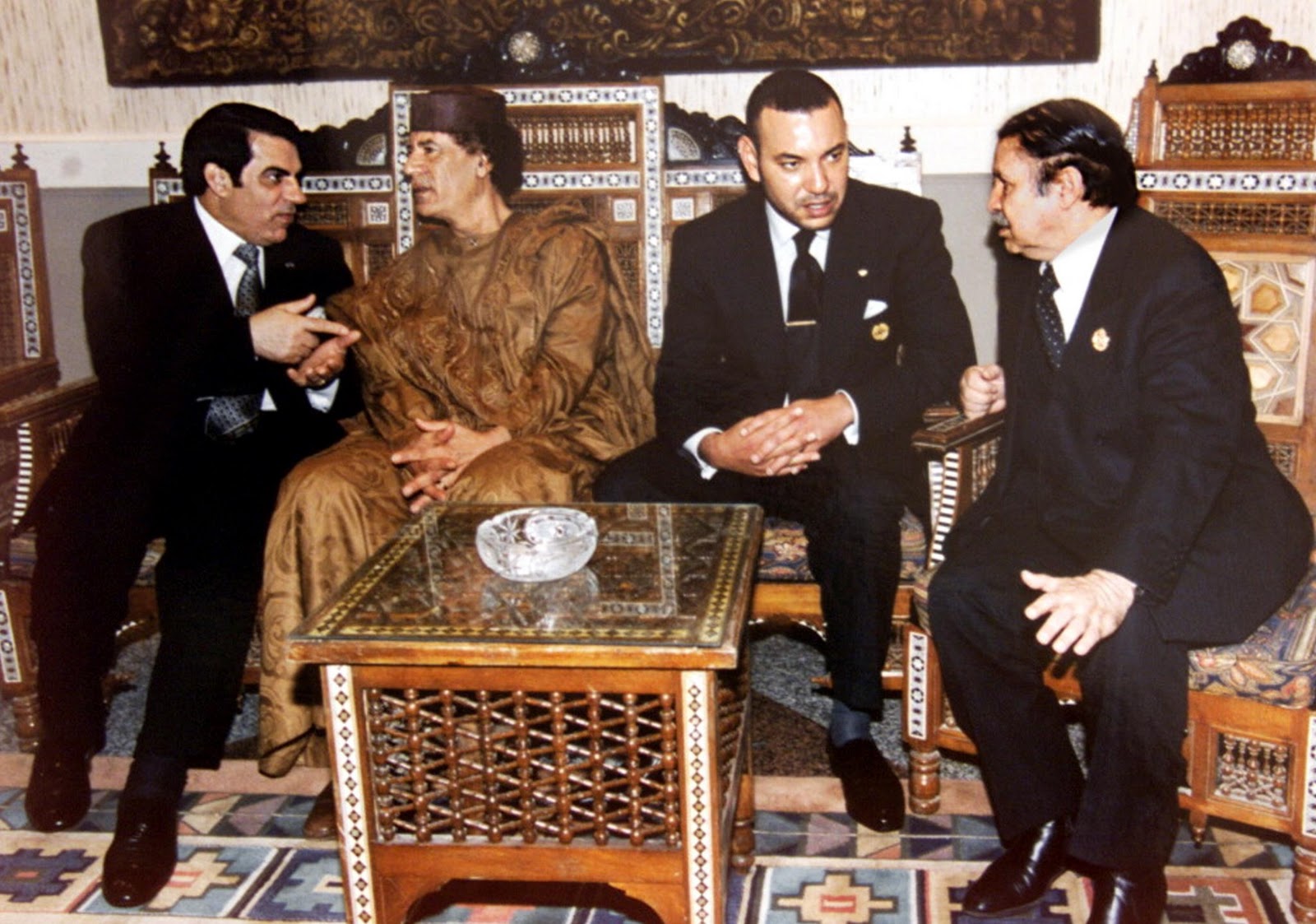
Gaddafi's Greatest Hits?


After Gaddafi reaffirmed his position in the mid 1970s the Libyan government continued to embark upon an interventionist path abroad. In the 70s the regime stood shoulder-to-shoulder with Idi Amin in Uganda as it propped up the ANC in South Africa. Repeatedly Gaddafi interfered in the politics of other Arab states, holding that the Arab people are for unity and the rulers stand in the way. A series of plots against leaders in other countries were uncovered, including in Egypt and Tunisia. Gaddafi played the part of a revolutionary looking to liberate the masses of the Arab world and to unite the Arab states carved out in colonial times. The Colonel argued that it is a moral duty to support every movement that stands for the liberation of the exploited and oppressed. This is where Gaddafi comes across as a strange parallel of a liberal interventionist, perhaps one of those self-proclaimed "democratic revolutionaries" who fought to bring American pornography to Russia. Gaddafi has also acted to mediate disputes in African countries such as Mali, specifically between the government and rebels. He has even sent peace keeping missions to countries.


By 1980 it was clear that there was dissent within Libya which the Colonel acted to suppress. There was a mutiny in the Libyan army at Tobruk which Gaddafi crushed. There were numerous assassination attempts over the years and the self-proclaimed "Brother Leader of the Revolution" had survived a coup attempt thanks to the CIA. Rocky times lay ahead as Libya went to war with Chad, with the US, Saudi Arabia, Egypt and Israel supporting Chad. Around the same time the Libyan government was looking to align itself with the Soviet Union as it saw the writing on the wall from the US. Even though just the year before Billy Carter attended the 10th anniversary celebrations of the Gaddafi's ascent to power. By which point the CIA had definitely abandoned its' pragmatic position on the Libyan government. There was soon little tolerance for Gaddafi as he lent support to the Sandinista movement that had deposed the vile Somoza in Nicaragua. The Americans were looking to keep their "backyard" in order.

In 1981 the Reagan administration declared the "War on Terrorism" and shot down two Libyan fighter jets in disputed waters before Reagan ordered US citizens to leave Libya and then refused US passport holders to travel there. Before the year was out the Reaganites were claiming that the Colonel had sent hit-men to assassinate the President and would target senior officials if Reagan couldn't be got. The line was played to deliberately invoke the assassination attempt that Reagan survived. It was a well crafted campaign of fear on the part of the American government and actually originates as a piece of Israeli secret service disinformation. Similarly in Britain The News of the World ran a story that the Libyan government was "masterminding a secret plot to arm black revolutionary murder squads" in the country. The British press has been jingoistically faithful to the cause of bombing Libya for quite some time. The source turned out to be a notorious con artist, who had squeezed £3,000 out of the paper for the story. Around the time that there were meant to be Libyan hit-men hiding under the President's bed a CIA plot to overthrow Gaddafi was leaked to the press.


In 1982 the CIA installed Hissène Habré in Chad as the war still raged with Libya. The aims of this were clear as Alexander Haig wanted to "bloody" Gaddafi's nose and it was the first operation carried out by new CIA chief William Casey. The National Front for the Salvation of Libya received $7 million from the Saudi Royals, as well as support from the CIA and the French. A plan to assassinate Gaddafi and overthrow the government was crushed in May of 1984. For the British the death of police officer Yvonne Fletcher in April of 1984, at the hands of a gunman inside the Libyan embassy, was enough to pin Colonel Gaddafi as the "Mad Dog" leader of a rogue state. There wasn't such fuss over the fate of Musa Sadr, who disappeared mysteriously on a trip to Libya in 1978. The Lebanese Imam had a significant following amongst Shi'ite Muslims, but had a reputation as politically unreliable though it remains a mystery precisely why Gaddafi would have killed him. Then in 1985 came the plan for an Egyptian invasion of Libya aimed at the removal of Gaddafi from power. Mubarak refused to carry out the invasion for Washington.

Finally in 1986 the US bombed Libya on the grounds that the Gaddafi regime was supporting international terrorism. It was the first military assault on a country that was staged for prime time television. No European country, except for Britain, would allow the US to launch the attack from its military bases. Thatcher was looking for a boost in the polls and hoped that the attack on Libya might propel her to victory in '87 as the Falklands war had in '83. The airstrikes failed to hit some major targets, the Colonel survived the attack, even cabinet ministers questioned the bombing and the British public were not impressed. Out of the 18 jets sent to bomb Libya 9 had been given the order to takeout the "Mad Dog". The attack on the compound was a military failure, Gaddafi was in a bunker at the time and only the windows on the administration building where he lived were blown out by the bombs. Though the tennis courts sustained two bombs and it only took one blast on the building where Gaddafi's family lives to injure two of his sons and kill his adopted daughter. Can you imagine the outrage of the commentariat had Reagan's daughter been killed in a Libyan air-raid on the US?


One of the specific charges against the Colonel was that he had sent advisers and arms to the Sandinistas in Nicaragua. Interestingly it would not be acceptable for Libya to bomb the US for the weapons and funds it gave to the Contras to bring down the Sandinista government by any means necessary. This is where Gaddafi acted as a mirror-image of an American neoconservative. He saw the same moral obligation to intervene where necessary on the side of the victim, preferably a victim valuable in some geopolitical sense. So Gaddafi supported the Sandinistas against the US, the Palestinians against the Israelis and the Irish against the British. This is the same reason Gaddafi would use to defend sending Libyan agents to subvert the Sadat government in Egypt. Then came the charges of terrorism, there was the Berlin Disco Bombing in 1986 which was immediately linked to the Libyan regime. The American neoconservatives jumped at the opportunity to "liberate" the Libyan people from the police state Gaddafi had built. Even though there was no evidence, at the time, that the bombing had anything to do with Gaddafi. It had been suggested that the attack might have been orchestrated by Iran or Syria.

After the airstrikes the CIA went on to launch an extensive effort to launch a coup in Libya, a secret army was put together from the Libyans captured in border battles with Chad. Then came the Lockerbie Bombing in December of 1988 which sent Pan Am Flight 103 down in flames, leaving 270 people dead. In August of the same year the USS Vincennes shot down an Iran Air Flight 665 over the Persian Gulf and 290 people were killed. It was written off as an "accident" in the US, though that is disputed by Tehran. It seems plausible that the bombing was orchestrated by a Palestinian group hired by the Iranian regime to take revenge against the US. But this is just a theory which has yet to be proven because of the absence of a serious investigation into the shooting down of Pan Am Flight 103 and Iran Air Flight 665. The indictments for Abdelbaset al-Megrahi and Khalifa Fahimah were handed down after Libya opposed the Gulf War. Fahimah was acquitted but al-Megrahi was convicted on the testimony of two witnesses, who received around $7 million from the Rewards for Justice programme at the Justice Department. One witness testified that he sold clothes to al-Megrahi, which were later recovered from the wreckage, the other (a CIA informant) claimed he saw Fahimah carrying the bomb onto the plane.


By this point sanctions had been deployed against Libya for a number of years. Britain had resorted to funding various opposition groups in Libya. Then MI6 put together a plan to kill Gaddafi in 1996 and saw to it that his motorcade was attacked by Islamists (who had been paid £100,000 to kill the Libyan leader). Gaddafi got away with his life but six bystanders were left dead. No surprise given that the weapons used included Kalashnikovs and rocket-propelled grenades. This was the same year that the Colonel connived to slaughter around 1,200 political prisoners at Abu Salim Prison. The majority of which were Islamist and stood in opposition to the secular model Gaddafi favoured even as he introduced 'purification laws' that were based on Islamic scripture. The relatives of the prisoners were the backbone to the demonstrations held in Benghazi earlier this year. Gaddafi moved to crush the demonstrations and the rebellion was sparked. In the end it was the brutal nature of the regime that led to the uprising and not the decisions made in Washington. Now there are even rumours that the rebels have seized the prison and began releasing prisoners.

Colonel Gaddafi was aligned with Charles Taylor in the late 90s, just as he had backed monsters like Slobodan MiloÅ¡ević. This is the same man who had supported the ANC at a time when the British and the Americans attacked Nelson Mandela as a "terrorist". Gaddafi sought to invest millions in Liberia in order to maintain the stability of the Taylor government that was established through terror. As Liberia became embroiled in the bloodbath in Sierra Leone so did Libya to the extent that there was an attempt to indict Colonel Gaddafi as well as Charles Taylor. The charges amounted to the role Gaddafi had played in the mutilation, maiming and murder of 1.2 million people. The attempt to extend the trial to Gaddafi was blocked by the US and Britain in March of 2011. When asked "Why?" the chief prosecutor David Crane simply said "Welcome to the World of Oil." The support that the British and the Americans lent to Libya was extreme and embarrassing. Even the economic sanctions imposed against Libya specified a convenient exemption for Libyan banks. The aim being to reconstitute the regime along new lines which fit into Western interests in controlling the oil spicket of the region.


Once the Soviet Union had collapsed it was inevitable that the Gaddafi regime would open up to Britain and the US. The terrorist attacks on September 11th 2001 provided an opening for such negotiations with Blair. In the 1980s the economy had began to be deteriorate, as had the welfare state, which the sanctions imposed on the country only exacerbated further in the 1990s. So the Colonel looked for a normal relationship with the West and the regime began to slowly initiate neoliberal reforms. The welfare state and social services began to crumble as a result. At the same time corruption and unemployment spun out of control. Many of the reformists in the Libyan government, including those who have been linked to embezzling and corruption in the past, have since defected to the rebels. Perhaps then we know where the 200 million Libyan Dinars flown in from London will end up. In the meantime the Gaddafis will join the growing list of scum deposed this year and the corporate vultures will finally land to pick the bones clean. The reformists were behind agreements with the West over neoliberal reforms and no doubt we'll see plenty of that in days to come.

Sunday, 28 August 2011

Get Cheney!


Behold the unremitting and unrepentant Dick Cheney, who is about to publish his memoirs. The book is yet another attempt to festoon the Bush legacy with a little more than the long list of disasters, outright megalomania, disregard for human life and all assorted fuck-ups. This is the man who ran the White House for at least 5 years as the Vice President to George W Bush. The man who ordered torture with such ice-cold ease, only Henry Kissinger topped him in the monstrous tasks he delegated. Dick Cheney lives and breathes war, he's a ultra-nationalist driven by an obscene desire to defend the ceaseless expansion of the American empire. The reign of Cheney and Bush shocked the world in its blunt arrogance and shameless embodiment of everything wrong with the United States. No doubt Cheney would remind us that we all 'owe' our freedom to the Americans for fighting Fascism and Communism to the bitter end. The jingo is blind even when confronted with a wall of mirrors.

 It was the Bushites who rammed the USA Patriot act through Congress. The act gave the state the power to monitor phone-calls, emails, medical records, credit card bills, bank records and even library records. The NSA are currently building a national database the size of a city to house the data raked in. The preference for the NSA over the CIA goes back to the struggle within the Nixon administration between Kissingerian realists and what we might deem 'idealists'. The CIA adhere to a realist vision of foreign policy which is ruthlessly pragmatic in the defence of American interests. Where Henry Kissinger wanted detente with the Soviet Union the guys like Cheney wanted to continue the Cold War no matter what. Perpetual war for perpetual peace is the name of the game for Cheney and friends. The point for the interests that Cheney served is not victory over 'good' or 'evil', but the endless accumulation of capital secured through the military-industrial complex. Cheney and Rumsfeld are joined at the hip, the two of them are ruthless in their goals and managed to strip Henry Kissinger of his position in government back in the 70s.

Since 1949 the US has spent over $7.1 trillion on its military budget, today it accounts for 50% of military spending in the world and over roughly the same period of time the US has "intervened" in over 70 countries around the world. In the service of this war machine which also props up a large share of the American economy, Cheney was willing to go to extraordinary lengths. Cheney and Rumsfeld pushed for a way to recreate a new Cold War with China as the major 'enemy' to be defeated. Of course the military-industrial complex and the energy industry approved of this proposal, but it would have significantly lowered the American standard of living if it had been pursued and "Corporate America" was well aware of that. So the plan of a new Cold War was not followed through, Colin Powell was quick to nudge George Bush in that direction and see it would not materialise. Sadly the entire administration was complicit in the re-declaration of the "War on Terrorism" which has seen more than a million people slaughtered in Iraq for oil.

It was in 2007 that Dick Cheney urged President Bush to bomb Syria as he learned the country could possess a nuclear reactor. It was other advisers who thwarted this plot, as in the other cases. Note the hold Cheney had over the Oval Office was weakened considerably as Donald Rumsfeld and a lot of the neoconservatives were booted out in 2006. The second Bush term was comparatively moderate as a result. The President is only as good and wise as the advisers who surround him. For years Cheney managed to spoon-feed Bush information which he "cherry-picked" without the consultation of the CIA and gathered directly from raw data. This brings us back to Cheney's pernicious relationship with the CIA. The supply-side economics prescription which Cheney has backed for decades in government posts, as well as in Congress and as a capitalist, led to financial crisis and the current stagnancy the global economy has experienced. It was the process of deregulation that Cheney accelerated which led to the BP disaster.

Now it turns out Dick Cheney kept a preemptive signed resignation letter in a locked safe for all the years he served in the Bush administration. Only the President and a single member of Cheney's personal staff knew of the letter's existence. He claimed the letter might have been necessary due to his history of health problems, which is a reference to the heart which runs on pure radical evil to the extent that it almost destroys itself on a regular basis. I find it more likely that Cheney was fully aware of the depravity in which he indulged in as a fitting expression of who he is and what he believes. The resignation letter was drawn-up early on because he expected an enormous backlash against the administration. Sadly the widespread opposition and outrage over his government did not suffice for him to step down at any point. The ongoing freedom of this wretched creature is itself a vindication for Anacharsis, who saw laws as cobwebs capable of keeping the weak entangled but flimsy when confronted with the strong. When he finally does die of an enormous heart attack all we can say is that it would've been better had he never lived at all, but it would be better if we just take a silent and steamy piss on his grave.

Tuesday, 10 May 2011

The Narrative of Terror.

Life After History.

After the collapse of the Soviet Union, which began with the Berlin Wall in 1989, the grand narrative that the US was engaged in a war against Communism came to an end. Out of the Second World War, the US came out the most powerful country in the world and it had a powerful military to justify. The threat of Communism was enough to play on to increase the defence budget. It began with the anti-Communist witch-hunts of the 1950s were actually started by the Democrats under Truman. It provided a pretext for the Korean war, as it would later provide for Vietnam and then lose in the mid 1960s. A performative contradiction emerged between the grand narrative professed by the US and the actual situation in the world. After all the US was bombing Vietnam to contain the spread of Communism, why was the US bombing South Vietnam then? A similar contradiction has arisen in Iraq and now in Afghanistan, why are we still in Afghanistan if Osama bin Laden was in Pakistan?

The collapse of the grand narrative of the Cold War came around 1990 and gave way for a new narrative. Though for a while things flat-lined as Fukuyama had declared the End of History. The events of 9/11 would open up such a narrative, though there are signs to be detected earlier than September 11th 2001. As there was a global economic crisis in 1998, as well as the hysteria around Monica Lewinsky, US embassies in Tanzania and Kenya were bombed. Osama bin Laden was the mastermind and Bill Clinton immediately seized on it. Cruise missiles were fired and nothing was hit (except for a pharmaceutical plant in Sudan) so the media charged Clinton with trying to take the heat off himself. If a Middle East connection had been found behind the 1995 Oklahoma City Bombing the US would have bombed just about anything in sight, with the press cheering it on all the way. It wasn’t until the atrocities struck on American soil in 2001 that the grand narrative was opened up as the “War on Terrorism” was declared.

The grand narrative of the “War on Terror” has been a self-serving narrative for the Bush administration, the commentariat and not to mention al-Qaeda. It gave the government and the media a meaningful way to simplify global events for public consumption. It also sells papers, boosts approval ratings for politicians and provides a way for Islamists to recruit young angry men in the Middle East. The US could have split the Jihadist movement in 2001, as there was a division between the Islamists who supported the action and those who opposed it. Instead the US invaded Afghanistan and in doing so united the Jihadist movement behind the new strategy to attack the “far enemy” and not just the “near enemy” of corrupt Arab leaders. In other words, the moves to "contain, minimise and marginalise" the threat referred to by Alex Massie couldn't include the invasions of Afghanistan and Iraq. The same can be said of state-sanctioned kidnapping and torture.

As Patrick Cockburn has claimed, al-Qaeda might just be the most successful terrorist organisation in history. After all the attacks on 9/11 were committed in order to lure the US into an over-reaction in which it would wage a war against Islam. Ayman al-Zawahiri expressed hopes of this, these was the reason for the attacks on 9/11. The logic being to unite the Muslim masses against the West, the attacks succeeded in uniting the Jihadist movement as the US invaded Afghanistan and later Iraq. With the US and Britain committed to a ground war in Iraq, the threat of terrorism in the West increased significantly. George Bush and Tony Blair had done a good job of acting how al-Qaeda wanted them to. Despite warnings that the invasions would increase the threat of terror Bush led the way. We can all look and see the link between the invasions and the terrorist attacks which have struck in Western countries since then.

History Jump-Started.

The trial of Osama bin Laden would have surely demystified al-Qaeda, it seems as though the assassination has the potential to bring the grand narrative to a close. It could make way for a new narrative. With the snake decapitated there are few ways for the Republicans to criticise the administration and a second term may be secure. There are also few ways to justify the current occupation of Afghanistan, a contradiction could easily rise from the depths of American ideology to the surface and manifest itself in political crisis. Whether or not it can be managed by simply claiming that the US has to fight the Taliban in Afghanistan is another matter. If the man is dead what is the point of occupying Afghanistan? The hopes look slim for the “War on Terror” to be bolstered in any significant way. Yes, there are terrorists still out there. There are also Communist regimes in Cuba, North Korea and China among a few other places and yet there is no hope of kick-starting the Cold War.

The only conceivable way the grand narrative could be maintained is if there is another invasion. The most valuable, in strategic and economic terms, are Pakistan and Iran. But to even justify a war another baddie has to emerge from the shadows. There is no one in sight who can fill the shoes of Osama bin Laden. Not even Ayman al-Zawahiri, the de facto leader of al-Qaeda. It should be noted that there is word of new names being added to the terrorist watch-list, as a consequence of the raid and the information found at the compound in Abbottabad. There is a great deal of speculation over how the Pakistani government managed to ‘miss’ that bin Laden was living in Abbottabad. The Americans felt no obligation to inform Pakistani intelligence of the raid because they were "untrustworthy", as the CIA have pointed out. Even though Pakistan agreed to this kind of raid 10 years ago.

Barack Obama has faced a great deal of criticism from across the political spectrum. There has been legitimate criticism for his position on Israel-Palestine and then there are the allegations that he is an illegal alien, a Muslim and the bastard son of Malcolm X. It seems that there is little room for words which regard what change he has accomplished. Understandably so, there is a great deal of disappointment with him and general disillusionment with politics in the US. But Obama never pretended to be anything more than a centrist liberal. We forget that the presence of a black family in the White House has moved the perimeters of what is possible in the US. The statements he has made on torture and Guantanamo Bay have the same impact. Though the gulag is still open, we should not forget that it was totally impossible to even imagine the American President admitting torture and calling for Gitmo to be closed down. The assassination of Osama bin Laden may be the greatest contribution to ideological change Obama has made thus far.

American intelligence officials are expecting to add new names to the terrorist watch-list as a consequence of the raid on the compound. The information is from 10 phones, 10 computers and 100 memory sticks found at the compound in Abbottabad. So there are hopes for the “crazies” who will want to see the narrative survive. Nevertheless, there is a chance that this narrative might have to close and with that a new narrative will open up. The conditions for this new narrative are not unique. It would have to make room austerity at home and repression abroad. It would need to rationalise the lunge for resources in Central Asia and the Middle East. As the US loses its power it is possible that the grand narrative will be shaped even more by China. It is even possible that the decline of American hegemony could itself be the next narrative. We live in interesting times, as well as dangerous times.